

Squeezed into a narrow valley along Big Wills Creek, with Lookout Mountain rising directly to the east, Fort Payne has a geography that funnels water. The DeKalb County seat sits at about 1,079 feet and averages roughly 58 inches of rain a year, much of which runs off the mountainsides and into the valley floor where the town, its mills and many of its homes were built.
The Restoration Job offers a free 24/7 phone line. Call (888) 317-9980 and we'll connect you with an independent restoration provider that serves Fort Payne and DeKalb County. We don't perform the restoration; the provider you reach handles the work directly.
How the call works: when you call (888) 317-9980, The Restoration Job connects you with an independent restoration provider that serves Fort Payne. That provider inspects the damage, explains the scope and quotes the work. The Restoration Job doesn't perform restoration itself. Read our referral disclosure.
Big Wills Creek and Runoff Off Lookout Mountain
The town grew in Wills Valley, the strip of lowland between Lookout Mountain and Sand Mountain. When heavy rain falls on those slopes, water moves downhill quickly into Big Wills Creek and the smaller branches that feed it. Streets near the creek, low commercial lots and houses at the base of the mountain are the places most likely to see flash flooding or water against their foundations.
Know your property's position before the next storm. A home on a slope may take water through the uphill wall, while a home near the creek may face rising water. FEMA's Flood Map Service Center shows mapped flood zones; remember that intense rain can also flood areas outside them.
A Record of Tornadoes, Hurricane Remnants and Snow
The city has been hit by an F3 tornado on February 29, 1952, an F4 on May 19, 1973, and another F3 during the Palm Sunday outbreak of March 27, 1994. Hurricane Opal brought hurricane-force winds in 1995, and the 1993 Storm of the Century dumped more than 20 inches of snow. Elsewhere in DeKalb County, the April 27, 2011 Rainsville EF5 killed 25 people along its path across Sand Mountain.
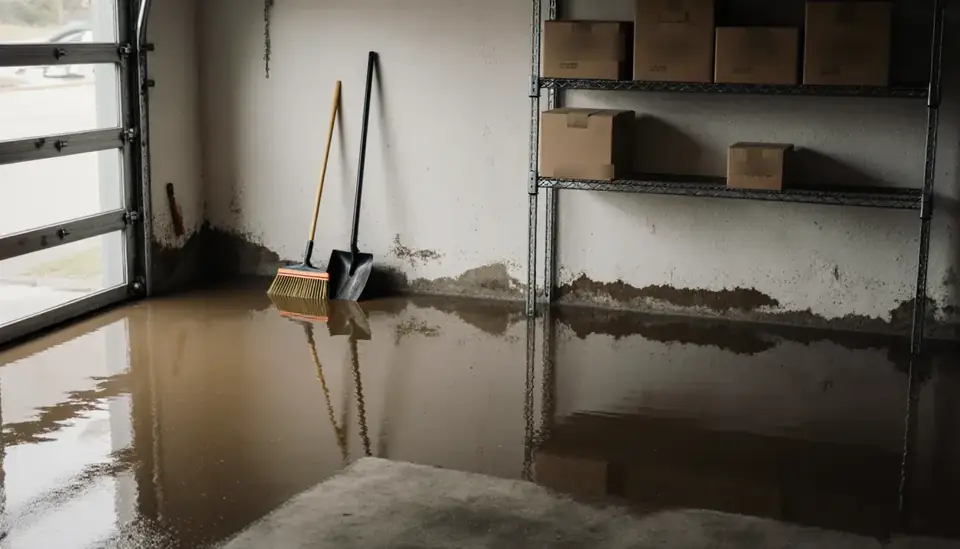
Each kind of storm leaves water problems behind. Tornadoes and high winds open roofs to rain. Heavy snow loads stress roofs and gutters, then melt into ice dams and leaks. After any of these events, tarp openings, remove wet contents and start drying quickly. Providers offering flood cleanup and storm work can handle both the debris and the moisture.
Boom-Era Buildings and Mill-Town Houses
Fort Payne boomed in the late 1880s on coal and iron, and the Fort Payne Boom Town Historic District along Gault Street preserves buildings from around 1889, including the opera house and the old depot. The Main Street Historic District covers the commercial core. In the twentieth century the hosiery mills shaped the town, and at their peak they made more than half of the socks made in the United States.
Older brick commercial buildings and early houses often have masonry that absorbs water, plaster walls, wood floors over crawl spaces and basements that were never designed to stay dry. Careful moisture mapping and controlled drying preserve more of the original material. Ask the provider to document readings throughout.
Cold Valley Nights, Burst Pipes and Mold
Cold air settles into the valley on clear winter nights, and the recorded low is 1 degree. That is cold enough to freeze supply lines in crawl spaces and exterior walls. Learn where your shutoff is, drip faucets during hard freezes and insulate exposed pipes before winter.
- Shut off the main as soon as you spot a burst line.
- Turn off power to wet rooms if the panel is in a dry location.
- Take photos before moving belongings.
- Keep wet materials from sitting more than a day or two.
Summer humidity in the valley turns lingering dampness into mold quickly. If growth appears after a leak, mold remediation with containment and removal should come before any rebuilding.

Sorting Out Insurance After Water Damage
Standard homeowners coverage usually handles sudden pipe bursts and storm openings in the roof. Water that rises from Big Wills Creek or flows across the ground into the house is flood damage, which requires a separate flood policy, often with a waiting period before it takes effect. Keep receipts, take dated photos and hold onto damaged materials for the adjuster. More guidance for the state is on the Alabama service area page.
Fort Payne Neighborhoods and Surrounding Towns
Calls come in from across Fort Payne, including:
- Fort Payne Main Street Historic District
- Fort Payne Boom Town Historic District
The same line also serves nearby communities such as:
- Rainsville
- Collinsville
- Valley Head
- Mentone
- Sylvania
- Hammondville
Questions From Fort Payne Property Owners
Does Big Wills Creek flood homes in Fort Payne?
Low ground along the creek and its tributaries can flood during intense or prolonged rain, especially when runoff pours off Lookout Mountain. Whether your property is at risk depends on its elevation and distance from the channel. Look it up on FEMA's Flood Map Service Center, and consider flood insurance even outside mapped zones, since homeowners policies exclude it.
Who should I contact for emergency information in DeKalb County?
DeKalb County Emergency Management is located on Grand Avenue SW in Fort Payne, and its contact information is listed on the Alabama EMA website. The National Weather Service in Huntsville issues watches and warnings for the county and posts damage surveys after tornadoes.
Our basement took water after a storm. Is drying it without a professional realistic?
Small amounts of clean water can sometimes be handled with a wet vac and dehumidifier, but water that came in from outside is considered contaminated, and soaked drywall, carpet and insulation should usually be removed. Moisture readings confirm when it is truly dry. Call (888) 317-9980 to be connected with an independent provider serving Fort Payne.