
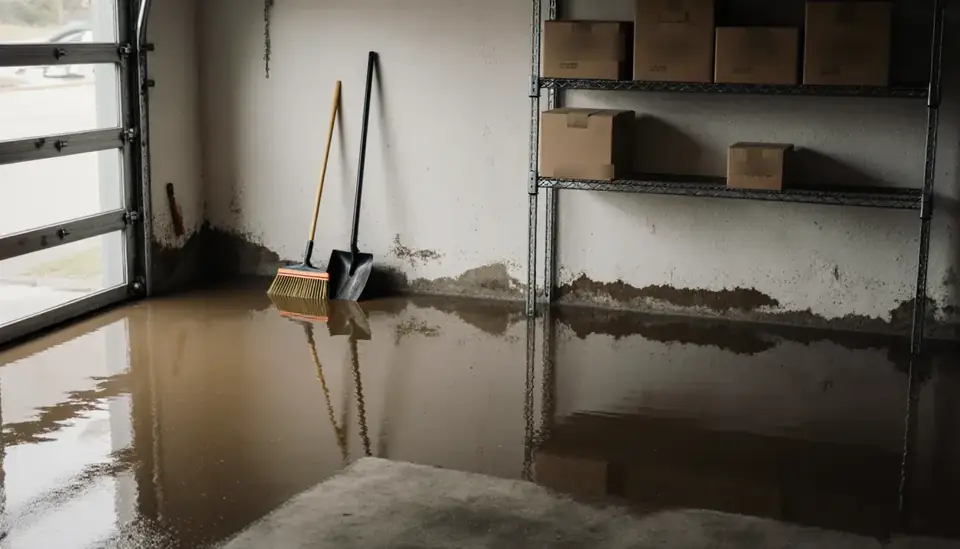
Floodwater that comes in from outside is a different problem from a burst pipe. Rising rivers, overwhelmed storm drains, storm surge and flash floods carry whatever they pass through, from soil and debris to sewage, fuel and farm runoff. Restoration providers treat it as Category 3, the most contaminated classification, and that changes nearly every decision about what can be kept.
The Restoration Job is a free service that connects callers with independent flood cleanup providers. We don't do the cleanup ourselves. This page covers what to expect, what to discard, and how flood insurance generally works, drawing on guidance from CDC, EPA, FEMA and Ready.gov.
Before You Go Back Inside
Return only when local authorities say it is safe. Floodwater can hide downed power lines and debris, and Ready.gov points out that just six inches of moving water can knock a person down. Once you're cleared to enter:
- Keep the power off until an electrician has checked any system that was underwater, and don't touch wet electrical equipment.
- Look for shifted foundations, cracked walls and sagging floors; if the structure looks unsound, stay out.
- Watch for snakes and other animals that may have moved indoors.
- Never run a portable generator or pressure washer inside the house, garage or basement, or near open windows. EPA advises keeping generators at least 20 feet from buildings because of carbon monoxide.
- Wear rubber boots, waterproof gloves, eye protection and an N95 respirator when handling flood-soaked materials, and keep children and pets away from the work.
Mud, Silt and Debris Removal
Flood cleanup is heavier work than most water losses. Receding water leaves mud and silt across floors, inside wall cavities, in ductwork and under appliances. Crews typically shovel and squeegee out the bulk while it is still wet, because dried silt hardens and turns into dust that spreads contamination. Debris is staged outside for hauling, and local governments often publish curbside sorting rules after a major flood, so watch for announcements from your city or county before piling everything at the street.
Hard surfaces such as concrete, tile, metal and sealed wood are washed with soap and water to remove soil, then disinfected. CDC suggests a mixture of one cup of household bleach per gallon of water for disinfecting after a flood, and warns never to mix bleach with ammonia or any other cleaner.

What Has to Be Thrown Out
Porous materials that soaked up floodwater generally can't be made safe again. EPA advises throwing away materials that absorb a lot of water and can't be cleaned and dried, and CDC lists wall coverings, cloth, rugs and drywall among items to discard. In practice that usually means:
- carpet and pad, upholstered furniture and mattresses;
- drywall and insulation below the water line and a margin above it;
- particleboard cabinets and furniture;
- pillows, stuffed toys and fabric items that can't be laundered in hot water;
- food, medicine and cosmetics that touched floodwater, plus food in containers that aren't waterproof.
Before discarding anything, photograph it and write down what it is. A flood adjuster may want to see damaged items or samples, so ask before the dumpster is hauled away.
Flood Cuts: Opening the Walls
A flood cut is a horizontal cut through drywall, commonly made a foot or more above the highest water line, running the length of each affected wall. Removing the lower section exposes wet insulation and framing so the cavity can be cleaned, disinfected and dried. Cutting at a consistent height, often two or four feet to line up with standard sheet sizes, also makes the rebuild simpler. Where water rose higher, full-height removal may be needed.
After the cut, crews pull the wet insulation, scrape silt off the bottom plate, and clean the framing. Studs must reach normal moisture levels before the wall is closed again, which the structural drying page explains. EPA notes that mold can grow on wet wood, drywall and carpet that stay wet for more than 24 hours, so speed matters; the mold remediation page covers what happens if growth has already started.
Flood Insurance Basics (NFIP)
FloodSmart, the National Flood Insurance Program's consumer site, states that most homeowners and renters policies do not cover flood damage. Flood coverage comes from a separate policy, through the NFIP, which FEMA manages, or a private insurer. A few points worth knowing:
- Waiting period: NFIP coverage generally takes effect 30 days after purchase, with limited exceptions, such as a policy bought in connection with a mortgage.
- Building and contents: NFIP policies split coverage between the structure and your belongings, and you only have the coverage you purchased.
- Basements: coverage in basements is limited, and FloodSmart suggests pairing building coverage with contents coverage to broaden what is covered there.
- Documentation: report the loss to your insurer quickly, photograph everything, and keep receipts for cleanup costs.
Without flood insurance, federal disaster assistance may be available after a presidential disaster declaration, but it is not a substitute for a flood policy.
Sanitation and Health During Cleanup
According to CDC, floodwater can carry human and livestock waste, household and industrial hazardous waste, and sharp objects. Wash your hands with soap and clean water after any contact and before eating. Cover cuts with waterproof bandages, and get medical attention if a wound turns red, swells or drains. Private wells and septic systems that were flooded need their own inspection before use.
Leave a flooded heating and cooling system off until it has been cleaned; EPA specifically says not to use an HVAC system affected by floodwater to help dry the house. For a connection to an independent flood cleanup provider in your area, call (888) 317-9980.
Frequently Asked Questions
Is flood damage covered by homeowners insurance?
Generally not. Standard homeowners and renters policies exclude flooding from outside sources such as rising rivers, storm surge and heavy rain that pools against the house. Flood coverage requires a separate policy from the National Flood Insurance Program or a private flood insurer. Damage from a burst pipe inside the home is a different cause of loss and is handled under the homeowners policy.
How high should a flood cut be?
Providers commonly cut a foot or more above the highest point where water or wicking reached, then square that line up to a convenient height such as two or four feet so replacement sheets fit neatly. If water stood higher than about four feet, or insulation is wet all the way up, removing the full wall height is often simpler.
Can hardwood floors be saved after a flood?
Usually not when floodwater soaked them for any length of time, because the wood absorbed contaminated water and often buckles off the subfloor. Some solid hardwood that was only briefly wet may be cleaned, dried and refinished, but that decision belongs to the provider and your adjuster after inspection. Engineered and laminate floors are nearly always replaced.
Can I do flood cleanup myself?
Homeowners do handle smaller jobs, especially in garages or unfinished spaces, if they use protective gear and follow CDC and EPA guidance. Larger losses involve heavy debris, contaminated wall cavities, and drying that is hard to verify without moisture meters. Many people start the work themselves and bring in a provider for demolition, disinfection and drying.
How soon should flood cleanup start?
As soon as authorities allow you back in and the structure and utilities are safe. Mold can start growing on wet materials within a day or two, and silt is far easier to remove before it dries. If you can't begin right away, take photos and remove what you can from the water to slow the damage.
Where this help is available
The The Restoration Job line takes calls from Florida, Georgia, Texas, Louisiana, Alabama, Mississippi, California, South Carolina, North Carolina, Tennessee, Arizona, New Mexico, Virginia, Maryland, Oregon, Washington, New York, New Jersey.