

Once the standing water is gone, most of the moisture in a water-damaged building is still there, held inside drywall, framing, subfloor, concrete and insulation. Structural drying is the controlled process of drawing that moisture out and removing it from the building before it causes swelling, warping or mold. It is less dramatic than extraction, but it decides which materials can be saved.
The Restoration Job doesn't own drying equipment or perform drying. We're a free phone service that connects callers with independent restoration providers in their area. Here is a plain-language look at how professional drying works, so you can follow what is happening in your home.
The Science, Without the Jargon
Psychrometrics is the study of air and the water vapor it carries. Drying depends on three things working together:
- Evaporation: water moves out of wet materials and into the air. Warmer materials and air moving across their surface speed this up.
- Humidity control: air can hold only so much water vapor. As it approaches saturation, evaporation slows to a crawl, so moisture has to be taken out of the air continuously.
- Removal: dehumidifiers pull water from the air and pump it to a drain, or damp air is exhausted outdoors when outside conditions are drier.
Technicians track temperature, relative humidity and a figure called grains per pound, which measures the actual weight of water in the air. Comparing grains in the drying area with the air leaving a dehumidifier shows whether the equipment is really removing water.
Air Movers and Dehumidifiers
Air movers are low, high-velocity fans aimed along walls and across floors to break up the layer of damp air that clings to wet surfaces. They are usually spaced around a room and angled in one direction to create a circular airflow. Some setups add specialty tools, such as systems that push air into wall cavities through small holes or under cabinets, or mats that draw moisture out of hardwood.
Dehumidifiers come in two main types:
- Low grain refrigerant (LGR) units chill air below its dew point so water condenses on cold coils. They work like a household dehumidifier but keep pulling moisture at much lower humidity levels, and they handle most residential jobs.
- Desiccant units pass air over a material that absorbs moisture, then use heat to release that moisture outside. They perform well in cold spaces such as unheated basements and crawl spaces in winter, and on dense materials like hardwood and concrete.
The number of units depends on room volume, the class of water damage and the materials involved. Running many air movers with too little dehumidification can raise indoor humidity and push moisture into dry areas instead of removing it.
Moisture Mapping and Drying Goals
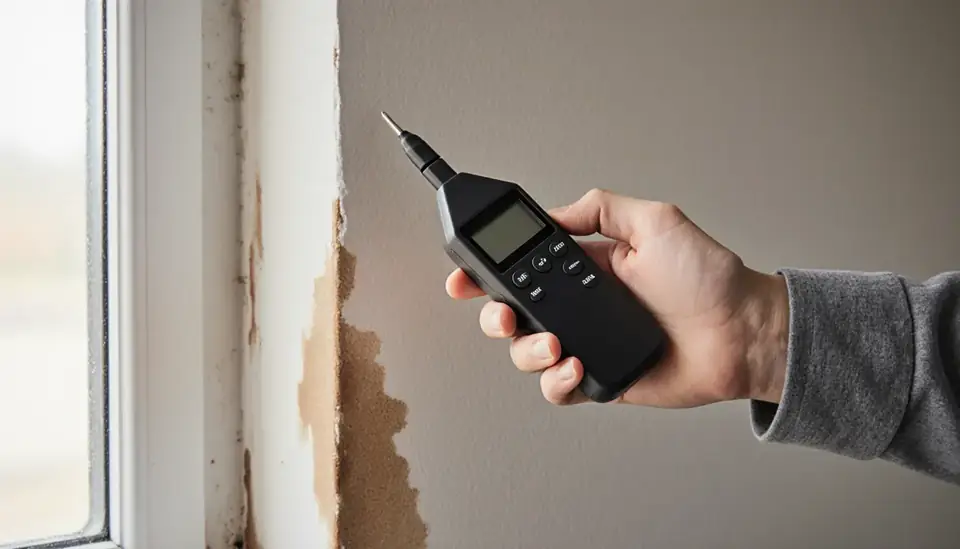
Before equipment goes in, a technician maps the wet area, probing and scanning walls, floors and ceilings with moisture meters and often a thermal imaging camera, then marking where readings return to normal. That map shows where drying has to happen and which materials might have to come out.
The target isn't zero moisture, because every building material holds some water under normal conditions. The usual approach is to take readings from the same material in an unaffected part of the house, known as a dry standard, and dry the damaged material back to that level. Readings are logged at the same marked spots on each visit, which documents progress and gives your insurer a record that drying was completed.
Hidden Moisture in Walls, Subfloors and Crawl Spaces
Some of the most damaging moisture is out of sight.
- Wall cavities: insulation and the back face of drywall stay wet long after the painted side feels dry, and vinyl wallcoverings or some paints slow drying further.
- Under flooring: water trapped beneath vinyl, laminate or tile, and in the subfloor below, can linger for weeks if nobody checks.
- Layered floors: plywood over plank subflooring, or flooring glued to concrete, may need layers removed to reach the wet one.
- Crawl spaces: wet soil, sagging insulation between joists and high humidity keep the floor above damp. Drying there often means removing wet insulation, dealing with standing water and running a dehumidifier in the enclosed space.
- Concrete slabs and basements: concrete gives up water slowly, and new flooring adhesives may fail if floors are installed too soon.
How Long Drying Usually Takes
For a typical clean-water loss involving drywall, carpet and framing, with a prompt response, drying often takes roughly three to five days. Treat that as a loose guide, not a promise. Things that stretch it out include:
- dense materials such as hardwood, plaster, brick and concrete;
- a delay before drying began;
- cold weather or very humid outdoor conditions;
- multiple layers of flooring or wall finishes that trap moisture;
- equipment being turned off or moved by occupants.
Drying is finished when readings meet the dry standard, not when a set number of days has passed. If the timeline you were given doesn't match what you're seeing, ask the provider to walk you through the moisture log. To be connected with an independent provider for drying services, call (888) 317-9980.
Keeping the Drying on Track at Home
A few habits help the equipment do its job:
- leave air movers and dehumidifiers running, overnight included;
- keep exterior doors and windows closed unless the technician says otherwise;
- keep the thermostat at a comfortable, moderately warm setting, since warmth helps evaporation;
- keep pets and children away from cords and equipment;
- tell the provider about musty odors, new stains or tripped breakers.
EPA recommends keeping indoor humidity below 60 percent, ideally between 30 and 50 percent, to discourage mold once the job is done. When readings meet the goal, the project moves to repair and reconstruction; the water damage restoration page shows how drying fits into the full process.
Frequently Asked Questions
Why not just open the windows to dry things out?
Sometimes that helps, but only when the outdoor air is drier than the air inside. On humid days, open windows let in more moisture and slow drying down. Professional drying usually performs better as a closed system, with dehumidifiers controlling the air and air movers speeding evaporation. Your technician can check outdoor and indoor conditions and tell you whether ventilation makes sense.
When can the drying equipment be turned off?
Only when the provider confirms the readings have reached the drying goal. Turning equipment off early, even overnight to get some quiet, lets humidity climb back up and can add days to the job. If noise or heat is a real problem, ask whether the setup can be adjusted rather than switching units off.
How do you know the inside of a wall is dry?
Technicians use penetrating moisture meters with pins pushed into drywall or framing, or non-invasive meters that read through the surface, and compare results with dry areas of the house. In some cases they drill small holes near the bottom of the wall to check the cavity directly or to inject air into it.
Will drying equipment raise my electric bill?
Yes, noticeably. Several air movers and a commercial dehumidifier running around the clock for several days use a meaningful amount of electricity. Some insurers reimburse the added cost when the loss is covered. Note your meter reading or save your bills from before and after the job, and ask your adjuster how to submit the difference.
Can wet hardwood floors be saved by drying?
Often, if drying starts quickly and the water was clean. Solid hardwood that cups during a leak can flatten again as moisture comes out, sometimes with the help of floor drying mats. Sanding should wait until the wood is fully dry, or boards may cup the other way. Engineered and laminate floors are less forgiving.
Where this help is available
The The Restoration Job line takes calls from Florida, Georgia, Texas, Louisiana, Alabama, Mississippi, California, South Carolina, North Carolina, Tennessee, Arizona, New Mexico, Virginia, Maryland, Oregon, Washington, New York, New Jersey.