
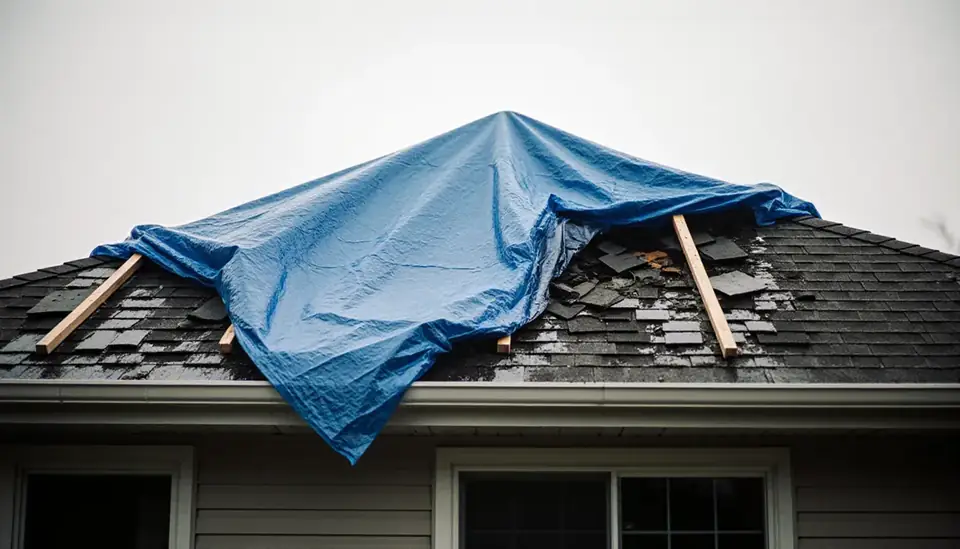
Storms damage buildings from the top down and from the outside in. Wind lifts shingles and peels back flashing, hail fractures roofing and siding, falling limbs puncture roofs, and wind-driven rain gets through gaps that stay dry in ordinary weather. Water that enters this way often travels a long distance before it shows up as a ceiling stain, so storm damage is frequently larger than it first appears.
The Restoration Job is a free call-connection service that puts callers in touch with independent providers handling storm cleanup, emergency tarping and water damage in their area. This page covers the first steps after a storm, the most common kinds of damage, and how to document everything for an insurance claim.
The First Day After the Storm
- Stay well away from downed power lines and anything touching them, and report them to the utility.
- Walk around the outside of the house and inspect from the ground. Don't climb onto a wet or damaged roof.
- Photograph and video all damage before you move debris or make temporary fixes, with wide shots and close-ups that include something for scale.
- Put buckets under active drips, move belongings away from leaks, and keep everyone out of rooms where a ceiling is bulging with water.
- Make reasonable temporary repairs to prevent further damage, and keep every receipt. Property policies generally expect owners to take reasonable steps to protect the home from additional loss.
Ready.gov recommends having a professional inspect damaged property before attempting cleanup or repairs, and contacting your insurance company to file a claim.
Emergency Tarping and Board-Up
Temporary protection keeps a damaged building from taking on more water while permanent repairs are scheduled. Roof tarping uses heavy polyethylene tarps that ideally extend over the ridge and are secured with wood battens fastened through the tarp, so wind can't get underneath. A tarp held down by a few bricks, or nailed straight through the plastic, often tears loose in the next storm.
Board-up covers broken windows, doors and wall openings with plywood to keep out rain, animals and intruders. Insurers commonly treat both services as emergency mitigation, but ask for itemized invoices and photos of the work for your file. Tarping means working on a damaged, slippery roof, so it is safer left to a crew with fall protection.

Wind-Driven Rain, Roof Leaks and Hidden Water
Wind pushes rain sideways and even upward, through soffit and ridge vents, window frames, siding laps and door thresholds. That water can soak attic insulation, run along rafters and pool on top of ceiling drywall well before a stain appears. Over the next several days, check for:
- new stains, bubbling paint or sagging in ceilings, particularly near exterior walls;
- damp or matted attic insulation and wet roof decking visible from inside the attic;
- swollen window sills, trim or flooring near exterior doors;
- a musty smell in closets or rooms on the side of the house that faced the wind.
Wet insulation and drywall need to be dried or removed promptly to head off mold; the structural drying page explains how providers dry ceilings and walls in place when possible.
Fallen Trees, Hail and Ice Dams
Fallen trees. A tree on a roof is a structural problem, not only a debris problem. Removal often takes a crane and a tree crew working alongside someone ready to tarp the opening immediately afterward. Don't try to cut a tree resting on a building yourself; releasing tension in the trunk can shift its weight without warning.
Hail. Hail damage to asphalt shingles shows up as dark spots where granules were knocked loose, cracks, or soft bruises you can feel. It may not leak right away, but it shortens the roof's life. Note the date of the storm, since claims are tied to the date of loss and policies set deadlines for reporting.
Ice dams. In cold climates, heat escaping into the attic melts snow on the roof, and the meltwater refreezes at the colder eaves and backs up under the shingles. The result is leaks along exterior walls in the middle of winter. The Insurance Information Institute lists damage resulting from ice dams among the losses standard homeowners policies cover.
Documenting Storm Damage for Insurance
Storm claims can involve several coverages at once: wind and hail under a homeowners policy, flooding under a separate flood policy, and in some coastal states a separate hurricane or windstorm deductible. Good records make each part easier.
- Note the date and time of the storm, and save weather alerts you received.
- Photograph the exterior, the roof (from the ground or with a zoom lens), fences, outbuildings, vehicles and every damaged room.
- Keep pieces of damaged material, such as torn shingles or soaked insulation, until the adjuster has seen them or approved disposal.
- Collect written estimates and itemized invoices for tarping, board-up, tree removal and water mitigation.
- Be cautious with contractors who knock on doors after storms, ask for large deposits, or offer to waive your deductible.
Preparing for Hurricane Season and Major Storms
Preparation cuts down on cleanup. Ready.gov recommends installing hurricane shutters or reinforcing windows, clearing drains and gutters, securing or bringing in outdoor furniture, and keeping important documents in a waterproof container with password-protected digital copies. A few other practical steps:
- Trim dead limbs and trees that overhang the roof.
- Record a video inventory of the house and belongings before the season starts.
- Check whether you carry flood insurance; standard policies don't include it, and NFIP coverage typically takes 30 days to begin.
- Learn where the main water shutoff and the electrical panel are.
Once a storm has done its damage, call (888) 317-9980 to be connected with an independent storm cleanup provider in your area. Storm surge and rising water inside the home are covered on the flood cleanup page.
Frequently Asked Questions
Will my homeowners policy pay for emergency roof tarping?
Many policies treat tarping as a reasonable step to prevent further damage after a covered storm, and reimburse it as part of the claim. Coverage depends on your policy and on whether the underlying damage is covered. Keep the invoice and photos of the tarp, and tell your adjuster it was done, rather than waiting for approval while rain keeps coming in.
Who removes a tree that fell on my house?
Usually a tree service with the right equipment, often coordinated with a restoration or roofing contractor who can cover the opening right after removal. Many homeowners policies include some coverage for removing a tree that damaged a covered structure, often with a dollar limit. Trees that fell in the yard without hitting anything are treated differently, so ask your insurer.
How can I tell whether hail damaged my roof?
From the ground, look for dented gutters, downspouts, vents and window screens, which often indicate the shingles were hit too. Granules collecting at downspout outlets are another clue. Confirming the damage requires a close inspection of the shingles, which is a job for a roofer or adjuster, not for climbing up yourself.
Should I wait to report storm damage until I know the full extent?
No. Report it promptly, since policies require timely notice and some states and insurers set deadlines for storm claims. You can usually add damage discovered later, such as a ceiling stain that shows up a week afterward, as a supplement to the same claim. Keep documenting as new problems appear.
Is storm damage the same as flood damage for insurance?
No. Water that enters through a roof or window damaged by wind is typically handled under a homeowners policy as wind damage. Water that rises from the ground, such as storm surge or overflowing streets, is flood damage and requires flood insurance. Many storms cause both, and adjusters will separate them.
Where this help is available
The The Restoration Job line takes calls from Florida, Georgia, Texas, Louisiana, Alabama, Mississippi, California, South Carolina, North Carolina, Tennessee, Arizona, New Mexico, Virginia, Maryland, Oregon, Washington, New York, New Jersey.