

Drying a building and rebuilding it are two different jobs. After wet materials have been removed and moisture readings are back to normal, what's left is a construction project: walls missing their bottom two feet, a kitchen without base cabinets, a floor stripped down to bare subfloor. That reconstruction phase is what most people mean by water damage repair.
This page covers how each common material is handled, how to decide between repairing and replacing, and what to verify before you hire anyone. The Restoration Job doesn't perform repairs; we connect callers with independent providers. Many restoration companies offer rebuild services alongside mitigation, while others hand that part off to general contractors.
Confirm It's Dry Before Anything Gets Closed Up
The costliest repair mistake is installing new materials over a structure that is still wet. Drywall hung on damp studs, or flooring laid over a subfloor that still holds moisture, seals water inside a cavity where it feeds mold and causes cupping, delamination or adhesive failure. A careful contractor verifies dryness with a moisture meter, comparing readings in the damaged area against the same materials in an unaffected room, before closing any wall or floor.
Ask for those final readings in writing. They protect you if problems surface later, and insurers frequently want them before paying the rebuild portion of a claim. If drying is still in progress, the structural drying guide explains what the targets look like.
Drywall, Insulation, Trim and Paint
Drywall that took on clean water briefly and dried quickly can sometimes stay. Gypsum board that has softened, swelled, sagged or crumbled along its bottom edge needs to go, and board exposed to contaminated water is generally removed no matter how it looks. Crews usually cut a straight, level line above the highest wet point so new sheets can be patched in cleanly.
- Insulation: wet fiberglass batts compress and lose much of their insulating value, and wet cellulose holds moisture for a long time, so both are usually replaced.
- Finishing: new drywall is taped, coated with joint compound in several passes, and sanded to blend with the existing wall texture.
- Paint: water stains bleed through ordinary latex, so a stain-blocking primer goes on first. Repainting the full wall from corner to corner hides the patch line.
- Trim and baseboard: MDF trim swells permanently once it absorbs water, while solid wood can often be pulled, dried and reinstalled.
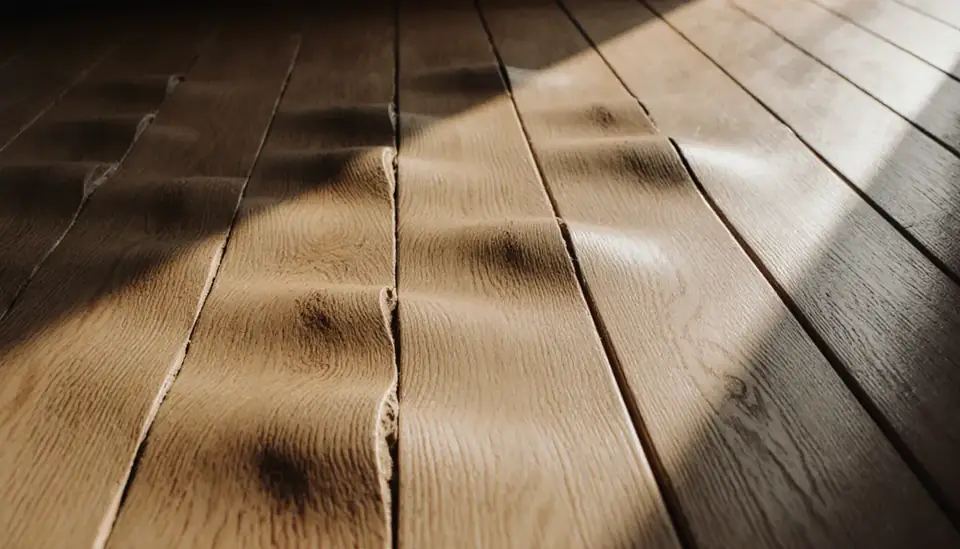
Flooring and Subfloor Decisions
What happens to a floor depends on the material and how long the water stayed on it.
- Solid hardwood often cups after a leak. When moisture is removed promptly, many boards flatten again and can be sanded and refinished; boards that stay cupped or crowned after drying, or that split or buckle off the subfloor, are replaced.
- Engineered wood and laminate have a fiberboard or plywood core that swells and rarely recovers. Replacement is the norm, and finding a match for a discontinued product can mean replacing flooring through connected rooms.
- Luxury vinyl plank tolerates water on its own, but moisture trapped beneath it still has to be dried, so planks are often lifted.
- Ceramic and porcelain tile usually survives; the question is whether water got beneath it into a wood subfloor or underlayment.
- Subfloor: delaminated plywood and oriented strand board that has swelled at the edges are commonly cut out and replaced in sections. Soft or spongy spots underfoot are a warning sign.
Cabinets, Countertops and Built-Ins
Kitchen and bathroom cabinet boxes are frequently built from particleboard, which swells and loses strength when it absorbs water. Toe kicks and cabinet floors take the worst of it. Sometimes a contractor can pull the toe kick and drill small holes to dry the cavity behind the cabinets, which saves the boxes. Other times the bases have to come out, which means removing the countertop as well.
Stone countertops can crack during removal, so ask how the contractor plans to handle them and who pays if one breaks. Cabinets built from solid wood or plywood have better odds of being dried and kept. Vanities, built-in shelving and window seats follow the same logic: the core material decides the outcome more than the finish does.
Repair or Replace: How the Decision Gets Made
Several factors determine whether a material stays or goes:
- the category of water it touched, since porous materials exposed to sewage or floodwater are generally discarded;
- how long it stayed wet, and whether there is visible growth or a lingering musty odor;
- whether its structure changed through swelling, delamination or loss of strength;
- cost, because drying and refinishing can exceed the price of new material in some cases;
- matching, particularly for flooring, tile and cabinetry that is no longer manufactured.
Policies differ in how they handle matching between damaged and undamaged areas, so talk it through with your adjuster before you pick new finishes. Insurers generally pay for materials of like kind and quality; upgrades beyond that are usually the owner's cost.
Permits, Contracts and Choosing a Contractor
Cosmetic work such as patching drywall and painting often needs no permit, but replacing wiring, outlets, plumbing, water heaters, HVAC equipment or structural framing usually does. Rules vary by city and county, so check with your local building department. In mapped high-risk flood areas, a building judged to be substantially damaged may have to be brought into compliance with current floodplain rules, and FEMA's Increased Cost of Compliance coverage on NFIP policies can help pay for that work.
Before you sign anything:
- Confirm the contractor holds any state or local registration your jurisdiction requires, and ask for proof of liability coverage.
- Get a written, itemized estimate that lists materials, scope and schedule.
- Avoid paying everything up front; tie payments to completed stages.
- Be wary of door-to-door solicitors after storms who press you to sign on the spot.
For help finding a restoration provider near you, call (888) 317-9980 or look through the service areas list.
Frequently Asked Questions
Should the same company handle drying and repairs?
It can be convenient. One company already knows the job, has the moisture records and can move straight from drying to rebuild. On the other hand, separating the two lets you get competitive bids on the reconstruction. Either approach works if the drying is documented and the repair contractor confirms the structure is dry before closing walls or laying floors.
How long does water damage repair usually take?
A drywall patch and repaint in one room might take a few days, partly because joint compound and paint need drying time between coats. Jobs that involve new cabinets, countertops or flooring often take several weeks, mostly due to ordering, fabrication and scheduling trades. Permit inspections add time when electrical, plumbing or structural work is part of the scope.
Can only the damaged section of a hardwood floor be replaced?
Sometimes. Installers can weave new boards into the existing floor, but getting the stain and sheen to match usually means sanding and refinishing the entire room or a continuous area. If the original wood species or width is hard to find, salvaged boards from a closet or other hidden spot are occasionally used to fill the visible area.
Does all drywall that got wet need to be replaced?
No. Drywall that was touched only by clean water, dried within a short time, and is still firm, flat and free of staining or odor can often stay. Drywall that softened, swelled, sagged or was exposed to sewage or floodwater should come out. Moisture readings and a firm press test along the bottom edge help decide.
Where this help is available
The The Restoration Job line takes calls from Florida, Georgia, Texas, Louisiana, Alabama, Mississippi, California, South Carolina, North Carolina, Tennessee, Arizona, New Mexico, Virginia, Maryland, Oregon, Washington, New York, New Jersey.