
Mold spores are present nearly everywhere, indoors and out. Moisture is what turns them into a problem. A leak that isn't dried in time, a damp crawl space or a slow drip behind a cabinet gives spores what they need to grow on drywall, wood, carpet and insulation. EPA guidance says that if wet materials are dried within 24 to 48 hours, mold won't grow in most cases, which explains why it so often follows water damage that wasn't caught or dried quickly.
The Restoration Job connects callers with independent mold remediation providers through a free phone line. We don't inspect, test or remove mold ourselves. This page explains how professional remediation generally works, when a homeowner can handle a small area, and what to check before hiring someone.
Fix the Moisture First
Remediation without fixing the water source doesn't last. Mold returns to the same spot if the plumbing leak, roof leak, condensation or high humidity that fed it is still there. EPA recommends fixing leaky plumbing and building envelope leaks as soon as possible. A sound remediation plan starts by identifying the moisture source, getting it repaired, and drying any remaining wet materials, a process covered on the structural drying page.
Musty odors, staining, peeling paint and warped materials near a past leak are the usual clues that moisture has been present long enough for growth to start, even when nothing is visible yet.
Containment, Air Filtration and Protective Gear
Disturbing mold releases spores, so professional remediation focuses on keeping them out of clean parts of the building. EPA's remediation guide for schools and commercial buildings, which many residential providers also follow, describes two levels:
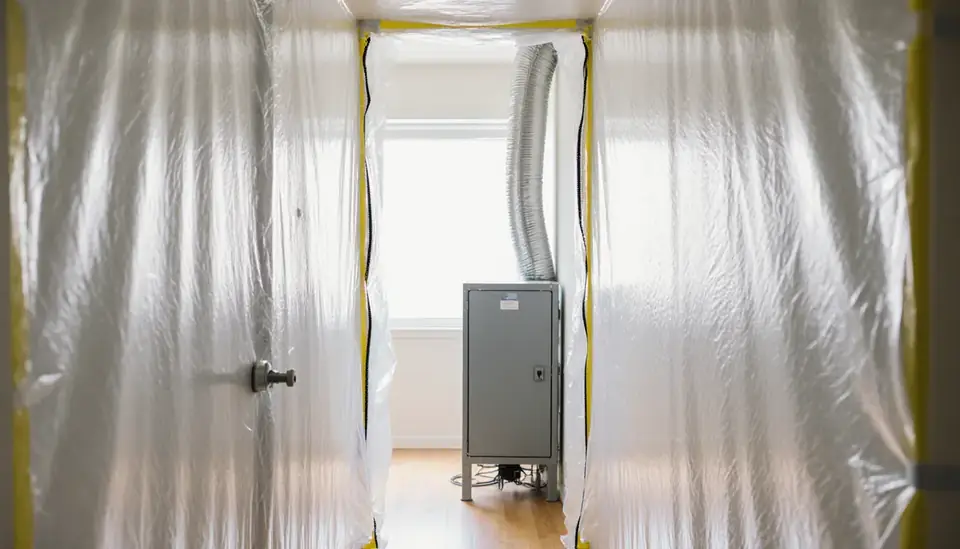
- Limited containment, generally recommended for roughly 10 to 100 square feet of contamination, encloses the work area with a single layer of polyethylene sheeting and a slit entry with a covering flap.
- Full containment, recommended for areas larger than 100 square feet, uses double layers of sheeting and a decontamination chamber or airlock for workers going in and out.
Inside the containment, air scrubbers with HEPA filters capture airborne spores, often exhausting outdoors to keep the work area under slight negative pressure. Workers wear respirators, gloves and eye protection; EPA calls for at least an N-95 respirator even for small cleanups. Supply and return vents in the area are sealed, and EPA advises against running a heating and cooling system that may be contaminated.
Removal vs Cleaning: What Happens to Each Material
The working rule: remove what can't be cleaned, clean what can, and dry everything.
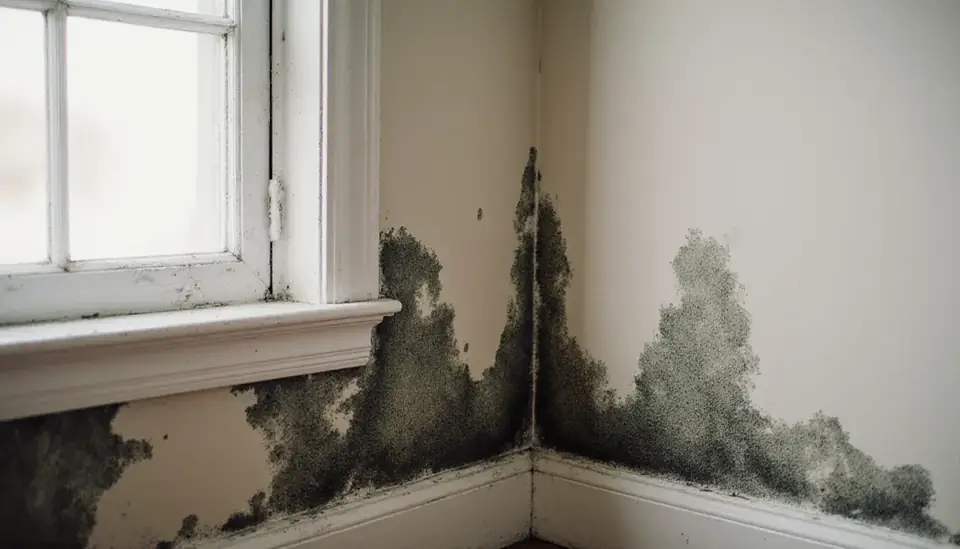
- Porous materials with growth, such as drywall, ceiling tiles, carpet and insulation, are generally cut out, bagged in heavy plastic inside the containment and discarded. EPA notes mold can fill the empty spaces in absorbent materials, which makes thorough cleaning impractical.
- Semi-porous materials like framing lumber and wood subfloor can often be cleaned by scrubbing, sanding or wire brushing the surface growth, followed by HEPA vacuuming, as long as the wood is still sound.
- Non-porous surfaces such as metal, glass and hard plastic are cleaned with detergent and water and dried.
EPA does not recommend biocides such as chlorine bleach as a routine part of remediation, because the goal is to remove mold rather than simply kill it, and EPA notes that dead mold may still cause allergic reactions in some people. Some providers apply antimicrobial products as part of their process, so ask what they use and why. A final HEPA vacuuming of the work area is standard practice.
Is Mold Testing Necessary?
Often it isn't. EPA's position is that sampling is usually unnecessary when mold growth is visible, and there are no federal limits for mold or spores to compare results against. Testing becomes more useful when you smell mold but can't find it, when a sale, lease or dispute calls for documentation, or after remediation to confirm the area was cleaned to an acceptable level, sometimes called clearance testing.
When testing is done, it is generally preferable to have it performed by someone independent of the company doing the removal, to avoid a conflict of interest. Ask how samples will be taken, which lab will analyze them, and how results will be interpreted before you pay for them.
When DIY Cleanup Is Reasonable
According to EPA, homeowners can usually handle cleanup themselves when the moldy area is less than about 10 square feet, roughly a three-by-three-foot patch. For a small area on a hard surface:
- wear an N-95 respirator, gloves and goggles;
- scrub with detergent and water, then dry the surface completely;
- bag and discard small porous items that have mold on them;
- never mix bleach with ammonia or other cleaning products.
Bring in a professional when the area is larger, when growth is inside walls or ductwork, when the moisture came from sewage or floodwater, or when anyone in the home has asthma, allergies, a weakened immune system or other health concerns. Painting or caulking over mold doesn't solve anything; EPA notes that paint applied over moldy surfaces is likely to peel.
State Mold Licensing Rules Vary
There is no single national rule for who may perform mold work, and several states run their own programs. Florida's Department of Business and Professional Regulation issues licenses to individual mold assessors and mold remediators. Texas requires non-exempt mold assessors and remediators to hold a license from the Texas Department of Licensing and Regulation. New York's Department of Labor runs a mold program that covers assessment and remediation contractors. In Louisiana, the State Licensing Board for Contractors has a mold remediation classification that applies once a job exceeds a set dollar value.
Requirements change, and many states have none, so check your state's licensing agency directly instead of relying on a contractor's description. Where a license applies, ask for the number and look it up yourself. For help reaching an independent remediation provider in your area, call (888) 317-9980.
Frequently Asked Questions
How fast does mold grow after water damage?
Growth can begin within a day or two on materials that stay wet. EPA's flood guidance notes that mold can grow on wood, drywall, carpet and furniture left wet for more than 24 hours, and its general guidance points to drying within 24 to 48 hours as the way to prevent it in most cases. Visible colonies often take longer to appear.
Can I just spray bleach on mold?
EPA doesn't recommend bleach or other biocides as a routine remediation step. On porous materials like drywall and wood, bleach can lighten the stain without removing growth below the surface, and dead mold can still cause reactions. For small areas on hard surfaces, scrubbing with detergent and water and drying thoroughly is the approach EPA describes.
Does homeowners insurance cover mold remediation?
It depends heavily on the policy. Mold that results from a sudden, covered water loss, such as a burst pipe, may be covered, often subject to a lower dollar limit. Mold from long-term leaks, ongoing humidity or lack of maintenance is commonly excluded. Read the mold language in your policy and ask your adjuster before work starts.
Should I test for mold before hiring a remediation company?
Not usually, if you can see the growth and know where the moisture came from. Testing makes more sense when the source is hidden, when you need documentation for a transaction or dispute, or for clearance after the work is finished. Consider using an assessor who isn't affiliated with the company doing the removal.
Can I stay home during mold remediation?
For a contained job in one area, many households stay, since containment and negative air pressure are meant to keep spores in the work zone. Larger projects, work near bedrooms or HVAC equipment, or anyone in the household with respiratory conditions or a weakened immune system are good reasons to plan time away. Ask the provider for their recommendation.
Where this help is available
The The Restoration Job line takes calls from Florida, Georgia, Texas, Louisiana, Alabama, Mississippi, California, South Carolina, North Carolina, Tennessee, Arizona, New Mexico, Virginia, Maryland, Oregon, Washington, New York, New Jersey.