
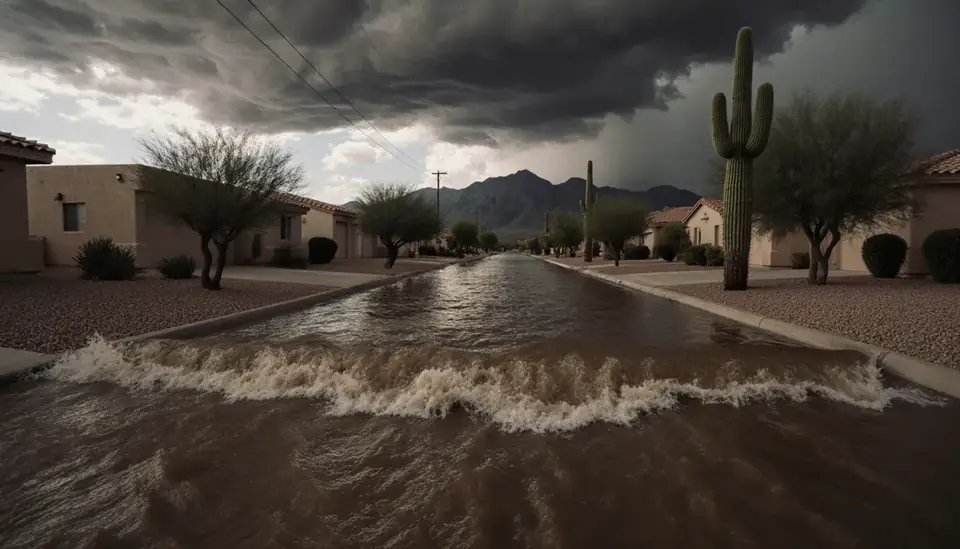
Arizona's water problems arrive fast and leave quickly, which is exactly what makes them easy to underestimate. The North American Monsoon officially runs from June 15 to September 30, and its thunderstorms can drop heavy rain on one neighborhood while the next one stays dry. Washes that sit empty for months fill in minutes, roofs that looked fine in May start leaking in July, and wind-driven rain pushes water past windows and doors that rarely see weather.
The Restoration Job is a free referral line, open 24/7 at (888) 317-9980. We connect callers with independent, third-party restoration providers that serve their area, whether that is Phoenix, Tucson, Flagstaff or Yuma. We don't do the work ourselves. Providers often offer emergency service for water damage restoration, but scheduling depends on the company and how busy a storm week gets.
Monsoon Thunderstorms and Flash Flooding in the Washes
The National Weather Service treats flash flooding as the greatest monsoon hazard, warning that just 12 inches of moving water can sweep a car off the road. Southern Arizona has thousands of low-water crossings and dips that flood during summer storms. For homeowners the risk is less dramatic but more frequent: runoff from a nearby wash or a neighbor's lot sheeting across a yard and into a garage, desert landscaping graded toward the house, and storm drains that cannot keep up with an inch of rain in under an hour.
Thunderstorm winds add to it. The NWS Tucson office notes straight-line winds frequently exceed 40 mph and the strongest gusts can top 100 mph, which can lift roofing, break windows and drive rain into walls. Northern Arizona gets 40 to 50 percent of its annual precipitation during the monsoon, and storms in the high country can also bring debris flows below wildfire burn scars.
Flat Roofs, Slab Homes and Plumbing Leaks
Much of the Phoenix and Tucson housing stock is slab-on-grade, often with flat or low-slope roof sections drained by scuppers and canales. Those roofs need clear drains and intact coatings; when debris blocks a scupper during a downpour, water ponds and finds the weakest seam. Ceiling stains after the first big monsoon storm are one of the most common Arizona water damage calls.
Inside the house, hard water and high summer temperatures are tough on water heaters, supply lines and fixtures. A pinhole leak in a pipe under a slab can soak flooring and baseboards for weeks before it shows. Many water heaters sit in garages or closets, and evaporative coolers and AC condensate lines can overflow onto ceilings when their drains clog. Higher-elevation towns such as Flagstaff, Prescott and Show Low also deal with winter freezes, so burst pipes in exterior walls and unheated spaces are a cold-season concern there.
Drying Out After a Storm or Leak in the Desert
Dry air helps drying, but it does not dry the inside of a wall or the underside of a slab-laid floor on its own. Monsoon season also brings the most humid weeks of the year, which slows drying just when storm damage peaks. A restoration provider will usually remove standing water, open up wet drywall and baseboards where needed, and set dehumidifiers and air movers for structural drying, checking moisture readings until materials reach normal levels.
- Shut off the water or the breaker to affected areas if it is safe to do so
- Photograph damage and the source before anything is moved
- Move rugs and furniture off wet floors and lift drapes away from walls
- Keep stormwater that carried mud or sewage separate in your mind from a clean supply-line leak, since it calls for different cleaning
Mold can still take hold in Arizona, especially behind cabinets, under sinks and in walls that stayed wet after a slow leak. Visible growth over a larger area should be handled through mold remediation with proper containment.
Flood Insurance, Emergency Management and Arizona Contractors
Homeowners policies generally exclude flooding from surface water, including runoff from washes, so flood coverage has to be bought separately through the National Flood Insurance Program or a private insurer. FEMA's Flood Map Service Center shows mapped flood zones, but monsoon flooding regularly affects properties outside them, and NFIP policies usually carry a waiting period before coverage starts.
The Arizona Department of Emergency and Military Affairs, through its Division of Emergency Management, coordinates statewide disaster response, and county emergency management offices issue local alerts. The Arizona Registrar of Contractors oversees construction contractors and encourages consumers to check a contractor's license before hiring; confirm current requirements with the Registrar for repair and rebuild work.