
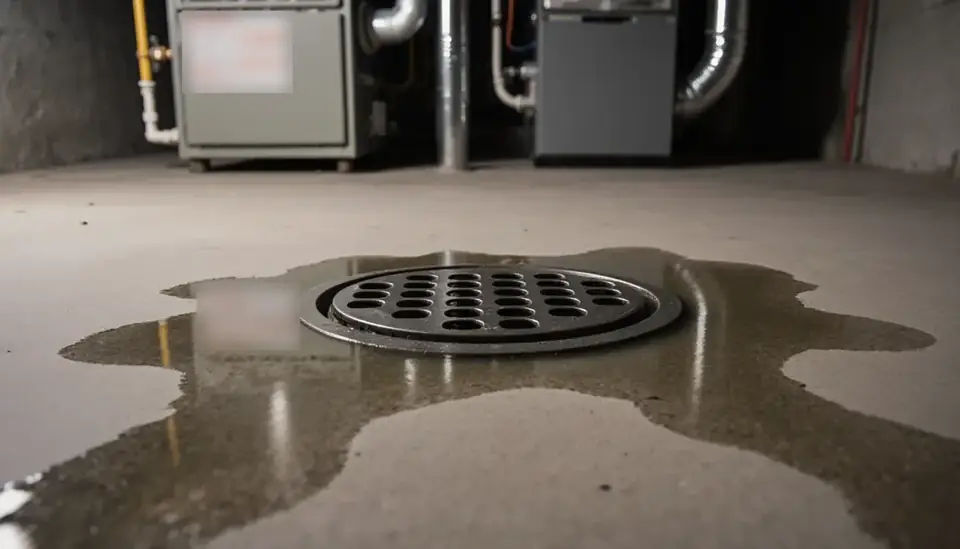
Few household emergencies are as unpleasant as sewage coming up through a floor drain, toilet or shower. Backups usually happen when a main sewer line clogs with roots, grease or debris, when a pipe collapses, or when heavy rain overwhelms a municipal system and pushes wastewater back toward homes. Whatever the cause, the water carries bacteria, viruses and parasites and is treated as Category 3, the most contaminated classification used in restoration.
The Restoration Job is a free service that connects callers with independent sewage cleanup providers. We don't perform the cleanup. Below is what to do right away, what professional cleanup involves, and how insurance tends to treat sewer backups.
Immediate Steps and Health Precautions
- Stop using water in the house: no flushing, showers, laundry or dishwashing, since whatever goes down a drain may come right back up.
- Keep children, pets, older adults and anyone with a weakened immune system or open wounds out of the affected area.
- Turn off electricity to the area only if you can reach the panel without walking through the water.
- Wear rubber boots, waterproof gloves and eye protection if you have to go in, and wash your hands well with soap and clean water afterward and before eating.
- Avoid tracking contamination into clean rooms; take off footwear at the edge of the affected space.
- Ventilate with windows if the weather allows, and shut off the heating and cooling system if its return or ductwork is in the affected area.
- Call a plumber or your local sewer utility to find out whether the blockage is in your line or in the public main.
CDC warns never to mix bleach with ammonia or any other cleaner, a real risk when people grab every product under the sink.
Your Sewer Line or the City's?
Responsibility for the sewer system is usually divided. In many places the property owner is responsible for the service line, or lateral, running from the house to the public sewer, while the municipality maintains the main. Where that dividing point falls varies by locality. If a city main backed up, notify the utility promptly, since some municipalities have their own claim procedures and filing deadlines.
A plumber's camera inspection can show whether roots, a sag, a break or a grease blockage in your own line caused the problem. Keep that report and any video; it is useful for an insurance claim and for preventing a repeat.
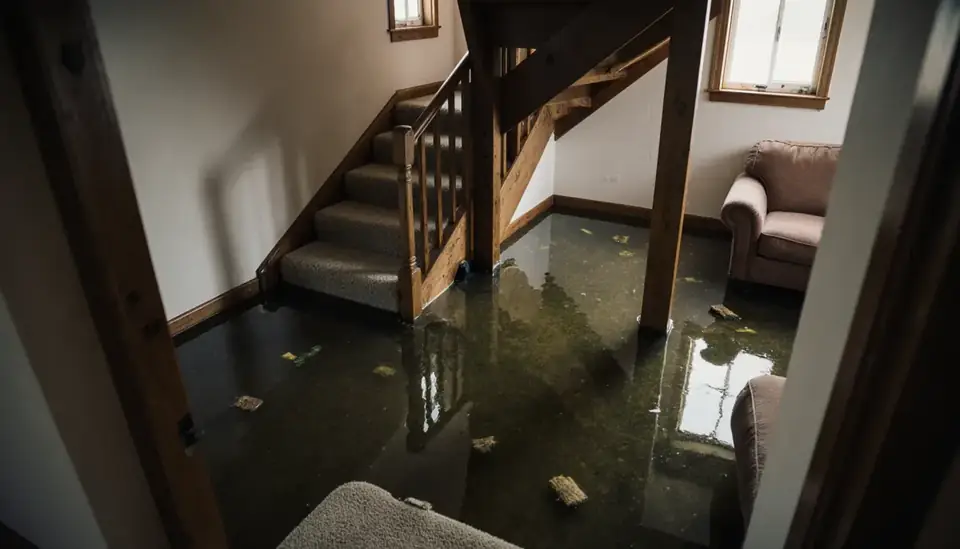
What Professional Sewage Cleanup Involves
Sewage cleanup crews work in protective suits, gloves, boots and respirators. A typical sequence looks like this:
- Isolating the affected area from the rest of the home with barriers.
- Pumping or extracting liquid and solid waste.
- Removing and bagging contaminated porous materials.
- Cleaning every remaining surface with detergent to remove soil and organic matter, then applying a disinfectant.
- Drying the structure with air movers and dehumidifiers, using moisture readings to confirm it is dry.
- Deodorizing where odor lingers.
Cleaning comes before disinfecting because disinfectants don't work well on surfaces still coated in organic material. The drying portion is described on the structural drying page.
What Gets Thrown Away
Because sewage contains pathogens, the rules for porous materials are strict. Items that absorbed sewage are generally discarded rather than cleaned:
- carpet and pad, including most area rugs;
- drywall and insulation that contacted the water, usually removed to a line above the wet area;
- upholstered furniture, mattresses and box springs;
- particleboard and MDF furniture, cabinets and trim;
- cardboard boxes and paper contents, books and stuffed toys;
- exposed food, medicine and personal-care products.
Hard, non-porous items such as metal, glass, ceramic and solid plastic can usually be cleaned and disinfected, and some clothing can be washed in hot water depending on the fabric. Photograph everything before it is removed and keep a list for your claim.
Insurance and the Sewer Backup Endorsement
This is where many homeowners get an unwelcome surprise. According to the Insurance Information Institute, sewer backups are not covered under a typical homeowners policy, and protection generally requires adding a separate endorsement, often called water backup or sewer backup coverage. Flood insurance doesn't automatically fill that gap either, because the cause of the backup matters. A few things to check:
- whether your policy has a water backup or sump pump overflow endorsement, and its dollar limit, which may be lower than the cost of cleaning a finished basement;
- whether the endorsement carries its own deductible;
- how your policy treats a backup caused by outside flooding compared with a blockage in your own line.
If you don't have the endorsement, ask your agent about adding it once the cleanup is behind you, since new coverage generally applies only to future losses.
Preventing the Next Backup
- Backwater valve: the Insurance Information Institute recommends installing and maintaining a backwater valve, which lets sewage flow out but not back in. Installation generally calls for a plumber and, in many jurisdictions, a permit.
- Grease and wipes: keep cooking grease out of drains, and don't flush wipes, even ones labeled flushable.
- Tree roots: if your line has had root intrusion before, periodic camera inspections can catch trouble early.
- Downspouts and sump pumps: make sure they discharge outdoors, away from the foundation, rather than into a floor drain or the sanitary line.
- Floor drain plugs: standpipes or plugs on basement floor drains can reduce backups during heavy rain.
If sewage has already backed up, call (888) 317-9980 and we'll connect you with an independent cleanup provider that serves your area. Backups caused by outside flooding are addressed on the flood cleanup page.
Frequently Asked Questions
Is it safe to clean up a sewage backup myself?
A small backup confined to a hard, unfinished floor, such as a few gallons around a basement floor drain, can be handled with protective gear, detergent, disinfectant and good ventilation. Anything that reached carpet, drywall or finished living space, or that involved a large volume, is better handled professionally because of the pathogens involved and the need to remove and dispose of contaminated materials.
Can carpet be saved after a sewage backup?
Generally no. Carpet and pad absorb sewage throughout their fibers and backing, and they can't be reliably disinfected. Wall-to-wall carpet and pad are removed and discarded, and most area rugs are too. A valuable rug might be evaluated by a specialty cleaner, but that is the exception rather than the rule.
Does homeowners insurance cover a sewage backup?
Typically only if you added a water backup or sewer backup endorsement. Without it, the standard policy usually excludes the loss. If a municipal main caused the backup, the city or sewer district may have a claims process of its own, although liability rules vary. Report the loss to your insurer either way and keep detailed records.
How do I know whether the backup is my responsibility or the city's?
If only your home is affected and the backup appears when you run water, the blockage is likely in your own line. If neighbors have the same problem, or it happened during heavy rain, the public main may be involved. Your sewer utility can check its side, and a plumber's camera inspection can confirm the condition of yours.
When can the affected area be used again?
After contaminated materials are removed, every surface is cleaned and disinfected, and the structure is confirmed dry with moisture readings. Depending on the size of the area, that may take several days or longer. Ask the provider how they confirm the work is complete before you move belongings back or start rebuilding.
Where this help is available
The The Restoration Job line takes calls from Florida, Georgia, Texas, Louisiana, Alabama, Mississippi, California, South Carolina, North Carolina, Tennessee, Arizona, New Mexico, Virginia, Maryland, Oregon, Washington, New York, New Jersey.