
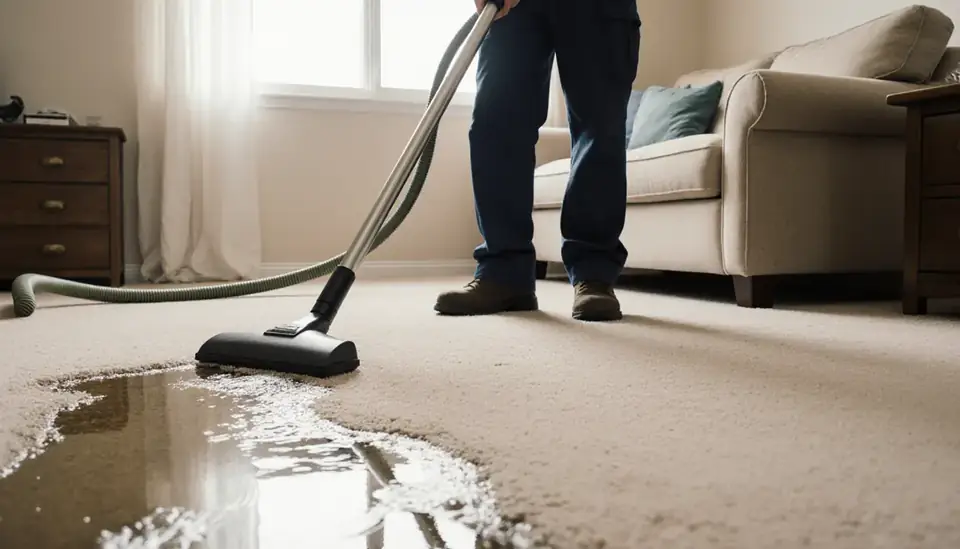
Standing water does most of its harm early. Every hour it sits, more of it wicks up drywall, soaks into carpet cushion and seeps under baseboards and flooring. Extraction, the physical removal of liquid water, makes every later step faster and cheaper, because pulling water out mechanically is far more efficient than evaporating it with drying equipment afterward.
The Restoration Job connects callers with independent water removal providers through a free phone line that is answered around the clock. We don't operate any equipment ourselves. Below is what extraction involves, how providers decide what to keep, and what you can safely do before help arrives.
Safety First: Electricity, Gas and Sagging Ceilings
Electricity is the main danger in the first hour. Don't wade into a flooded room if outlets, power strips, extension cords or appliances are underwater, or if water is near the electrical panel. If you can reach the panel from a dry location, switch off the circuits serving the wet area; if you can't, stay out and call the utility or an electrician. Ready.gov warns against touching electrical equipment that is wet or while you are standing in water.
- Leave right away if you smell gas, and call the gas utility once you are outside.
- Stay out from under ceilings that bulge or sag. A ceiling holding water can come down without warning.
- Treat water from a toilet, floor drain or the outdoors as contaminated, and avoid skin contact with it.
What You Can Do While Waiting
Once the area is safe and the water has stopped, a few steps limit the damage:
- Close the main water valve if the leak can't be isolated at the fixture.
- Photograph the scene before you move anything, for the insurance claim.
- Carry electronics, paperwork, rugs and small furniture out of the water, and set heavier furniture legs on foil or plastic blocks so they don't stain the carpet.
- Pin draperies and bed skirts up off the floor.
- Mop or blot small amounts of clean water on hard floors. Use a wet/dry vacuum only if it is designed for water and plugged into a dry, GFCI-protected outlet away from the wet area.
- Open interior and cabinet doors so air can circulate. If outdoor air is cooler and drier than indoor air, opening windows helps; in hot, muggy weather, keep them shut and run the air conditioning if that system wasn't affected.
Never use a household vacuum on wet carpet, and leave ceiling lights and ceiling fans off in any room where water came through the ceiling.
Truck-Mounted vs Portable Extraction Units
Restoration providers generally bring two kinds of extraction equipment. Truck-mounted units stay in the service vehicle, with hoses run into the building. They produce strong suction and handle large volumes, which suits big losses and wet carpet spread across several rooms. Portable extractors are carried inside and run off household outlets or a generator. They are slower, but they reach upper floors, high-rise units and places where a hose run from the street isn't practical.
When water is deep, crews often start with submersible pumps and switch to extractors once it is down to an inch or so. On carpet, weighted extraction tools that a technician stands on compress the carpet and pad and pull out far more water than a standard wand. Hard floors are squeegeed and vacuumed, and some providers use suction mats that draw water out of hardwood boards.
Carpet and Pad: What Stays and What Goes
Carpet and the cushion under it are treated differently. The pad acts like a sponge, costs relatively little and is hard to dry in place, so it is frequently pulled out while the carpet itself is saved. Common rules of thumb:
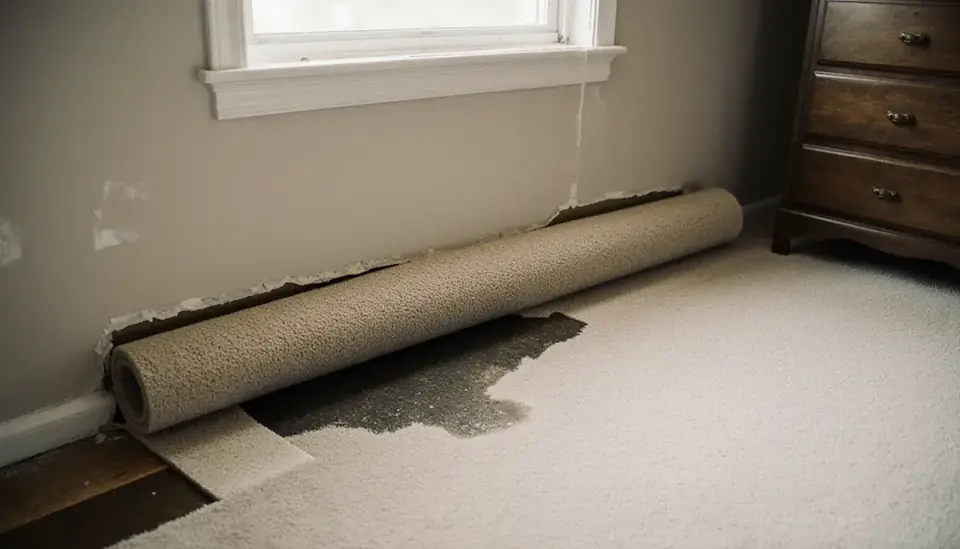
- Clean water, caught quickly: the carpet can often be extracted, lifted at the edges and dried with air blown beneath it, a technique called floating. The pad may be dried in place or replaced.
- Category 2 water from appliances: the pad is usually thrown out, and the carpet may be cleaned and kept depending on how long it was wet.
- Sewage or outside floodwater: carpet and pad both go. The flood cleanup page explains why.
- Delamination: if the backing separates from the face fibers after soaking, the carpet won't lie flat again and has to be replaced.
Where Water Hides After the Floor Looks Dry
Removing the visible water is only the beginning. Water runs downhill and along framing, so it often ends up under cabinets, beneath tile or vinyl, inside wall cavities, and in the ceiling of the room below a second-floor leak. A thorough extraction visit ends with the technician checking the perimeter of the wet area with a moisture meter to see how far it spread, then setting structural drying equipment to deal with the moisture a vacuum can't reach.
EPA guidance notes that in most cases mold won't grow if wet materials are dried within 24 to 48 hours of a leak, which is why the extraction visit matters so much. To be connected with an independent provider for emergency water removal, call (888) 317-9980.
Frequently Asked Questions
How quickly should standing water be removed?
As soon as it is safe to do so. Removal in the first few hours limits how much water soaks into walls, cabinets and subfloor, and it gives the drying phase a realistic chance of finishing inside the 24 to 48 hour window that EPA associates with preventing mold. Waiting overnight is common, but waiting days usually means more materials end up being removed.
Can a shop vac handle water extraction?
For a small amount of clean water on hard floors, a wet/dry vacuum works well, as long as it is plugged into a dry, protected outlet. It can't compress carpet and pad the way professional weighted tools do, so water stays trapped underneath. For more than a small area, or any water that has soaked into carpet, professional extraction removes much more.
Is it safe to stay in the house with standing water?
It depends on the source and where the water is. Clean water confined to one room, with power off to that area, usually isn't a reason to leave. Water from sewage or outside flooding, water near the electrical panel, a gas smell, or a sagging ceiling are all reasons to stay out of the affected area or leave the house until it is checked.
Does fast extraction mean my carpet can be saved?
It improves the odds. Carpet that held clean water and was extracted and dried promptly is often reused, sometimes with new pad. Carpet that soaked in contaminated water, stayed wet for days, or began to delaminate usually isn't worth saving. The provider should explain which situation applies before anything is removed.
What if the water is coming from a neighbor's unit?
Stop what you can on your side, then notify the neighbor and building management right away so the source can be shut off. In condos and apartments, association documents and each owner's policy determine who pays for what, so photograph everything and report the loss to your own insurer as well. Extraction in your unit shouldn't wait for those questions to be settled.
Where this help is available
The The Restoration Job line takes calls from Florida, Georgia, Texas, Louisiana, Alabama, Mississippi, California, South Carolina, North Carolina, Tennessee, Arizona, New Mexico, Virginia, Maryland, Oregon, Washington, New York, New Jersey.