
Flowing Wells packs more than 15,600 people into under four square miles on Tucson's northwest side, hemmed in by Interstate 10 to the west, the Rillito River to the north and the city of Tucson on the other two sides. At roughly 4,100 residents per square mile, homes sit close together, and one storm cell can affect a whole block at once. The community has its own school district and won an All-America City Award in 2007.
For residents dealing with a soaked floor, ceiling stain or backed-up drain, The Restoration Job offers a free referral line at (888) 317-9980, answered 24/7. We connect callers with independent restoration providers that work in Flowing Wells and the rest of the Tucson area. We do not send crews ourselves; the provider you speak with sets the schedule, scope and price.
How the call works: when you call (888) 317-9980, The Restoration Job connects you with an independent restoration provider that serves Flowing Wells. That provider inspects the damage, explains the scope and quotes the work. The Restoration Job doesn't perform restoration itself. Read our referral disclosure.
Living on the South Bank of the Rillito
The Rillito runs about 12 miles east to west across northern Tucson, formed where Tanque Verde Creek meets Pantano Wash and ending at the Santa Cruz River. It was once a year-round stream lined with cottonwoods and willows; groundwater pumping dried it out, and today it flows only after heavy rain. Dry or not, it still drains a huge area of the Santa Catalina and Rincon mountains.
During the October 1983 flood the Rillito ran so hard that it cut its banks back about 100 feet in places, taking out a parking lot and an office building. The National Weather Service lists a record flow of 29,700 cubic feet per second on the Rillito in that event. Much of the channel has since been lined with soil cement to hold the banks, which has reduced erosion risk for nearby property, but the river can still rise fast when storms sit over the mountains.
Street Runoff and Sewer Backups in a Dense Grid
Most water damage calls in Flowing Wells have less to do with the river than with what happens on the street during a monsoon cell. NWS Tucson says the city averages about 5.7 inches of rain during the June 15 to September 30 monsoon, and much of that can fall in bursts of an inch or more in under an hour. Water sheets off roofs, driveways and pavement faster than drains can take it, and low entries, sunken patios and garages take the overflow.
Heavy runoff can also stress sewer lines. In a December 1965 flood, the Rillito ruptured sewage lines in the Tucson area and contaminated several wells. Modern systems are far sturdier, but a drain that gurgles or backs up into a tub or floor drain during a storm is a warning sign. Backed-up wastewater is a different job from clean water: it calls for protective gear, removal of porous materials it touched and disinfection. Ask for sewage cleanup specifically so the provider brings the right setup.

When a Leak Crosses Into the Next Unit
In a rental, an apartment or a duplex, a leak usually becomes more than one person's problem. A few points that help sort things out:
- Tenants should report water to the landlord or property manager in writing right away, with photos, and save anything damaged until the insurer sees it.
- The building owner's policy generally covers the structure; a renters policy, if you have one, covers your belongings.
- If water comes from an upstairs unit, shut off its supply valve if you can reach it, or ask management to do it.
- Unplug electronics and lift cords off wet floors before anyone starts mopping.
Slab Floors, Monsoon Humidity and Mold
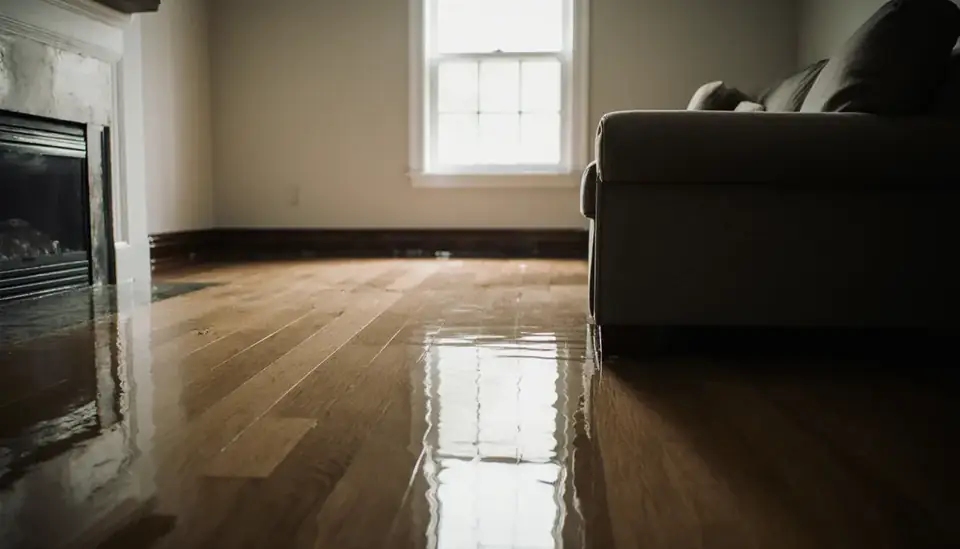
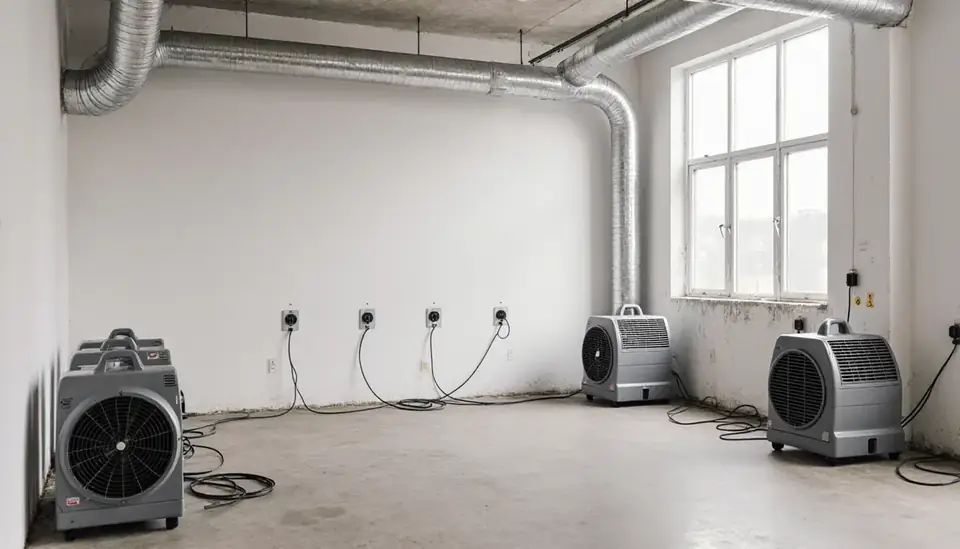
Most Tucson-area homes are built slab-on-grade, so standing water does not drain into a crawl space; it sits on the slab and soaks up into baseboards, drywall and cabinet bases. Professional structural drying usually means pulling up wet carpet pad, opening baseboards or drilling small holes at the bottom of walls, and running dehumidifiers and air movers for several days while readings are checked. Closets and the backs of kitchen cabinets are where water hides longest.
Monsoon season adds humidity to the mix. Wet drywall in a warm, closed room can show mold spots within a few days, often first behind furniture or along the bottom of walls. If you notice a musty smell after a leak was cleaned up, ask for moisture readings before repainting or replacing flooring. Covering a damp wall only hides the problem.
Flood Coverage Outside the Mapped Floodplain
Homeowners and renters policies typically exclude damage from surface flooding, the kind that comes in under a door from the street. A separate flood policy covers that. Flowing Wells is unincorporated, so the Pima County Regional Flood Control District handles its floodplain management, and its Class 2 rating in FEMA's Community Rating System can lower flood premiums for many county properties by up to 40 percent. The district reports that during the 2012 monsoon at least eight homes flooded outside FEMA-mapped floodplains, a reminder that runoff does not follow map lines.
Neighborhoods and Nearby Communities
The same line also serves nearby communities such as:
Frequently Asked Questions
Water came in under my door from the street during a monsoon storm. Is that a flood claim?
Usually yes. Insurers generally treat surface water that enters from outside as flood, which standard homeowners and renters policies exclude. A separate flood policy would cover it. Water from a burst pipe or a roof leak during the storm is often handled differently, so describe the source carefully when you report it. Either way, start extraction and drying quickly and photograph the water line before cleanup.
Is the Rillito still a flood risk for Flowing Wells after the bank work?
The soil-cement bank protection along much of the Rillito has greatly reduced erosion risk, which was the main threat in 1983 when the river cut its banks back about 100 feet. The channel still carries large flows after heavy rain over the Catalinas and Rincons, and nearby crossings can close. For most homes here, street runoff and plumbing failures are the more frequent sources of water damage.
My tub drain backed up during a storm. Can I clean it myself?
Small amounts of clean water you can handle, but a storm-related backup may contain sewage. Treat it as contaminated: keep children and pets away, avoid touching it without gloves, and do not run the HVAC fan through the area. Carpet, pad and lower drywall it soaked usually need to be removed. A provider doing sewage cleanup will also disinfect and dry the space before it is rebuilt.