
About 15 miles south of Tucson, the desert gives way to long rows of pecan trees. Sahuarita, incorporated in 1994, grew around the FICO orchards, which cover more than 6,000 acres and some 106,000 trees, and around master-planned communities like Rancho Sahuarita to the north, Madera Highlands to the south and Quail Creek to the southeast. The town had about 34,000 residents in 2020, at an elevation of roughly 2,700 feet in the Santa Cruz Valley.
The Restoration Job runs a free referral line, (888) 317-9980, open around the clock. A call connects you with an independent restoration provider that serves Sahuarita, Green Valley and the surrounding area. We are a connection service only, and the provider you speak with decides what work is needed and when it can start.
How the call works: when you call (888) 317-9980, The Restoration Job connects you with an independent restoration provider that serves Sahuarita. That provider inspects the damage, explains the scope and quotes the work. The Restoration Job doesn't perform restoration itself. Read our referral disclosure.
A Town With a Quarter of Its Land in the Floodplain
The Santa Cruz River flows north through Sahuarita toward Tucson, and for most of the year it is a dry bed. During the monsoon it can carry real water, and about 25 percent of the town's land is designated floodplain. That figure surprises many newer residents, especially those who bought in subdivisions that look nothing like a river corridor.
Floodplain status matters for two reasons. First, a lender will usually require flood insurance on a federally backed mortgage if the home sits in a FEMA-mapped flood zone. Second, Pima County's flood control district notes that some floodplains are mapped locally rather than by FEMA, and a real estate agent may only check the federal map. Before assuming you are outside the risk area, look up your address on FEMA's Flood Map Service Center and ask the county about local mapping.
Monsoon Runoff Across Desert Lots and Streets
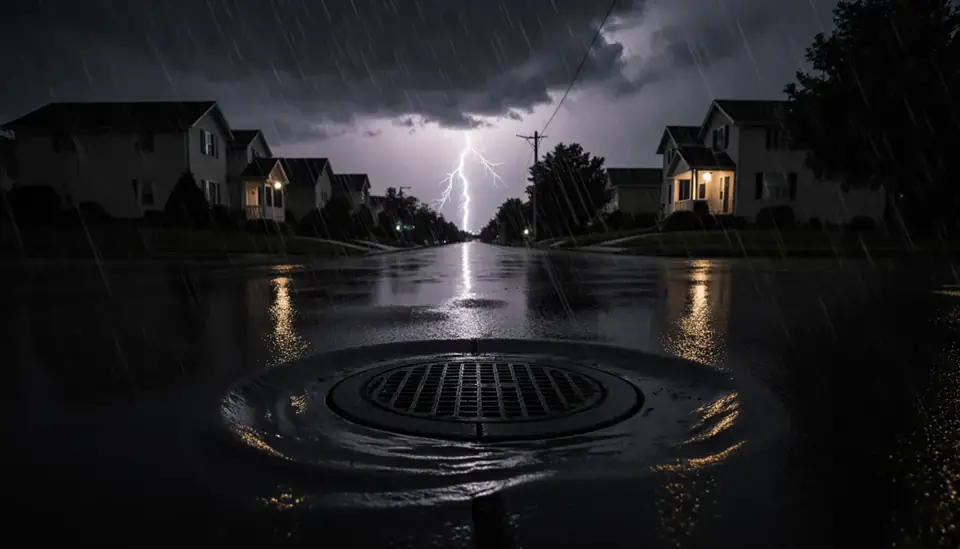
Most summer water damage here starts with runoff rather than the river itself. A short, intense thunderstorm can drop more water than the soil can absorb, and it sheets across lots and down streets toward the nearest wash. Homes at the low end of a cul-de-sac or with a driveway that slopes toward the garage tend to take water first.
- Keep gravel and planting beds below the edge of the slab
- Make sure downspouts and roof scuppers empty several feet from the house
- Do not block wall openings or channels meant to carry storm runoff through a yard
- Move stored boxes off garage floors before July
When runoff does get in, flood cleanup usually involves pulling wet carpet and pad, cutting out the lower section of affected drywall and cleaning the slab, because stormwater carries dirt and debris along with it.

Wind-Driven Rain and Roof Leaks
Monsoon storms bring wind as well as rain. The National Weather Service office in Tucson notes that thunderstorm gusts in Arizona very often exceed 40 mph, and the strongest straight-line winds can top 100 mph. That is enough to lift roofing, peel back flashing and drive rain sideways past window frames and door thresholds.
After a storm, walk the house and look at ceilings in every room, inside closets and around skylights and window corners. A tarp or temporary patch from a roofer limits further damage. For ceilings and walls that got wet, structural drying with dehumidifiers and air movers usually takes several days, and moisture readings tell you when it is done, not the look of the paint.
Indoor Leaks and the Mold That Follows Them
As the master-planned neighborhoods age, original water heaters, washer hoses and supply lines reach the point where they start to fail. A burst washer hose can put a lot of water on a slab floor in a short time. Slow leaks are harder: a dripping fitting under a vanity or behind a dishwasher may go unnoticed until cabinet bases swell or flooring lifts.
Mold is less of a threat in the dry months, but humid monsoon weeks give it a window. Look for discoloration on cabinet floors, baseboards that feel soft, and a musty smell in a closed room. Small surface spots can be cleaned; anything recurring or larger than a few square feet should be opened up, dried and handled with proper containment.

Seasonal and Second Homes South of Tucson
Some houses in town and in neighboring Green Valley sit empty for part of the year, whether as seasonal residences or rentals between tenants. A leak that starts while owners are away can run for weeks. Shutting off the main water supply before leaving, asking a neighbor to check in after storms, and having a plumber look at water heater age before a long trip are simple steps that prevent the worst outcomes. If damage is discovered on return, take photos before touching anything and report it to your insurer promptly.
Where Callers in the Sahuarita Area Are
Calls come in from across Sahuarita, including:
- Rancho Sahuarita
- Madera Highlands
- Quail Creek
- La Joya
- Valle Verde del Norte
- Los Arroyos
The same line also serves nearby communities such as:
Frequently Asked Questions
How do I know if my Sahuarita home is in a floodplain?
Start with FEMA's Flood Map Service Center, which shows federally mapped zones by address. Then contact the Pima County Regional Flood Control District, since some floodplains are mapped locally and may not appear on the federal map. With roughly a quarter of the town's land designated floodplain, it is worth checking even if your neighborhood looks high and dry.
I was away and came home to a leak. What now?
Shut off the main water valve, turn off power to wet areas if it is safe, and photograph the damage before cleaning. Notify your insurer quickly, since many policies require prompt reporting. For extraction and drying, (888) 317-9980 connects you with an independent provider serving Sahuarita and Green Valley.
Does the Santa Cruz River flood often here?
It is usually dry and flows mainly during the monsoon. Large flows are uncommon, but they happen, and runoff from summer storms causes far more household damage than the river itself. Pima County's ALERT gauges report real-time rainfall and streamflow, which helps you see what is happening upstream during a storm.