

Six inches of rain fell near Chandler on September 8, 2014, as moisture from the remains of Hurricane Norbert stalled over the Valley. Forecasters put that total at roughly a 1-in-1,000-year event, and stretches of Interstate 10 closed under floodwater. Most years look nothing like that. Chandler averages a little over 9 inches of rain, and some of the wettest months on record are January and March, not just the monsoon. Still, that storm showed how quickly a flat, heavily paved city can run out of places to put water.
This line is a free referral service: The Restoration Job doesn't own equipment or employ technicians, and the work is done by independent, third-party companies. Call (888) 317-9980 at any hour and we will put you in touch with a company that serves your part of the city, whether that's north of the Santan Freeway or down toward the San Tan Mountains.
How the call works: when you call (888) 317-9980, The Restoration Job connects you with an independent restoration provider that serves Chandler. That provider inspects the damage, explains the scope and quotes the work. The Restoration Job doesn't perform restoration itself. Read our referral disclosure.
Retention Basins, Drywells and the 36-Hour Rule
Chandler moves stormwater along streets and gutters into storm drains and spillways, and from there into retention basins, greenbelts, parks and community lakes. Many of the grassy dips you see in subdivisions and office parks are those basins. Underneath many of them sit drywells, subsurface structures registered with the Arizona Department of Environmental Quality that let water soak into the ground.
The city's stormwater manual for property owners sets a clear benchmark: standing water in a basin or drywell that lasts more than 36 hours is a sign that maintenance is needed, and the property owner of record is responsible for the drywell. In practical terms, a clogged basin owned by an HOA or a commercial lot can back water toward nearby homes in the next storm. If you notice a basin holding water for days, report it to whoever maintains it before the next round of rain.
Winter Rain and Monsoon Storms on Low-Slope Roofs
Because January and March rank among the wettest months here, roof leaks are not strictly a summer problem. Gentle winter rain lasting most of a day finds the same weak spots that a short, violent monsoon burst does: worn underlayment beneath concrete tile, cracked flashing around a parapet, and scuppers packed with leaves or nesting debris on flat sections. During the summer, the added factor is wind. The National Weather Service in Phoenix notes downburst gusts often run above 40 mph, which can lift tiles and push rain under them.
A ceiling stain that spreads after each storm usually means wet insulation and a soaked drywall ceiling above it. Getting a tarp up and the attic dried quickly through storm damage cleanup keeps a roof repair from turning into a ceiling replacement.
From Farm Town to Tech Hub: Chandler's Housing and Plumbing
Dr. Alexander J. Chandler opened the townsite office in 1912, and for decades the area was irrigated farmland. The population went from about 3,800 in 1950 to 30,000 by 1980, then kept climbing to roughly 276,000 by 2020 as employers such as Intel grew. The result is a mostly post-1950 city, with its oldest buildings clustered around Downtown Chandler and newer subdivisions spread across North, West and South Chandler.
In slab homes, the most common non-storm calls involve water heaters in garages, washing machine hoses, refrigerator lines and pinhole leaks in pipes under the slab. Hard water shortens the life of valves and heater tanks. A failed supply line upstairs in a two-story house is a particular headache, because the water runs down through the ceiling and into the walls below before anyone sees it.
Drying Out a Slab House After a Leak or Flood
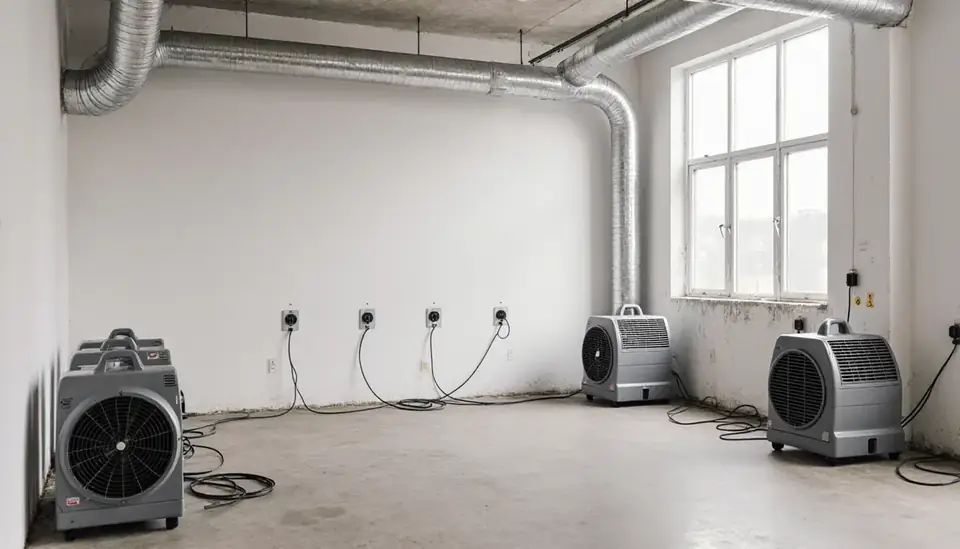
Desert air is dry, but drywall, cabinets and tack strip don't dry on their own once they've soaked up water. Here is roughly how a provider approaches it:
- Stop the source and remove standing water.
- Pull up wet carpet pad and baseboards, and cut drywall above the wet line where readings call for it.
- Set dehumidifiers and air movers for structural drying, adjusting as readings drop.
- Record moisture levels each day so the insurer can see when materials reached dry standard.
Surface floodwater from a storm is treated as contaminated, so porous materials it touched usually go rather than being dried in place.
Mold Risk in a Dry City
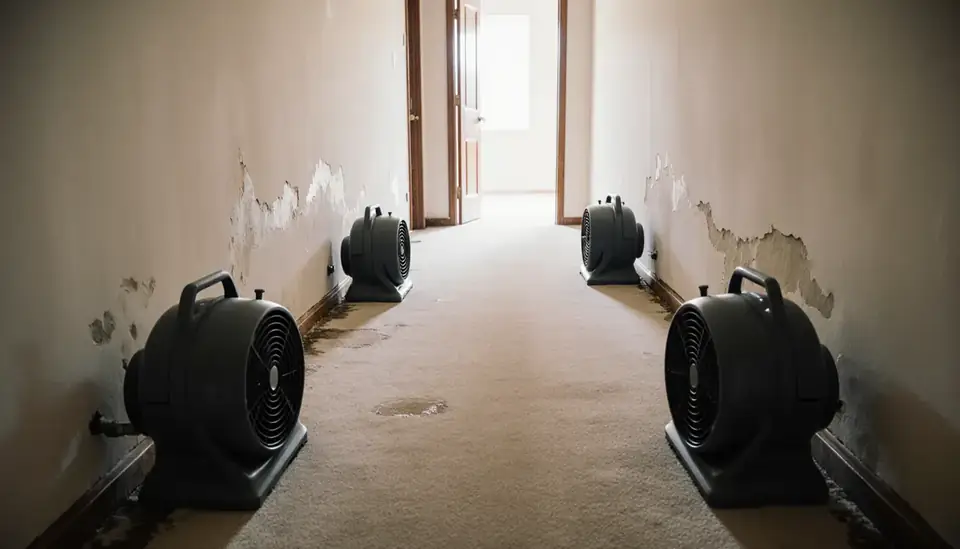
The monsoon months raise humidity right when storm leaks happen, and enclosed spaces like wall cavities, the back of cabinets and closets behind a shared bathroom wall can hold moisture for a long time. A slow under-sink leak that goes unnoticed for weeks is often a more likely mold source in Chandler than a dramatic flood. Discoloration that returns after cleaning, or a musty smell in one room, is worth having checked by a provider who does mold remediation.
Areas In and Around Chandler
Calls come in from across Chandler, including:
- Downtown Chandler
- North Chandler
- West Chandler
- South Chandler
The same line also serves nearby communities such as:
Chandler Water Damage Questions
The retention basin behind my house floods every storm. Who is responsible?
Under the city's stormwater rules, the property owner of record is responsible for maintaining drywells and keeping basins draining, and standing water lasting longer than 36 hours is treated as a maintenance trigger. For most subdivisions, that owner is the HOA. Document the standing water with dated photos and contact the association or the city's stormwater staff.
Does a homeowners policy in Chandler cover monsoon flooding?
A standard homeowners policy usually covers sudden water damage like a burst pipe, but it typically excludes surface water flowing in from outside. That requires separate flood insurance. The Flood Control District of Maricopa County handles floodplain management for the city and offers free floodplain determinations if you want to know your mapped risk.
Water came through my ceiling from the bathroom upstairs. What should I do first?
Shut off the water at the fixture or the main, turn off power to any light fixture with water in it, and move belongings out of the wet room. Poke a small hole in a sagging ceiling bulge over a bucket only if it is safe to do so. Then call (888) 317-9980 to be connected with a restoration provider who can open and dry the ceiling.