
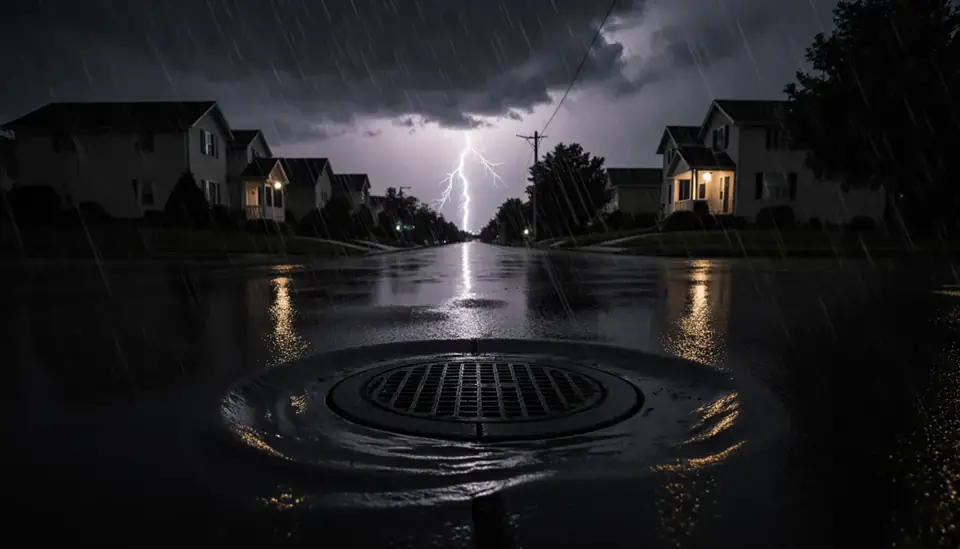
Stretching 18 miles from Price Road to Meridian Road, Mesa covers nearly 139 square miles of desert floor, and the city averages only about 10.8 inches of rain a year. That small number hides how the water actually arrives. A single monsoon cell can dump a large share of a month's rain on one side of town in under an hour while the other side stays dry, and streets, retention basins and garages take the hit together. On September 8, 2014, rain over Mesa reached a level estimated as a 1-in-1,000-year event, and residents of about 100 homes in the city were evacuated.
Our line at (888) 317-9980 is a free referral service, open around the clock, that connects you with an independent restoration provider covering the city. We do not send crews or do the work ourselves; the company you are connected with handles the inspection, drying and repairs, and many providers offer emergency service when a storm or a burst line can't wait.
How the call works: when you call (888) 317-9980, The Restoration Job connects you with an independent restoration provider that serves Mesa. That provider inspects the damage, explains the scope and quotes the work. The Restoration Job doesn't perform restoration itself. Read our referral disclosure.
Monsoon Runoff Across Mesa's Long East-West Spread
Because the city is so wide, storm impacts vary a lot from one side of town to the other. The city's storm drains are a separate system from the sanitary sewer, and they send runoff toward washes, retention basins, parks and eventually the Salt and Gila rivers. When a downpour outruns those drains, water sheets down the street, over the curb and across driveways. Homes that sit slightly lower than the street, or that have patios sloped toward the slider, are the ones that end up with wet carpet.
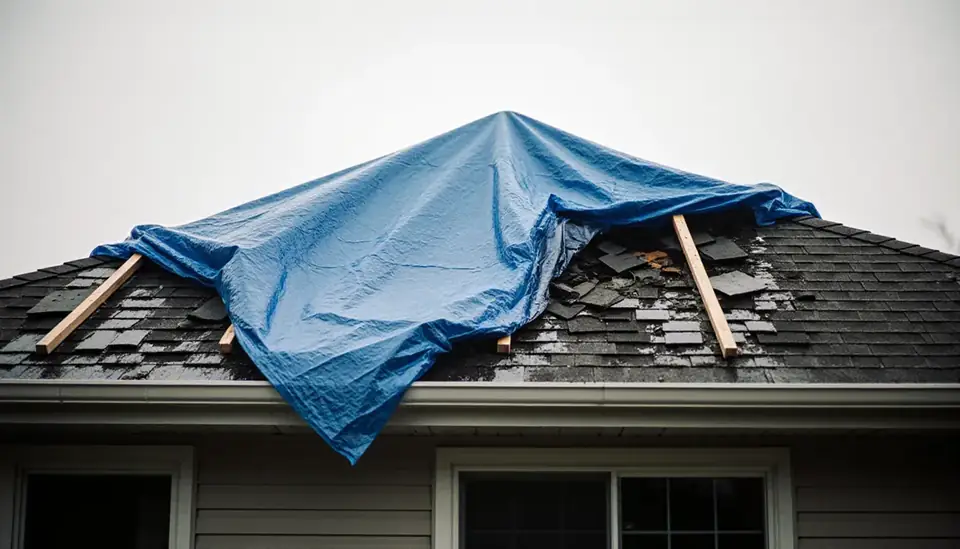
Wind is the other half of a monsoon storm here. The National Weather Service office in Phoenix notes that downburst gusts commonly exceed 40 mph and sometimes top 100 mph. That is enough to peel back roofing, crack windows and drive rain sideways under door thresholds, so a lot of storm calls are really roof and window problems rather than rising water. For tarping, debris and the interior water that follows, storm damage cleanup is usually the first step.
Sandbags From Mesa Fire Stations and Service Centers
The city makes free sand and bags available before and during storm season. A few details are worth knowing before the sky turns:
- Fire Stations 202 (830 S. Stapley Dr.), 208 (4530 E. McKellips Rd.), 209 (7035 E. Southern Ave.) and 212 (2430 S. Ellsworth Rd.) have sand and empty bags. Bring your own shovel.
- The city's two transportation service centers, at 300 E. 6th St. and 6935 E. Decatur St., also stock pre-filled bags.
- The city suggests calling 480-644-2160 to check availability.
- Fill each bag only one-half to two-thirds full so it lies flat. Overstuffed bags don't nest together and leave gaps in the wall.
A short row of bags across a garage door or low slider will not stop a true flood, but it often keeps street runoff out of the house during a fast storm.
Postwar Ranch Homes, Canal Neighborhoods and Hidden Slab Leaks
The city started as a one-square-mile townsite in 1878, and its settlers reused canals first dug by the Hohokam. Real growth came after Falcon Field and Williams Field opened in the early 1940s, and many homes built in the decades that followed are now old enough for original plumbing to fail. Aging water heaters tucked into garages and supply lines worn by years of hard water cause a steady share of indoor water damage that has nothing to do with weather.
A leak under a slab tends to show up slowly: a warm spot on tile, baseboards that swell, a water bill that creeps up. If your lot is on SRP flood irrigation, SRP is clear that the homeowner is responsible for the private system past the delivery gate and for keeping the water on their own lot. A cracked berm or a failed valve can push irrigation water against a stem wall or into a neighbor's yard.
Inside a Typical Water Call in Mesa
The process is fairly consistent whether the source was a storm, a water heater or a supply line. A provider will typically:
- Find and stop the source, or confirm a plumber has.
- Pull standing water with truck-mounted or portable water extraction equipment.
- Check drywall, baseboards, cabinets and the slab with moisture meters to map how far the water travelled.
- Remove materials that can't be dried, then set air movers and dehumidifiers.
- Take readings over several days and document the work for your insurer.
The dry desert air helps, but only with the surfaces it can reach. Wet insulation and the back side of drywall still need controlled drying, and the humid weeks of monsoon slow everything down.

Mold After Monsoon Humidity
People tend to think mold isn't a desert issue. In practice, the monsoon brings the most humid stretch of the year at exactly the time roofs and windows are leaking. Drywall that stays damp behind a vanity or a closet wall for several days can start to grow mold, especially in rooms with poor airflow. If you smell mustiness after a leak, or the stain keeps spreading, ask the provider to check behind the surface. Proper mold remediation means containing the area, removing affected material and drying the structure, not painting over the spot.
Neighborhoods and Nearby Communities
Calls come in from across Mesa, including:
- Downtown Mesa
- West Mesa
- East Mesa
- Dobson Ranch
- Lehi
The same line also serves nearby communities such as:
Frequently Asked Questions
Who handles floodplain questions for a Mesa property?
The Flood Control District of Maricopa County manages floodplain regulation for the city. It offers free floodplain determinations and a GIS floodplain viewer, so you can check whether your lot sits in a mapped flood zone. That matters for insurance: a standard homeowners policy generally does not cover surface flooding, and lenders require separate flood coverage only in mapped high-risk zones.
Is water from SRP flood irrigation treated like a burst pipe?
Coverage depends on your policy and on what failed. SRP places responsibility for the private irrigation system past its delivery gate on the homeowner, including keeping water contained on the property. Photograph the berm, valve or standpipe involved, note the delivery date, and talk to your insurer before materials are thrown out.
Can I wait for the desert heat to dry out a wet wall?
Outdoor heat does little for the inside of a wall cavity or the pad under carpet. Surfaces may feel dry in a day while the drywall core, the bottom plate and the slab stay wet. A restoration provider uses moisture meters to confirm drying instead of guessing, which also gives your adjuster a record of what was wet and for how long.
How fast can someone get to my Mesa home after a storm?
It varies. After a widespread monsoon storm, every provider in the East Valley gets busy at once. When you call (888) 317-9980, we connect you with an independent provider that serves Mesa, and that company will give you its own timing. Meanwhile, shut off the source, move valuables and take photos.