
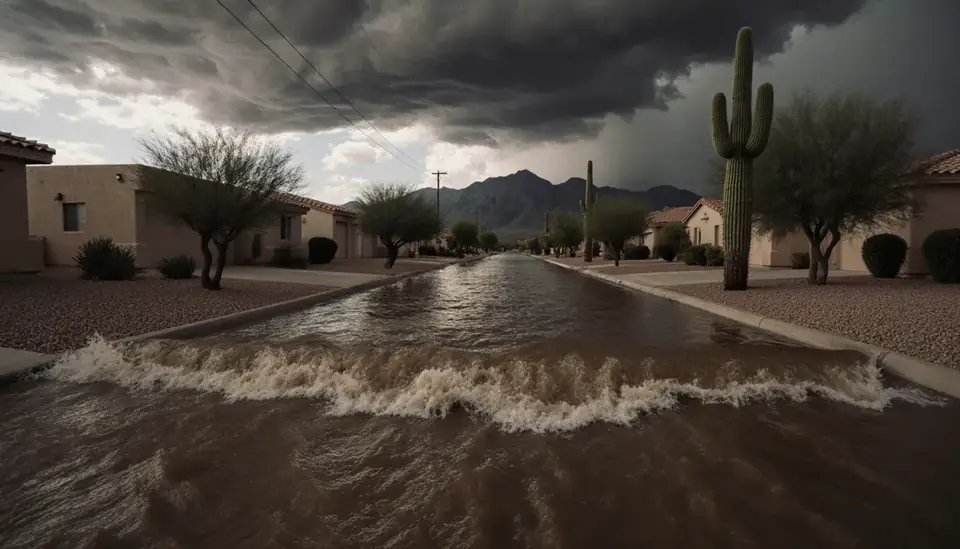
Fort Mohave spreads across the low desert floor of the Mohave Valley at about 545 feet above sea level, bordered by Bullhead City to the north and the Fort Mojave Indian Reservation and the Colorado River to the west. The community grew from under 9,000 residents in 2000 to more than 16,000 in 2020, and much of that growth came as subdivisions laid out on gently sloping ground that drains toward the river. Rain is scarce, around five inches a year in nearby Bullhead City, yet when a storm stalls over the hills to the east, that sloping ground sends water and sediment straight through neighborhoods.
The Restoration Job is a no-cost referral service; dial (888) 317-9980 any hour and we connect callers with independent restoration providers that serve Fort Mohave and the surrounding Mohave Valley. We are not a contractor ourselves, and each provider sets its own schedule and pricing.
How the call works: when you call (888) 317-9980, The Restoration Job connects you with an independent restoration provider that serves Fort Mohave. That provider inspects the damage, explains the scope and quotes the work. The Restoration Job doesn't perform restoration itself. Read our referral disclosure.
Mud and Sediment Runoff Through Subdivisions Along Mountain View Road
The county's flood control records describe a pattern that repeats across this part of the valley. In the Tierra Del Rio subdivision, north of Joy Lane and east of Mountain View Road, homeowners dealt with recurring floods and debris flows for decades, with notable damage during the statewide storms of January 2010. Sediment-heavy runoff ran down streets without curbs and into some homes sitting below street level. The Mohave County Flood Control District finished five retention and detention basins there in 2013, designed to cut 100-year runoff roughly in half, and added curb and gutter to keep flows in the roadway.
Nearby, a 1966 subdivision first platted as River Run City along Mountain View Road was laid out with no drainage system at all. Microbursts in 2007 and 2008 dropped more than 1.3 inches of rain in about two hours, causing ponding and damage to homes before retention basins were built. At Camp Mohave Elementary, parts of the playground had sat under several feet of stormwater from Camp Mohave Wash before a 2013 drainage channel was added.
The lesson for owners: flood water here usually arrives carrying silt and gravel, not just clear water. That changes cleanup. Mud must be shoveled and washed out, carpet and pad generally cannot be saved, and drywall that wicked up muddy water is cut out well above the visible line. Read more about flood cleanup after sediment-laden runoff.
Developer Channels That Need Upkeep
Several drainage channels in the area were built by developers when subdivisions such as Sun Valley, Valley Springs Estates and Everglades Estates were platted. County inspections later found erosion, overgrown vegetation and damaged dikes in some of them; the Antelope Drain and the Tierra Verde channel both needed clearing and bank repair. A channel choked with brush holds less water, so overflow reaches yards and slabs sooner. If you live beside a drainage easement, it is worth knowing who maintains it and reporting blockages to the Flood Control District before the monsoon arrives.
Indoor Leaks in Extreme Heat
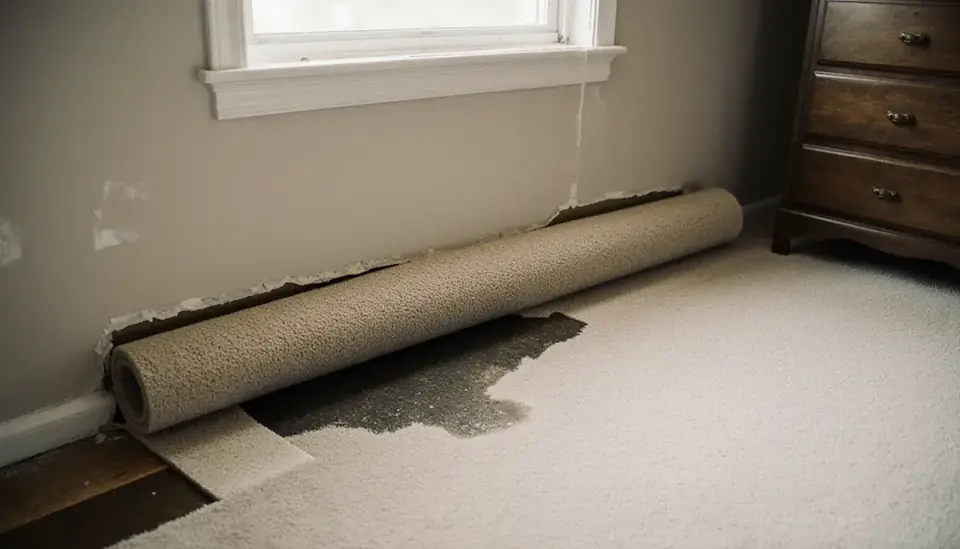
Summer is brutal on the valley floor: Bullhead City averages about 135 days a year at or above 100°F. Air conditioners run nearly nonstop from late spring into fall, and the condensate they produce has to go somewhere. Clogged condensate lines, cracked drain pans in attic air handlers and failing water heaters in garages account for a large share of indoor water damage in Fort Mohave. Supply lines and fittings also age faster under constant heat in attics.
- Turn off the AC or water heater and close the supply valve.
- Check ceilings under the air handler for staining or sagging.
- Move furniture off wet carpet and photograph everything.
- Ask the provider to check moisture inside walls and under flooring, not just on the surface.
Mold Risk When Moisture Gets Trapped
Outdoor air in this part of the Mohave Valley is usually very dry, so surface water evaporates quickly. The problems start where moisture is shielded: behind baseboards, inside wall cavities after a slow leak, under laminate flooring, and in insulation beneath an attic air handler. Mold can develop in those spaces within days. Proper mold remediation starts with finding and fixing the moisture source, then removing affected porous materials and drying the area thoroughly.
Flood Maps, Insurance and Local Alerts
Mohave County's flood map viewer shows FEMA Special Flood Hazard Areas by address or parcel number, and you can request an official FIRMette from FEMA's Map Service Center. Many properties damaged by local runoff sit outside mapped zones. Standard homeowners insurance generally excludes surface flooding, so ask your agent whether a separate flood policy makes sense, keeping in mind that new policies typically carry a waiting period. The county's Alert Center posts real-time rainfall and flood data and offers CodeRED sign-up.
Where Callers in the Fort Mohave Area Are
Calls come in from across Fort Mohave, including:
- Tierra Del Rio
- Tierra Verde
- Sun Valley
- Valley Springs Estates
- Everglades Estates
The same line also serves nearby communities such as:
- Bullhead City
- Mohave Valley
- Golden Shores
- Golden Valley
- Kingman
Questions From Fort Mohave Property Owners
Why does flood water in Fort Mohave leave so much mud behind?
Runoff here comes off the desert slopes east of the valley floor, picking up silt, sand and gravel as it moves. County project records describe sediment-laden flows and debris in local subdivisions. That means cleanup involves removing mud, cleaning and disinfecting surfaces, and usually discarding saturated carpet, pad and lower drywall instead of simply drying them in place.
Is the drainage channel behind my house the county's responsibility?
It depends. Some channels were built by developers and later inspected or restored by the Mohave County Flood Control District, while others remain the responsibility of a homeowners association or individual owners. Call the district in Kingman at 928-757-0925 to ask who maintains a specific easement, and report erosion or heavy brush before storm season.
An attic air handler overflowed and stained my ceiling. Is that a water damage restoration job?
If water soaked ceiling drywall or insulation, yes. A restoration provider will typically remove saturated materials, dry the framing, and check for moisture spread before repairs. Clearing the condensate line or replacing the pan is usually handled by an HVAC technician. Acting quickly matters because heat accelerates mold growth in wet attic insulation.
How do I reach help for water damage in Fort Mohave at night?
The Restoration Job line at (888) 317-9980 answers 24/7 and can connect you with an independent provider that covers the Mohave Valley. Many providers offer emergency service, but availability depends on the company and on demand after a storm. Meanwhile, shut off the water source and cut power to wet areas if it is safe to do so.