
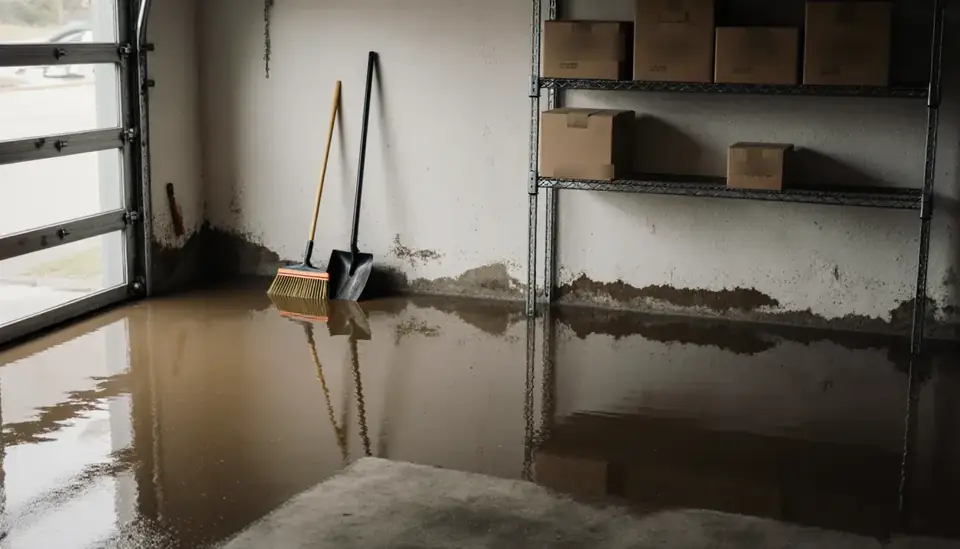
Huntsville grew up around the Big Spring, a karst spring at the foot of the Tennessee Valley hills, and water still shapes how the city floods. Small creeks such as Aldridge Creek and Pinhook Creek drain the slopes below Monte Sano and the neighboring mountains, and they can rise faster than most residents expect. The city's own floodplain figures put about 29 square miles and more than 6,000 developed properties inside the 100-year floodplain, roughly 17 percent of Huntsville's land.
For a flooded basement in Jones Valley, a ceiling stain in a Twickenham house, or a supply-line failure in a newer Hampton Cove home, call The Restoration Job at (888) 317-9980, a free referral line staffed around the clock, and we'll connect you with an independent restoration provider that serves Huntsville. We do not do the work ourselves; third-party companies handle the inspection, drying and repairs.
How the call works: when you call (888) 317-9980, The Restoration Job connects you with an independent restoration provider that serves Huntsville. That provider inspects the damage, explains the scope and quotes the work. The Restoration Job doesn't perform restoration itself. Read our referral disclosure.
Aldridge Creek, Pinhook Creek and Huntsville's Fast-Rising Streams
The worst local flooding has usually come from short, intense rain rather than the Tennessee River. On June 28, 1999, a gauge at Aldridge Creek near Toney Drive caught 6.81 inches while the airport recorded only 1.38. According to the National Weather Service, roughly 300 homes and businesses flooded, damage ran near $7 million, and water covered Memorial Parkway from the Clinton Avenue area south toward Byrd Spring Lake. The city notes that Aldridge Creek at Mountain Gap Road climbed 8 feet in about half an hour that night.
Older residents may remember March 1973, when about 200 people were displaced, long stretches of Memorial Parkway went underwater and some motorists were pulled out by boat. In May 2003 a station in northeast Huntsville logged nearly an inch of rain in five minutes. These are the kinds of storms that push water through doors, garages and crawl-space vents in a matter of minutes.
Historic Twickenham Homes Versus Newer South Huntsville Construction
Housing age matters when a provider plans the drying. Twickenham and Old Town hold some of Alabama's oldest houses, many with plaster walls, original wood floors and crawl spaces that trap humid air once they get wet. Plaster dries slowly and can hide moisture behind sound-looking surfaces, so moisture meters and careful monitoring matter more than speed. The former mill villages around Lowe Mill and Lincoln Mill present similar issues on a smaller scale.
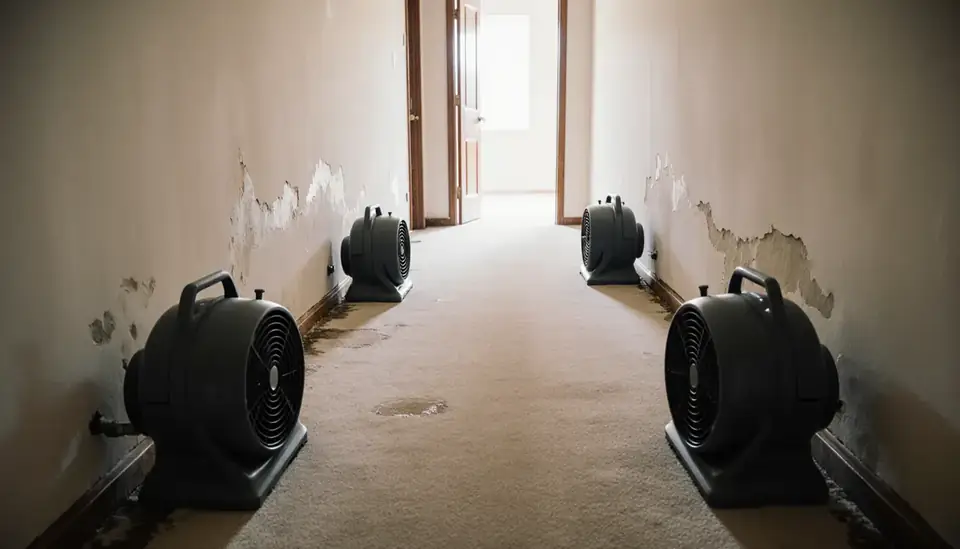
In the subdivisions that spread south and east after the Redstone Arsenal and NASA boom, the usual culprits are different: a failed water heater in the garage, a washing machine hose, a slab leak, or an upstairs bathroom overflowing into the kitchen ceiling. Drywall and carpet pad in these homes soak up water quickly, and wet gypsum board can crumble if it is bumped before it dries. A provider offering structural drying will set up air movers and dehumidifiers and track readings until framing reaches normal levels.

First Hours After Creek Water or a Pipe Break
The steps differ depending on where the water came from. A clean supply-line leak can often be dried in place if extraction starts early. Creek or street floodwater is treated as contaminated and usually means removing soaked drywall, insulation and carpet.
- Shut off the main water valve or the breaker to flooded rooms if it is safe to reach.
- Stay off flooded roads; the 1999 storm claimed a life on Vermont Road.
- Photograph waterlines, damaged contents and the outside of the house before anything is moved.
- Pull rugs, furniture and boxes off wet floors and open interior doors to start air movement.
- Call your insurer, then a restoration provider; for standing water, ask about water extraction first.
Contents often take as much damage as the structure, so a crew will typically sort items into keep, clean and discard piles with photos for the claim.
Humid Tennessee Valley Summers and Mold Growth
Huntsville averages more than 54 inches of precipitation a year, and summers are hot and humid. That combination gives mold a head start in any wall cavity, crawl space or closet that stays damp for more than a day or two. Common hiding spots include the backs of base cabinets after a dishwasher leak, carpet tack strip along exterior walls, and the underside of subfloors above a wet crawl space.
Running the HVAC system helps pull humidity down, but it will not dry saturated framing on its own. If you notice a musty odor or spotting weeks after a leak, a provider handling mold remediation can contain the area, remove affected materials and correct the moisture source so growth does not return.
Ice, Snow and Tornado Damage in Dixie Alley
Severe weather is a second major source of claims. Huntsville sits in the region called Dixie Alley, and tornadoes struck the city in November 1989, a deadly event, and again in January 2010. Torn roofing and broken windows let rain pour in long after the wind passes, so storm damage cleanup usually starts with tarping and boarding to stop further water entry.
Winter brings a quieter risk. Heavy snow is rare, but the city recorded 8.9 inches in January 2011, and its all-time record low sits at 11 below zero. Pipes in exterior walls, attics and unheated garages can split during a hard freeze, and the leak often shows up only when temperatures rise and water starts flowing again.
Huntsville Neighborhoods and Surrounding Towns
Calls come in from across Huntsville, including:
- Twickenham
- Old Town
- Jones Valley
- Hampton Cove
- Lowe Mill Village
- Lincoln Mill Village
- Monte Sano
- Research Park
The same line also serves nearby communities such as:
- Madison
- Meridianville
- Owens Cross Roads
- Gurley
- New Hope
- Harvest
- Triana
- Decatur
Frequently Asked Questions
How do I know if my Huntsville property is in a flood zone?
Check the FEMA Flood Map Service Center by address, or contact the City of Huntsville engineering office, which handles floodplain questions. About 17 percent of the city's land lies in the 100-year floodplain, much of it along smaller creeks rather than the Tennessee River. Homes outside the mapped zone can still flood during intense downpours, as the 1999 Aldridge Creek event showed.
Does homeowners insurance cover creek flooding in Huntsville?
Standard homeowners policies generally exclude flood damage from creeks, rivers or surface water. That requires a separate flood policy, and National Flood Insurance coverage has a 30-day waiting period. The city participates in FEMA's Community Rating System at Class 8, which the city says gives residents a 10 percent premium reduction. Sudden pipe bursts are a different matter and are often covered under the homeowners policy.
My crawl space flooded after heavy rain. Does it need professional drying?
Usually yes, if the water reached insulation, ductwork or the subfloor. Vented crawl spaces in older Huntsville homes pull in humid summer air, so damp materials may not dry on their own. A provider can pump out standing water, remove wet insulation, and use dehumidifiers to bring wood moisture back down before mold or rot starts.
Can I get help at night or on a weekend in Huntsville?
Our phone line is answered 24/7. When you call, we connect you with an independent provider that serves Huntsville, and many providers in the area offer emergency service outside business hours. Availability depends on the provider and on demand after major storms, so ask about timing when you are connected.