
John Gately Downey laid out his town on land between two rivers, the Rio Hondo to the west and the San Gabriel River to the east, and that setting still defines how water behaves here. Both channels are now concrete-lined flood control works fed by the Whittier Narrows Dam upstream, and the flat, low ground between them, about 118 feet above sea level, was farmland until postwar subdivisions and aerospace plants replaced the orchards. Today the city's roughly 36,000 housing units split evenly between owners and renters.
Our role is limited to referrals: The Restoration Job runs a free 24/7 line at (888) 317-9980 that connects Downey callers with independent restoration providers serving the area. Providers frequently offer emergency calls, but each sets its own schedule.
How the call works: when you call (888) 317-9980, The Restoration Job connects you with an independent restoration provider that serves Downey. That provider inspects the damage, explains the scope and quotes the work. The Restoration Job doesn't perform restoration itself. Read our referral disclosure.
Living Between the Rio Hondo and the San Gabriel River
The two rivers that frame Downey have a history of moving. A major flood in 1867 shifted the San Gabriel River into a new course, and the abandoned channel became the Rio Hondo, once known locally as the Old River. In the great flood of 1938, the San Gabriel peaked at more than 100,000 cubic feet per second; dams built before that storm sharply reduced the damage downstream. After 1938 the Army Corps of Engineers encased hundreds of miles of Los Angeles County streams in concrete.
Those channels work well in ordinary winters. The bigger concern is the extreme storm. In 2017 the Corps warned that Whittier Narrows Dam, the central piece of the county's drainage system, no longer met its tolerable-risk guidelines and could fail in an exceptionally rare storm comparable to the floods of 1861 and 1862. That is a low-probability scenario, but it is a reason for Downey households to know their flood zone, consider whether a flood policy makes sense, and sign up for county alerts.
Street Ponding and Postwar Slab Homes
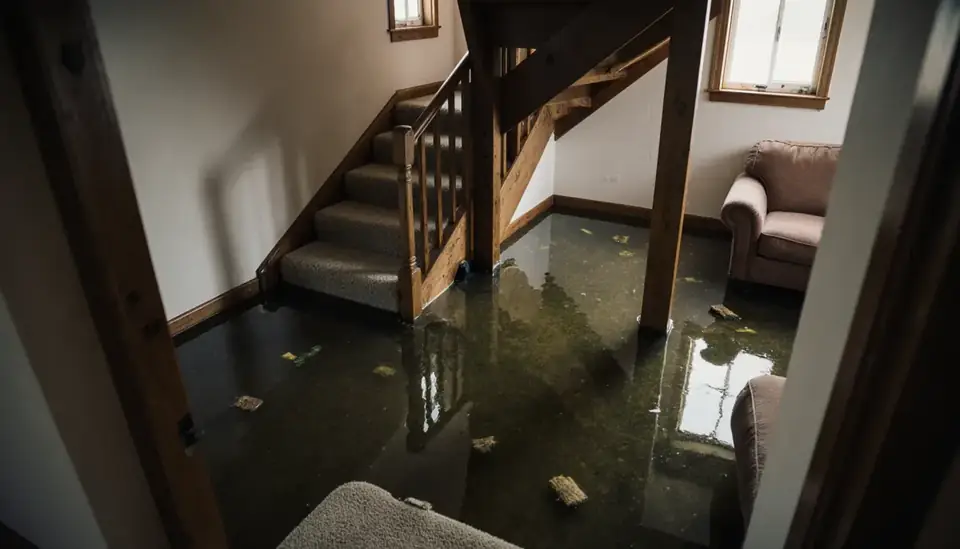
Day to day, the water damage most Downey homes see is far more ordinary. Flat terrain means heavy rain can pond at curbs and in driveways when storm drains are slow or clogged with leaves, and water finds its way under garage doors and into low patios. Many of the postwar houses that replaced the farms sit on concrete slabs, which brings two specific risks:
- A pressurized supply line leaking under the slab can soak flooring across several rooms before it shows up as a warm spot, a high water bill or a damp baseboard.
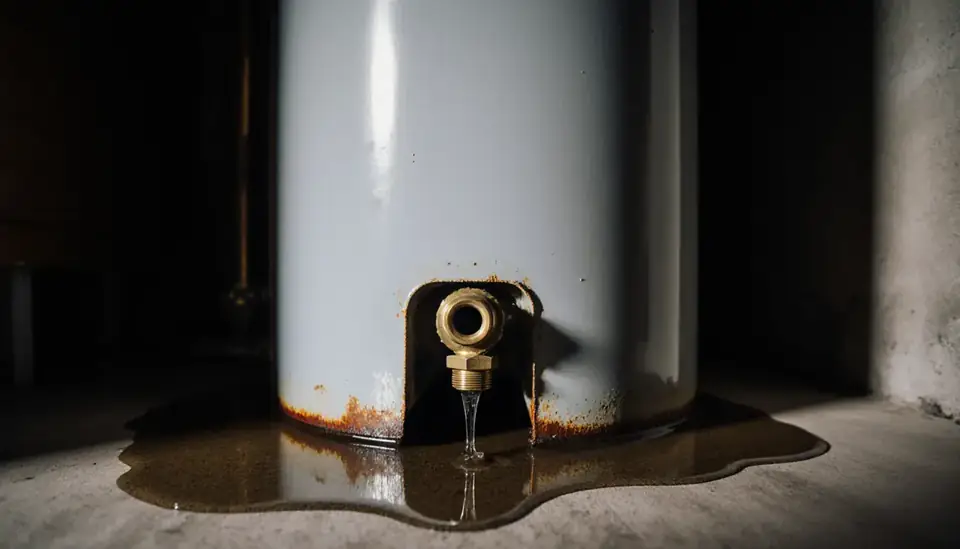
- Garage water heaters, laundry hookups and aging copper or galvanized lines fail without warning, and the water spreads quickly across a slab.
A water damage repair job in a slab home usually starts with a leak detection visit from a plumber, then drying and replacement of flooring, baseboards and lower drywall as needed.
Renters, Landlords and Who Handles the Cleanup
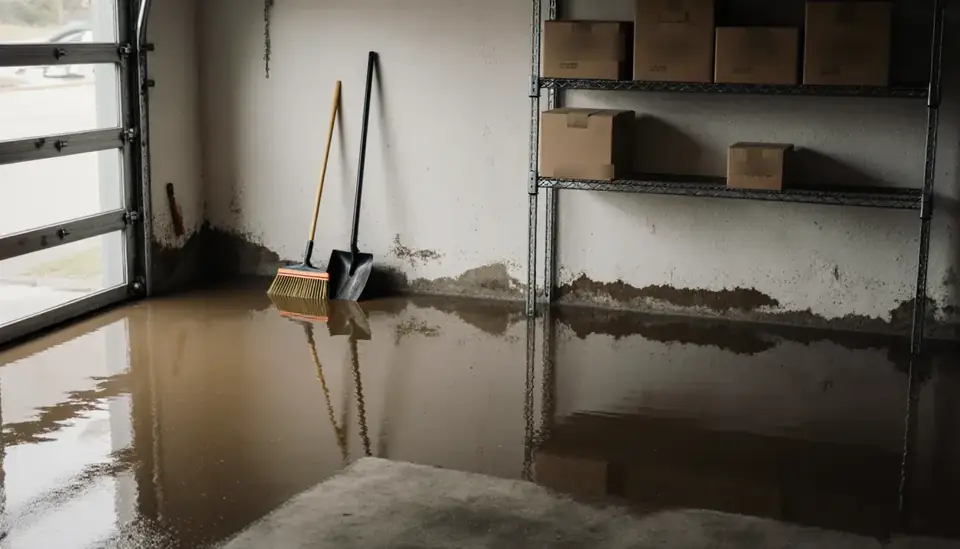
With half the city renting, a lot of water damage in Downey involves two parties. In general the property owner is responsible for the building, including drying walls, floors and cabinets, while a renter's own policy, if they have one, covers their belongings. Tenants should notify the landlord in writing right away and photograph damage to their furniture and electronics. Landlords should move quickly on drying, since delays can lead to mold and disputes about habitability.
Drying It Out and Keeping Mold From Starting
Downey's climate is semi-arid, but that does not help inside a wet wall. Once water gets behind baseboards or under laminate, the cavity stays humid until someone dries it mechanically. Restoration providers commonly extract water, open up affected areas, and run dehumidifiers and air movers while tracking moisture readings until materials reach a normal level. Proper structural drying is the most effective way to prevent mold growth after a leak.
If mold is already visible, especially on drywall or cabinet backs, it is generally cut out and the area cleaned under containment rather than sprayed and painted. Keep the HVAC system off in affected rooms until a provider has looked at it, so spores are not spread through ducts.
Flood Maps and Alerts for Downey
Los Angeles County Public Works offers a flood zone lookup, and FEMA's Flood Map Service Center hosts the official maps lenders use. The National Weather Service in Oxnard covers southeast Los Angeles County with flash flood watches and warnings. Residents on the other side of the Rio Hondo system can find related guidance on our El Monte page.
Areas In and Around Downey
Calls come in from across Downey, including:
- Downtown Downey
The same line also serves nearby communities such as:
- South Gate
- Bell Gardens
- Pico Rivera
- Santa Fe Springs
- Norwalk
- Paramount
- Bellflower
Questions From Downey Property Owners
Is Downey in a flood zone because of the rivers?
Flood zone status varies by parcel, so the honest answer is to look up your address. Los Angeles County Public Works has a flood zone determination website, and FEMA's Flood Map Service Center shows the effective maps. Even outside a mapped high-risk zone, a flood policy can be worth pricing, since standard homeowners insurance usually excludes rising water.
My water bill jumped and the floor feels warm. Could that be a slab leak?
Those are classic signs of a hot water line leaking under a slab, which is common in older single-story Downey houses. Shut off the water heater supply if you can, call a plumber for leak detection, and then have a restoration provider check moisture under flooring and in nearby walls. Water can travel well beyond the room where the leak is.
I rent in Downey and my unit flooded from the neighbor's water heater. What should I do?
Tell your landlord or property manager in writing right away and take photos of the damage, including your belongings. The owner is generally responsible for drying and repairing the building. Your renters insurance, if you have it, typically handles your personal property and sometimes temporary housing. Keep receipts for anything you spend.