

Two rivers finish their run through Morris County inside this township. The Rockaway River leaves the Boonton Reservoir, swings past Lake Hiawatha and heads for Hatfield Swamp, where the Whippany River joins it just before both empty into the Passaic. Add Troy Meadows, Lake Parsippany and nearly two square miles of water, and it is easy to see why so many Parsippany-Troy Hills basements have a history with water. Long before the township was incorporated in 1928, glacial Lake Passaic covered roughly half of this ground, and the low, swampy eastern side still behaves like the floodplain it is.
The Restoration Job does no repair work itself; it is a free line that links callers to independent restoration providers. Call (888) 317-9980 at any hour and we'll connect you with one that serves Parsippany-Troy Hills, for anything from river water and a failed sump pump to a ceiling leak in a garden apartment.
How the call works: when you call (888) 317-9980, The Restoration Job connects you with an independent restoration provider that serves Parsippany-Troy Hills. That provider inspects the damage, explains the scope and quotes the work. The Restoration Job doesn't perform restoration itself. Read our referral disclosure.
Where the Rockaway Meets the Whippany
The township sits at the downstream end of two watersheds. The Rockaway drains about 125 square miles of northern Morris County, and the Whippany another 69 square miles through Morristown and Hanover. Both slow down in the flat wetlands of Troy Meadows and Hatfield Swamp, so when the Passaic itself is running high, water has nowhere quick to go.
Hurricane Irene in August 2011 showed what that means. The Rockaway crested roughly six feet above its previous record, a flood described as a 500-year event; upstream in Denville the business district took up to eight feet of water, and in Boonton the river tore away part of the northbound shoulder of I-287. Homes in Parsippany-Troy Hills downstream of that water saw basements and low streets flood as the river spread out toward the swamps.
Lake Hiawatha's Summer Cottages, Now Year-Round Homes
Lake Hiawatha began as a resort. Developers diverted the Rockaway River to create a lake, finished in 1935, and lined the shore with summer houses. By the 1960s the lake had dried up and those cabins had been rebuilt as year-round homes, many of them still close to the river that forms the community's eastern edge.
That history matters during cleanup. Converted seasonal houses often have low floor framing, shallow foundations, additions built in different decades and basements finished long after construction. Water travels along those seams, under flooring and into wall cavities, so a provider should map moisture room by room instead of assuming the wet area stops where the carpet looks dry. Similar care applies around Lake Parsippany and Rainbow Lakes, where homes sit near the water's edge.
Flood Cleanup in a Township of Basements and Garden Apartments
Most local calls fall into a few patterns, and each one is handled a little differently:
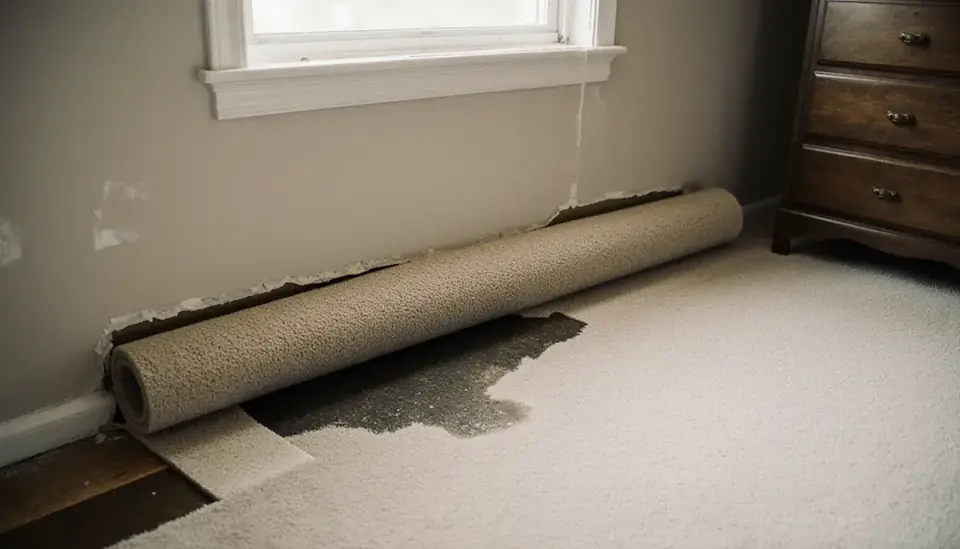
- River or surface water in a basement is treated as contaminated. Saturated carpet, insulation and drywall are removed, and the space is cleaned and disinfected before drying.
- Sump pump failure during a long rain, often when the power goes out, usually means cleaner groundwater but a large volume; fast water extraction limits how far it wicks into walls.
- Floor drain backups carry sewage and call for sanitizing, not just drying.
- Unit-to-unit leaks in apartment and condo complexes involve the association or landlord as well as each owner's insurer, so document the source before repairs start.
For any of these, flood cleanup ends only when moisture meters show the framing and subfloor have returned to normal readings.
September Storms, Humid Summers and Mold
Morris County averages roughly 50 inches of precipitation a year, and September, the height of the tropical season, tends to be the wettest month. A remnant tropical system that stalls over the Highlands can send days of runoff down the Rockaway, and the township's low wetlands hold that moisture long after the rain stops.
Humid summer air then keeps damp basements damp. Mold tends to appear first on the paper face of drywall, on stored cardboard and behind paneling in below-grade rooms. Running a dehumidifier from June through September and drying any leak within 48 hours goes a long way. When growth is widespread or keeps returning after cleaning, mold remediation should start with finding and fixing the moisture source.

Watching the River Before the Next Big Rain
The USGS gauge on the Rockaway River below the Boonton Reservoir has daily records going back to 1906 and shows in real time how the river is responding upstream of Lake Hiawatha. Forecasts and flood warnings for the township come from the National Weather Service office in Mount Holly, and Morris County's Office of Emergency Management offers an emergency alert sign-up. When a watch is posted, lift stored items off basement floors, test the sump pump and battery backup, and know where your gas and electric shutoffs are.
Flood damage from rising water is generally excluded from standard homeowners policies, so check your property on FEMA's flood map and ask your agent about a separate flood policy before storm season. More statewide context is on our New Jersey service area page.
Areas In and Around Parsippany-Troy Hills
Calls come in from across Parsippany-Troy Hills, including:
- Lake Hiawatha
- Mount Tabor
- Lake Parsippany
- Rainbow Lakes
- Troy Hills
- Powder Mill
- Intervale
- Rockaway Neck
The same line also serves nearby communities such as:
- Boonton
- Denville
- Morris Plains
- Mountain Lakes
- East Hanover
- Hanover Township
- Montville
Parsippany-Troy Hills Water Damage Questions
Is Lake Hiawatha more flood-prone than other parts of the township?
Lake Hiawatha sits along the Rockaway River, which forms its eastern edge, and much of the township's eastern side is low ground draining toward Troy Meadows and Hatfield Swamp. Homes nearest the river and the wetlands face the most exposure when the Rockaway and Passaic run high. Check your exact address on FEMA's Flood Map Service Center rather than relying on the neighborhood name.
My Parsippany basement flooded when the power went out. Is that a flood claim?
Often it is not. Water from a sump pump that stopped during an outage is usually handled differently from river or surface water entering the home, and many homeowners policies cover it only with a sump or water backup endorsement. Photograph the pump, the water line and damaged items, then call your agent before discarding anything to confirm which coverage applies.
Who handles a leak between units in a Parsippany apartment or condo complex?
Responsibility usually depends on where the leak started and what the association's documents or the lease say. The unit where the water originated, the association's master policy and each owner's own policy can all be involved. Report the leak to management right away, document it with photos, and keep drying going in your unit so damage does not spread while the paperwork is sorted out.
How fast should a wet basement be dried to avoid mold?
Aim to start drying within 24 to 48 hours. In a humid Morris County summer, mold can begin growing on wet drywall and cardboard within a couple of days. Extract standing water, remove soaked porous items, and run dehumidifiers and fans. If water reached into walls or under finished flooring, a restoration provider can measure hidden moisture and confirm when materials are actually dry.