

Burlington grew up around a railroad repair yard. The North Carolina Railroad built its Company Shops here in the 1850s, the town took its present name in 1887, and Edwin Holt's cotton mills later grew into Burlington Industries, which ran dozens of plants in the region. Today the city covers nearly 32 square miles, mostly in Alamance County with a piece in Guilford, with the Haw River and Great Alamance Creek nearby and about 47 inches of precipitation spread fairly evenly through the year.
Calling The Restoration Job is free. Dial (888) 317-9980 any time and we will connect you with an independent restoration provider that serves Burlington and the rest of Alamance County. That provider sets its own prices, and many offer emergency service.
How the call works: when you call (888) 317-9980, The Restoration Job connects you with an independent restoration provider that serves Burlington. That provider inspects the damage, explains the scope and quotes the work. The Restoration Job doesn't perform restoration itself. Read our referral disclosure.
Aging Storm Pipes and Creek Restoration Projects
The city's own stormwater program says plainly that repairing aging infrastructure is one of its main jobs. Current work includes the Ireland Street and Main Street improvement project, the Chandler Avenue stormwater project and a stream restoration on Staley Creek meant to help the channel absorb more runoff. Burlington is also moving to a stormwater fee tied to impervious surface, a sign of how much paved area drives local runoff.
For homeowners, old or undersized pipes mean that intense summer downpours can overwhelm street drains and send water across yards and into basements and crawl spaces. Report drainage problems through the city's Fix-it, Report-it, Request-it page or by calling 336-222-5000. If water has already reached the house, it is treated as surface water, and flood cleanup procedures apply.
Lakeside Mills, East Davis Street and Mill-Era Houses
The city's National Register historic districts include Downtown, Beverly Hills, East Davis Street, Lakeside Mills and the South Broad-East Fifth Streets area. Much of this housing dates to the textile era. Houses built for mill workers and merchants often have crawl spaces, wood floors laid directly on joists and plumbing that has been patched several times.
- Look under the house after any plumbing leak; water can pool on the crawl-space floor without showing upstairs.
- Old cast-iron drains crack and can leak slowly into wall cavities for months.
- Wood floors that cup after a leak may flatten with controlled drying, so avoid replacing them too soon.

The Haw River, Reservoirs and Flood Insurance
The Haw River is the largest river in Alamance County and flows on to Jordan Lake and the Cape Fear River. Lake Mackintosh and Lake Cammack are among the reservoirs that supply the county's cities. Alamance County Emergency Management reminds residents that homeowners policies do not cover flooding and that flood policies through the National Flood Insurance Program typically take up to 30 days to take effect, so coverage has to be in place well before a storm is in the forecast. Check whether your property is in a mapped flood zone using the state's Flood Risk Information System.
What Restoration Involves After a Burst Pipe or Storm Leak
Many Burlington calls start inside the house: a water heater that fails, a frozen pipe in a crawl space, or a roof that lets go during a thunderstorm. The work usually follows the same order:
- Stop the water and make wet areas electrically safe.
- Extract standing water and remove soaked pad and insulation.
- Measure moisture in walls, floors and framing to find the full extent.
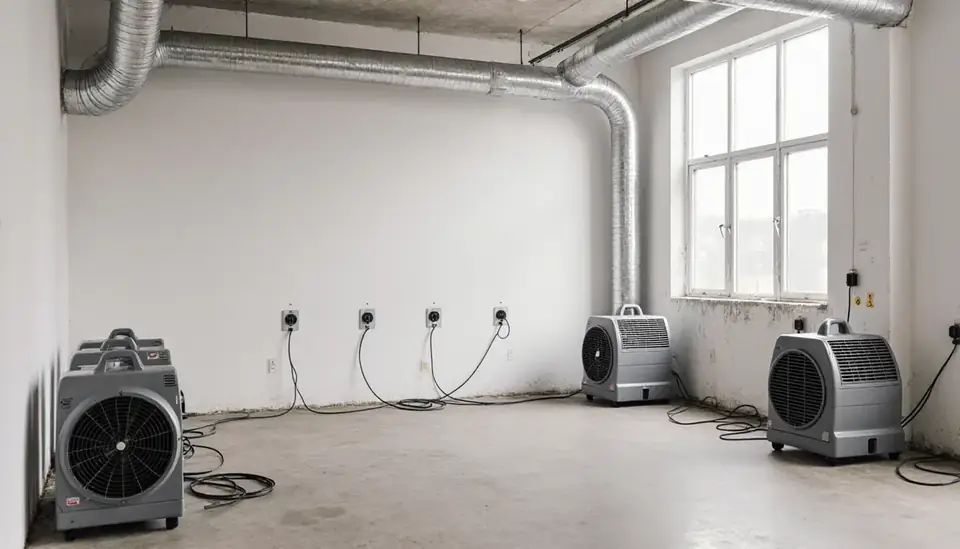
- Run dehumidifiers and air movers, rechecking until readings return to normal.
A provider doing water damage restoration should give you a moisture log you can share with your insurer.
Year-Round Rain and Mold in Older Homes
Because rain falls fairly evenly across the year, Burlington homes rarely get a long dry stretch to recover after a leak, and the humid summers speed up mold growth on wet wood and drywall. Crawl spaces with torn vapor barriers, gutters that dump water against the foundation and slow leaks behind cabinets are the usual starting points. Dry wet materials within a day or two where possible, and use mold remediation with containment if growth is widespread.
Areas In and Around Burlington
Calls come in from across Burlington, including:
- Downtown
- Beverly Hills
- East Davis Street
- Lakeside Mills
- South Broad-East Fifth Streets
The same line also serves nearby communities such as:
Burlington Water Damage Questions
How do I report a drainage or storm drain problem in Burlington?
Use the city's Fix-it, Report-it, Request-it page online or call the city at 336-222-5000. The stormwater program funds repairs to aging pipes and stream restoration, so reports help the city find problem spots. If water is entering your home, protect the interior first by stopping the source, moving belongings and starting extraction, then make the report.
Can I buy flood insurance right before a storm hits Alamance County?
Not effectively, in Burlington or elsewhere in the county. Alamance County Emergency Management notes that National Flood Insurance Program policies typically take up to 30 days to take effect, so a policy bought when a storm is already forecast will not help. Standard homeowners coverage excludes flooding. Look over your coverage well ahead of hurricane season and severe storm season.
Where can I get emergency alerts in Burlington?
Alamance County Emergency Management runs ACE Alerts through Nixle, which residents can sign up for and update online. The county's emergency management site also has flood safety guidance, including the reminder never to drive through flooded roads. Early warning helps you move valuables off basement floors and clear gutters before heavy rain arrives.
Is a slow leak in an older mill house worth calling about?
Yes. Slow leaks from old drain lines or supply pipes can soak subfloors and wall cavities for weeks and lead to rot and mold that cost far more than the plumbing repair. A restoration provider can use moisture meters and thermal cameras to find how far the water traveled, then dry the area before repairs close it up.