

A statue of a woman holding a boll weevil has stood in the middle of Main Street since 1919, a reminder that this city has rebuilt before. Enterprise straddles Coffee and Dale counties beside Fort Rucker, home of Army Aviation, and its weather history is defined less by rivers than by wind: the March 2007 tornado, and earlier hurricanes such as Eloise in 1975 and Opal in 1995, which Wikipedia's city history says caused extensive damage. Rain is generous too (river flooding is more of a concern down the road in Elba), close to 58 inches a year, with July the wettest month at about seven inches.
Calling (888) 317-9980 is free and the line is staffed around the clock. The Restoration Job will connect you with an independent provider of water damage restoration in Enterprise that can assess the problem and quote the work. We refer callers; the third-party company performs the job.
How the call works: when you call (888) 317-9980, The Restoration Job connects you with an independent restoration provider that serves Enterprise. That provider inspects the damage, explains the scope and quotes the work. The Restoration Job doesn't perform restoration itself. Read our referral disclosure.
What the March 2007 Tornado Taught Enterprise About Wind and Water
On March 1, 2007, an EF4 tornado about 200 yards wide cut a ten-mile path through the city shortly after 1 p.m. Eight students died at Enterprise High School when a wall collapsed onto a hallway, and another person was killed downtown. According to Wikipedia, at least 647 houses were damaged or destroyed along a quarter-mile-wide swath through the downtown area.
For homes on the edge of a track like that, the lasting damage is often water. Roofs that lose decking or shingles let the next rain soak attics and walls, sometimes days before a contractor can rebuild. Tarping quickly, pulling out wet insulation and drying framing before it is closed back in are the steps that keep storm repairs from turning into mold repairs a year later.
Tropical Systems Moving Up From the Gulf
Eloise and Opal both reached this far inland with enough force to do serious harm. Hurricanes that come ashore along the Florida Panhandle can still bring damaging gusts, falling pines and several inches of rain by the time they reach Coffee County. Severe storms are not limited to hurricane season, either: the National Weather Service in Tallahassee confirmed tornadoes in Coffee County on April 8, 2010.
After a tropical system, walk the house with a flashlight. Check ceilings below valleys and chimneys, window sills on the windward side, and the attic around vent boots. A provider offering storm damage cleanup can dry out what got wet and coordinate with the roofer so new materials are not installed over damp wood.
Military Rentals, Moves and Vacant Houses Near Fort Rucker
With Fort Rucker next door, many Enterprise homes change hands or tenants on military timelines. That pattern creates a few recurring water problems:
- Water heaters or supply lines failing in a house that sits empty between occupants
- Tenants unsure whether to call the landlord, property manager or a contractor first
- Leaks discovered during a move-out walkthrough after weeks of slow seepage
Renters should notify the landlord or manager in writing right away and photograph their belongings; renters insurance generally covers contents, while the owner's policy covers the building. Owners of vacant homes should shut off the main water valve and have someone check the property regularly.
July Downpours and Floodplain Questions
Summer thunderstorms can drop more rain in an hour than yard drainage and street inlets can carry. The City of Enterprise Engineering Department lists floodplain administration among its core services, so it is the office to ask about a property's flood zone or drainage questions before you build an addition or regrade a yard. You can also check the FEMA Flood Map Service Center by address.
Remember that standard homeowners coverage typically excludes surface flooding. If runoff came in under a door, your flood policy, not your homeowners policy, is usually what responds.

Drying Standards and Mold Control After a Leak
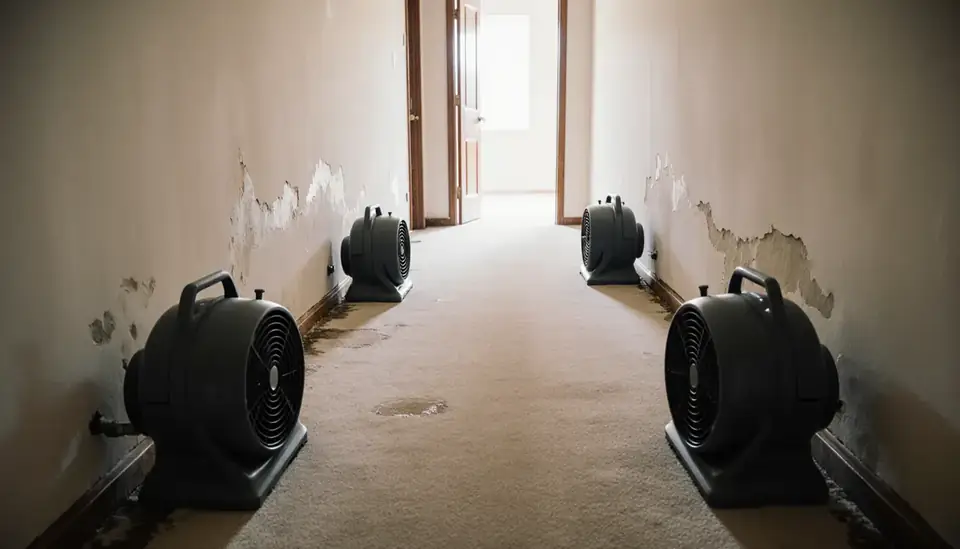
Coffee County humidity slows natural drying and gives mold a head start. A careful provider will extract standing water, then use meters to find where moisture has wicked into drywall, baseboards and subfloor. Structural drying with dehumidifiers and air movers continues until materials test dry, not just until they feel dry.
Where growth has already started, mold removal in Enterprise should include containment of the work area, removal of damaged porous materials and a fix for whatever let the water in. Painting over stains only hides the problem.
Areas In and Around Enterprise
The same line also serves nearby communities such as:
Common Questions
I rent near Fort Rucker and a pipe burst. Who pays for the cleanup?
In most cases the property owner's insurance covers damage to the building, and your renters policy covers your belongings and sometimes temporary housing. Tell your landlord or property manager in writing immediately, take photos before moving anything, and keep receipts. If the owner cannot be reached, ask a restoration provider to start emergency water removal so the damage does not spread.
Part of Enterprise is in Dale County. Does that matter for flood maps?
Flood maps are organized by county panels, so your exact address determines which map applies. The simplest approach is to search your address on the FEMA Flood Map Service Center or ask the city's Engineering Department, which handles floodplain administration. Inside the home, cleanup is handled the same way on either side of the county line.
My roof was damaged in a storm but the inside looks dry. Should I still have it checked?
Yes. Water often runs along rafters and settles into attic insulation or wall cavities before it shows on a ceiling. A provider can use a moisture meter or thermal camera to look for hidden wet areas. Finding them early means drying in place instead of replacing drywall and insulation later.