

Huntington Beach is a coastal city built close to sea level. Its average elevation is about 39 feet, but large parts sit much lower: Sunset Beach, annexed in 2011, is a narrow strip along Pacific Coast Highway at roughly five feet above the ocean, squeezed between the beach and Huntington Harbour. The city has about 9.5 miles of sandy shoreline, the Bolsa Chica wetlands on its northwest side and the mouth of the Santa Ana River at its southeast edge. Water arrives here from the sky, from the ocean side and from inside the walls.
Nobody from The Restoration Job shows up at your door with equipment. We operate a free phone line, (888) 317-9980, that is answered 24/7 and connects you with an independent restoration provider serving Huntington Beach. Many providers offer emergency flood cleanup and drying, though each sets its own hours.
How the call works: when you call (888) 317-9980, The Restoration Job connects you with an independent restoration provider that serves Huntington Beach. That provider inspects the damage, explains the scope and quotes the work. The Restoration Job doesn't perform restoration itself. Read our referral disclosure.
Huntington Harbour and Sunset Beach: Living Next to the Water
Huntington Harbour was built starting in 1963 on what had been the Sunset Bay estuary, which was dredged and filled to create five man-made islands: Admiralty, Davenport, Gilbert, Humboldt and Trinidad. A large share of the homes have direct water frontage on channels 15 to 20 feet deep. Next door, Sunset Beach is only a few blocks wide and sits at very low elevation.
Properties like these face risks inland homes rarely do. High tides combined with storm swell can push water toward seawalls, patios and low garages, and heavy rain can drain slowly when outlets are near tide level. Salt air also corrodes metal fittings, water heater connections and exterior hose bibs faster than it would a few miles inland. If you own waterfront property, check your FEMA flood zone, know where your utility shutoffs are, and keep a flood policy in mind, since standard homeowners coverage generally excludes flooding from outside.
Winter Storms and Where Water Goes on Flat Ground
The city gets about 14 inches of rain in a typical year, almost all of it in mid-winter. Most of Huntington Beach is flat coastal plain, so storm water moves slowly toward storm drains and flood control channels rather than running off quickly downhill. During a strong storm, streets and parking areas can pond, and water may reach garages and ground-floor rooms, particularly in older tracts where the slab sits only a step above the street.
The city's Public Works department provides free sand and sandbags to Huntington Beach and Sunset Beach residents at its corporate yard on Gothard Street during business hours, with a limit per household and proof of residency required. Bring your own shovel, and fill bags before the storm, not during it.
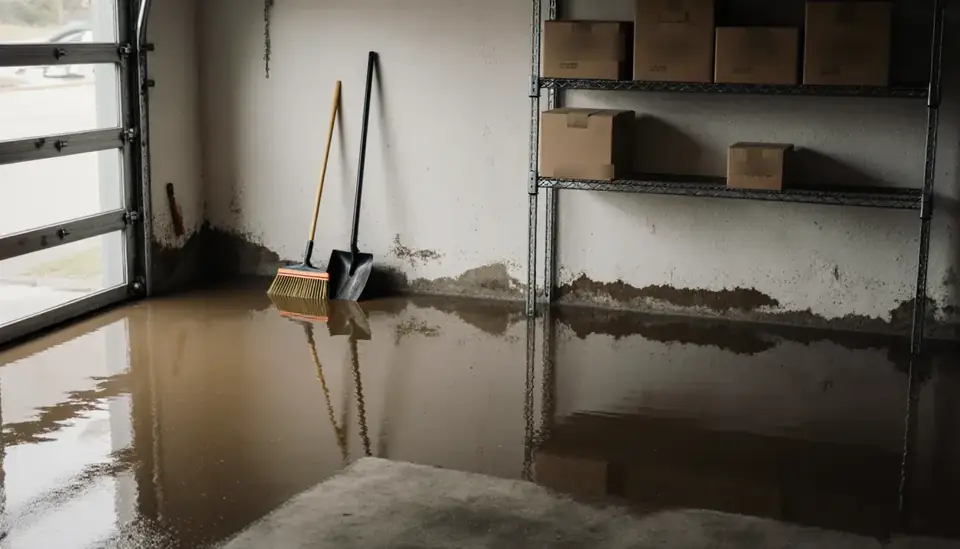
Oil-Field History, Older Tracts and Indoor Leaks
The city sits above the Huntington Beach Oil Field, and its growth from an oil town into a large suburb left a mix of housing from different decades. Whatever the age, most day-to-day claims start indoors: a burst washer hose, a corroded water heater in the garage, a failed toilet supply line or a slow drain leak under a sink. In two-story homes, an upstairs bathroom leak often shows up first as a stained ceiling in the room below.
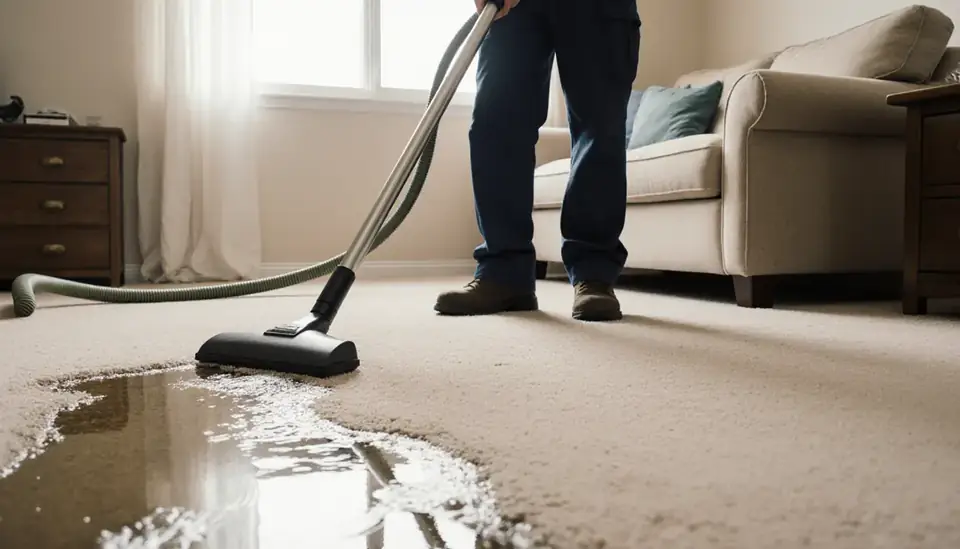
When a restoration crew arrives, the usual sequence is to stop the source, extract water, remove soaked carpet pad and baseboards where needed, and set dehumidifiers and air movers. Drying is tracked with daily moisture readings. Saltwater or outside floodwater is handled more aggressively than a clean supply-line leak, because it carries contaminants and leaves residue in porous materials.
Marine Air Slows Drying
Summer high temperatures here rarely top 85 degrees, and the ocean keeps humidity higher than in inland Orange County. That is pleasant for living but works against drying. Wet drywall, wood framing and carpet backing take longer to dry in moist coastal air, which gives mold more time to start. Run dehumidifiers rather than relying on open windows alone, and watch closets, under-sink cabinets and exterior walls on the ocean side for musty odors or spotting. Persistent or spreading growth calls for professional mold remediation rather than bleach and paint.
A Short Checklist for Coastal Homeowners
- Sign up for AlertOC through ReadyOC to receive emergency notifications.
- Look up your address on the FEMA Flood Map Service Center and keep your flood policy documents somewhere you can reach quickly.
- Know where your main water shutoff is, and test it once a year.
- Photograph rooms and major belongings now, so you have a before record if you ever file a claim.
- After any water event, take photos before cleanup and save damaged items until your adjuster has seen them.
Huntington Beach Neighborhoods and Surrounding Towns
Calls come in from across Huntington Beach, including:
- Huntington Harbour
- Sunset Beach
- Downtown
- Bolsa Chica
The same line also serves nearby communities such as:
- Fountain Valley
- Westminster
- Seal Beach
- Costa Mesa
- Newport Beach
- Garden Grove
Common Questions
Where can Huntington Beach residents get sandbags?
The city's Public Works sandbag page lists free sand and bags for Huntington Beach and Sunset Beach residents, with the Corporate Yard at 17371 Gothard Street as the main site on weekdays. It is for residents only, there is a per-household limit, and you may be asked for proof of residency. Other sites open seasonally, so check the page before going.
Does homeowners insurance cover flooding in Huntington Harbour?
Standard homeowners policies generally exclude flooding from rising water, tides or storm surge. That coverage typically comes from a separate flood policy through the National Flood Insurance Program or a private insurer. Sudden indoor leaks, like a burst pipe, are handled differently and are often covered under a homeowners policy, subject to its terms.
Why does my house smell musty weeks after a leak was fixed?
Coastal humidity slows drying, so materials that looked dry on the surface may still hold moisture inside walls, under flooring or in cabinet bases. That trapped moisture can support mold. Ask a provider to take moisture readings in the affected area; if readings are high, the area may need to be opened up and dried properly.
Is seawater flooding cleaned up differently from a pipe leak?
Yes. Water from outside, including tidal or storm water, is treated as contaminated. Porous materials it reaches, such as carpet, pad and the lower part of drywall, are usually removed rather than dried in place, and surfaces are cleaned before drying. Salt residue can also attract moisture later if it is not removed.