
Costa Mesa takes its name from its geography: a coastal tableland that sits about 98 feet above sea level, with the Santa Ana River running along its western bluffs and the ocean barely a mile beyond its southern edge. That raised ground keeps most of the city out of the way of the ocean itself, but it does not keep water out of houses. Rain here averages a little over 11 inches a year and arrives almost entirely between November and March, so a roof, gutter or drain that went untested all summer often fails on the first real storm. The rest of the year, the leaks start indoors.
The Restoration Job is a free referral line, answered 24/7 at (888) 317-9980. We connect callers with independent restoration providers that work in Costa Mesa; we don't do the work ourselves. The company you're connected with inspects, quotes and carries out the job, and many providers offer emergency service when water is still moving.
How the call works: when you call (888) 317-9980, The Restoration Job connects you with an independent restoration provider that serves Costa Mesa. That provider inspects the damage, explains the scope and quotes the work. The Restoration Job doesn't perform restoration itself. Read our referral disclosure.
A Postwar City on the Mesa
Costa Mesa was a farming community of about 16,840 people when it incorporated in 1953. Within three decades its population had nearly quintupled, and it passed 111,000 by 2020. That pace of growth means a large share of the city's homes, apartments and commercial buildings went up in a fairly compressed period, and many of them are now reaching the age when original plumbing, water heaters and roof coverings wear out at roughly the same time.
On the ground this shows up as a familiar set of calls: a supply line behind a washing machine that finally splits, a water heater tank that rusts through in a garage, a pinhole leak in copper pipe running under a concrete slab. Slab leaks are the sneaky ones. Water can travel along the slab for days before it shows as a warm spot on the floor, a damp baseboard or a sudden jump in the water bill.
Santa Ana River Bluffs and Winter Runoff
The Santa Ana River has a long flood history in Orange County. The 1862 flood is now estimated as roughly a 1,000-year event, and in 1938 the river broke its banks upstream and flooded Anaheim and Orange under as much as four feet of water, killing nearly 60 people. Prado Dam followed in 1941, and from 1989 the Santa Ana River Mainstem Project lined about 30 miles of the lower river in concrete. The main channel is far better contained than it was, though it still carries the drainage of a large watershed past Costa Mesa's west side.
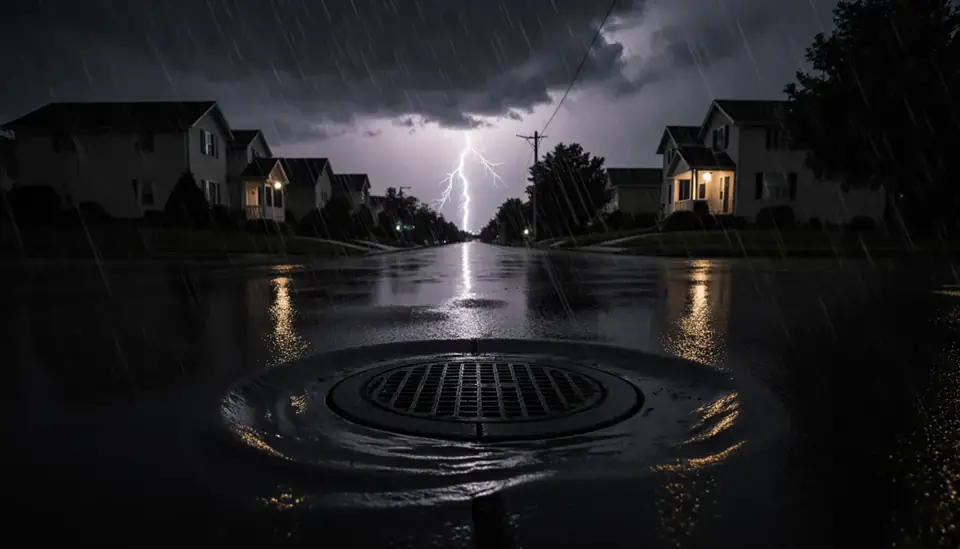
For most residents the practical risk is closer to home. Orange County's ReadyOC program lists heavy, localized rain, runoff from hillsides and clogged storm drains as the usual causes of flooding in the county. On the mesa that means water ponding at low corners of a lot, pushing under garage doors, or overflowing a patio drain that's packed with leaves. It also means wind-driven rain working under old flashing and tile.
Apartments, Condos and Shared Walls
In apartment and condo buildings, water rarely respects unit lines. A toilet supply line that fails upstairs can soak the ceiling, insulation and cabinets of the unit below within an hour. In that situation:
- Shut off water at the fixture or the unit valve, and alert the neighbor below.
- Notify the property manager or homeowners association in writing, with photos and times.
- Check your own policy. HOA master policies and individual unit policies usually split responsibility differently, so read both before repairs begin.
- Ask the restoration provider to document moisture readings in every affected unit, not just yours.
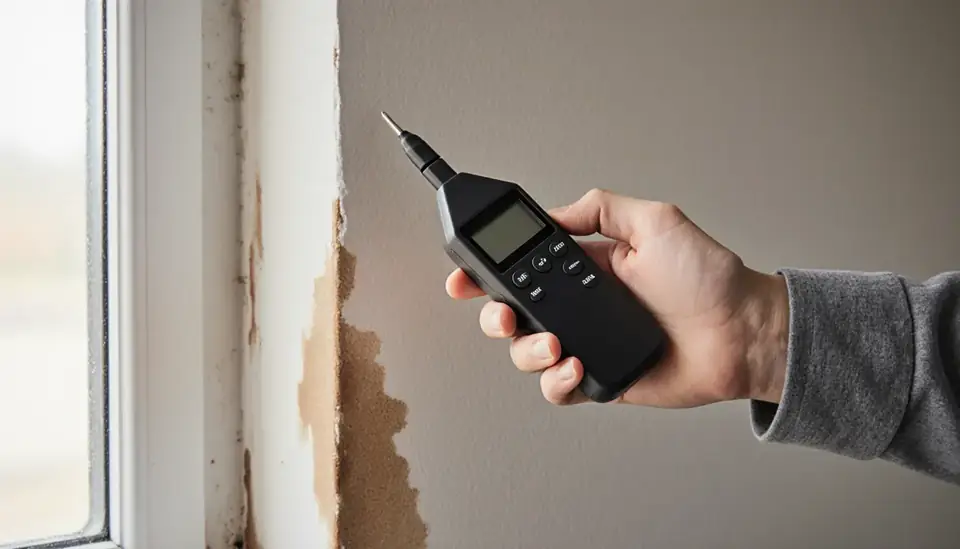
Moisture mapping matters more than people expect, because wet drywall and subfloor in a neighboring unit can keep feeding humidity back into yours.
Drying Out After a Leak or Storm
Water damage restoration in a Costa Mesa house usually follows a predictable sequence. A crew stops the source, pulls standing water, and uses moisture meters and thermal imaging to find how far it has wicked into walls, cabinets and flooring. Wet carpet pad generally comes out. Baseboards may be removed so air movers and dehumidifiers can reach the bottom of the drywall. On slab floors, water trapped under laminate or engineered wood often needs that flooring lifted to dry properly.
Once the structure reaches dry readings, the water damage repair phase begins: drywall, paint, flooring and trim. Ask for the drying logs. They are useful to an insurance adjuster and to you if a question comes up later about whether the space was fully dry before it was closed up.

Mold Risk Under a Marine Layer
Costa Mesa's summers are dry, but the coastal marine layer keeps nights mild and air moist for long stretches of the year. That is enough for mold to start on wet drywall, carpet backing or cabinet bases within a couple of days if a leak goes unnoticed. Hidden spaces are the usual problem: behind a dishwasher, under a sink, inside a wall that shares a bathroom.
If you can smell mustiness or see spotting, have the area assessed rather than wiping it and painting over it. A provider offering mold cleanup will typically contain the area, remove affected porous materials and dry what remains, then confirm moisture is back to normal levels.
Where Callers in the Costa Mesa Area Are
Calls come in from across Costa Mesa, including:
- South Coast Metro
The same line also serves nearby communities such as:
- Newport Beach
- Santa Ana
- Huntington Beach
- Fountain Valley
- Irvine
Costa Mesa Water Damage Questions
Is Costa Mesa in a flood zone?
Most of the city sits on raised ground, but flood zone status is set property by property on FEMA's flood maps, and parts of Orange County near the Santa Ana River and other channels are mapped differently than the mesa. Enter your street address in FEMA's online Flood Map Service Center to see the mapped zone for your lot. Standard homeowners and renters policies generally exclude flood, so coverage for rising water is a separate decision.
My water bill spiked and the floor feels warm. What does that mean?
Those are classic signs of a slab leak, where a hot or cold line under the concrete has developed a pinhole. Shut off the water at the main if you can find it, and call a plumber to locate the leak. Once the pipe is repaired, a restoration provider can measure how far moisture spread into flooring, baseboards and lower walls and dry it before anything is replaced.
Who pays when a unit above mine leaks into my condo?
It depends on where the leak started, your association's governing documents, and how the master policy and your unit policy are written. Document everything right away with dated photos, notify the HOA or property manager, and file with your own insurer if your unit is damaged. Restoration work can often start to prevent further damage while those questions are being sorted out.
How do I get storm and flood alerts in Costa Mesa?
Orange County sends emergency notifications through AlertOC, and the county's ReadyOC site has flooding guidance and sign-up links. During heavy rain, avoid driving through moving water: ReadyOC notes that six inches of moving water can knock a person down and a foot can carry away a vehicle.