

Santa Ana is the county seat and one of the most densely built cities in Southern California, with roughly 11,350 residents per square mile on low, nearly flat ground. It also has more renters than owners: of about 79,000 housing units, around 54 percent are renter-occupied. In practice that means a large share of water losses here involve apartments, shared walls and a landlord, tenant and two insurance policies that all have to be sorted out at once.
The Restoration Job connects callers with independent, third-party restoration providers. The actual cleanup is done by those outside companies, not by us. Call (888) 317-9980, day or night, and we will put you in touch with a provider that covers Santa Ana for extraction, drying and cleanup.
How the call works: when you call (888) 317-9980, The Restoration Job connects you with an independent restoration provider that serves Santa Ana. That provider inspects the damage, explains the scope and quotes the work. The Restoration Job doesn't perform restoration itself. Read our referral disclosure.
Between the Santa Ana River and Santiago Creek
The Santa Ana River runs through the west end of the city inside a mostly channelized bed, and it is usually dry or nearly so because Prado Dam and Seven Oaks Dam hold back flow upstream. The river caused several severe floods in the twentieth century, and it is still considered a threat despite the dams. Santiago Creek, its main tributary from the east, flows southwest between Orange and Santa Ana before joining the river. Its lower course was channelized in the mid-1900s after the Orange County Flood Control Act of 1927.
Today, the more common problem is not the river overtopping but storm water that cannot drain fast enough. Santa Ana averages about 12.5 inches of rain a year, mostly between November and April, and a single storm can deliver a meaningful fraction of that. On flat streets, water backs up at intersections and crosses low thresholds into ground-floor units, garages and storefronts. Anyone on a ground floor near a known low spot should keep sandbags or door barriers on hand before winter.
Apartment Leaks and Who Handles What
With so many multi-unit buildings, a single failed water heater or drain line can affect several households. A few points that usually apply:
- The property owner is generally responsible for the building itself: drywall, flooring, cabinets and plumbing. Report the leak to the manager in writing and keep a copy.
- Your belongings are typically covered only by your own renters policy, not the landlord's insurance.
- If water is coming from the unit above or next door, take dated photos of ceilings and walls as the stain grows; this helps establish the timeline.
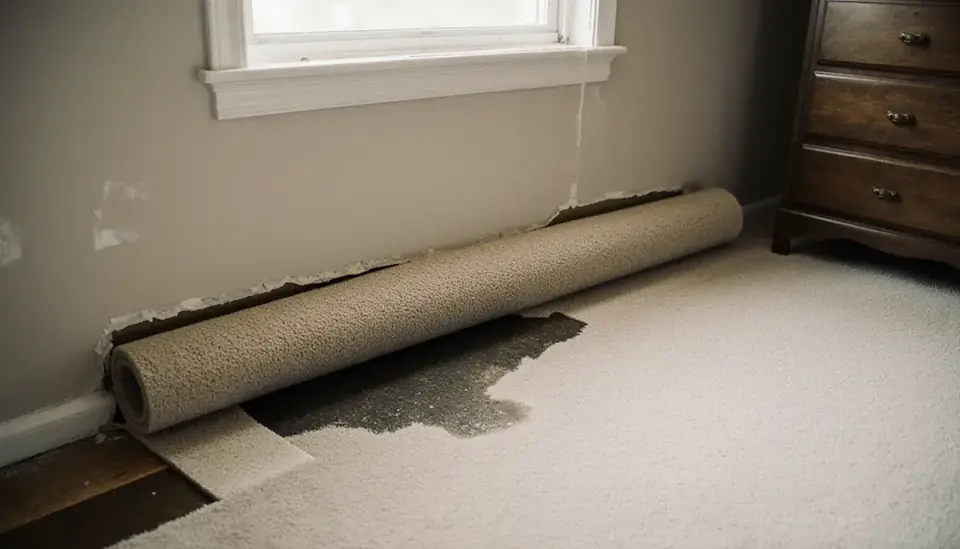
- Ask that wet carpet and pad be removed or dried quickly. Waiting for paperwork while materials stay wet is how a clean-water leak becomes a mold problem.
Owners of small rental properties should line up a provider who can document moisture readings daily, since those logs are useful for both insurance and tenant communication.
Older Homes Downtown and in French Park
Santa Ana has several historic homes dating from the late 1800s, and districts such as the French Park Historic District and the downtown National Register districts preserve older buildings and houses. Older construction often has raised wood floors over a crawl space, plaster walls and plumbing that has been repaired piecemeal over decades. When water gets under one of these homes, it can sit in the crawl space unseen, raising humidity in the floor system above.
Drying a plaster wall or an old hardwood floor takes more patience than drying modern drywall. A good provider will measure moisture before deciding what to remove, and will explain whether materials can be saved through structural drying rather than demolition. For historic properties, ask before anything original is torn out.
Sewer Backups and Category 3 Water
Not all water is equal. A toilet overflow, a main-line clog or a storm that surcharges the sewer can push wastewater into tubs, showers and floor drains. That water is treated as contaminated, and porous materials it touches, such as carpet, pad and the bottom of drywall, are generally removed rather than dried in place. Keep children and pets out of the area, turn off HVAC that could spread odors, and avoid running fixtures until the line is cleared. Our sewage cleanup page explains the process in more detail.

Keeping Mold Out of Closed-Up Units
Santa Ana's semi-arid climate helps surfaces dry, but small apartments with windows shut and bathrooms without good exhaust fans hold moisture well. After any leak, mold can begin on damp drywall and carpet backing within a couple of days. Run fans and a dehumidifier, open what you can, and watch for a musty smell or spotting at the base of walls in the weeks after. If growth appears inside a wall cavity or keeps returning, ask the landlord to bring in a remediation provider rather than painting over it.
Santa Ana Neighborhoods and Surrounding Towns
Calls come in from across Santa Ana, including:
- Downtown
- French Park
- Midtown
- Artist Village
- Metro East
- Greenville
- South Coast Metro
The same line also serves nearby communities such as:
- Orange
- Garden Grove
- Irvine
- Tustin
- Costa Mesa
- Fountain Valley
- Anaheim
Common Questions
Is the Santa Ana River still a flood risk for the city?
The river is channelized and controlled by Prado Dam and Seven Oaks Dam, so major river floods are much rarer than they were before the 1940s. Still, it is regarded as a continuing threat despite the dams, and local storm drainage can be overwhelmed in heavy rain. Look up your address on FEMA's flood map and consider whether flood coverage makes sense for you.
My landlord is slow to respond to a leak. How should I protect myself while I wait?
Put your notice in writing, photograph the damage, and move belongings away from wet areas. Contact your renters insurance company about your property. If water is actively flowing, shut off the fixture or the unit's water supply if you can safely reach it. Prolonged wet materials can grow mold, so press for prompt drying and keep records of every contact.
Can a crawl space under an older Santa Ana house really cause mold upstairs?
It can. Water that pools under a raised floor raises humidity in the joists and subfloor, and that moisture can show up as cupped hardwood, musty odors or growth on the underside of flooring. A provider can check the crawl space with meters, remove standing water and set up drying equipment there as part of the job.
Where can Santa Ana residents sign up for emergency alerts?
The City of Santa Ana helps operate ReadyOC with the County of Orange and the City of Anaheim. The site explains how to register for AlertOC, which sends notices about emergencies that may require immediate action, and offers preparedness guidance for flooding, earthquakes and extreme heat.