
St. Bernard Parish has no incorporated towns, and Chalmette, its seat and largest community, holds about 21,500 people on a strip of land between the Mississippi River and the marshes leading to Lake Borgne. Its elevation is roughly three feet. Almost everyone here knows a family story about the water, and many homes standing today were rebuilt or replaced after 2005.
The Restoration Job connects callers with independent, third-party providers; it does not do the work itself. Call (888) 317-9980, 24/7, and we'll connect you with a provider serving St. Bernard Parish for water damage restoration, from pumping and drying to rebuilding.
How the call works: when you call (888) 317-9980, The Restoration Job connects you with an independent restoration provider that serves Chalmette. That provider inspects the damage, explains the scope and quotes the work. The Restoration Job doesn't perform restoration itself. Read our referral disclosure.
From Betsy to Katrina: Why the Parish Floods Deep
In September 1965, Hurricane Betsy's surge broke levees along the Industrial Canal and flooded Chalmette and neighboring Arabi. Forty years later, Katrina's surge moved up the Mississippi River Gulf Outlet, the shipping channel finished in 1968, and its levees broke in about 20 places. Water reached 14 to 15 feet in parts of Chalmette, most of the parish sat under 5 to 15 feet of standing water, and the parish president declared every home unlivable. By October 2005 most buildings had been judged beyond repair.
The population fell from about 32,000 in 2000 to under 17,000 in 2010 before recovering to roughly 21,500 by 2020. That history means much of the housing is either post-2005 construction or older homes gutted and rebuilt to the studs.
What Changed: The MRGO Closure and the Surge Barrier
Two big projects changed the parish's exposure. The Corps of Engineers closed the outlet channel with a rock structure at Bayou La Loutre in July 2009, and in 2011 completed the 1.8-mile Lake Borgne Surge Barrier, designed for surges up to 28 feet. Together they reduce the chance of a repeat of 2005.
Reduced is not eliminated, though. Heavy rain still has to be pumped out of low ground, roofs still fail in hurricanes, and plumbing and appliance leaks happen year-round. Most water damage calls here now come from those everyday sources rather than from the levees.
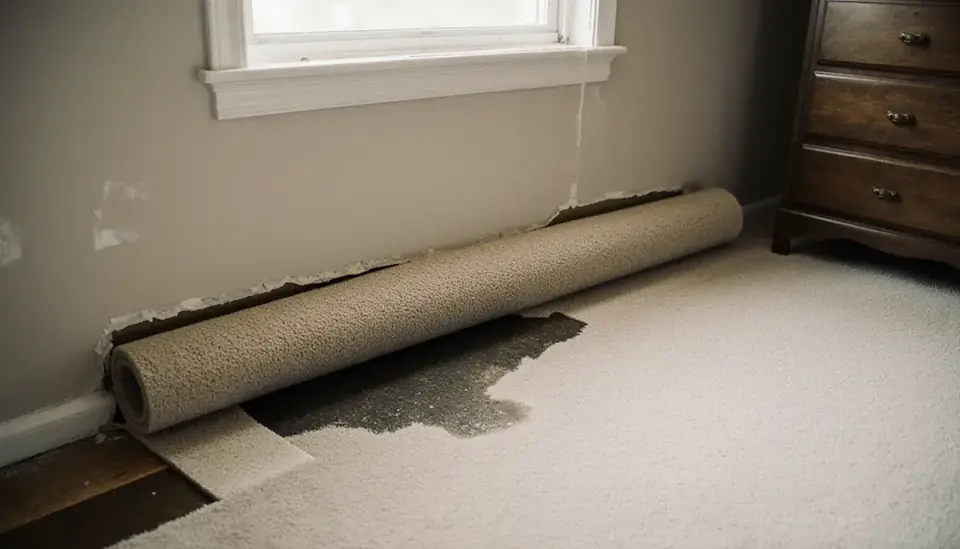
Household Leaks in Rebuilt Slab Homes
In a slab-on-grade house with the air handler in the attic and the water heater in a closet or garage, a familiar set of problems comes up:
- Overflowing AC condensate pans that drip through a ceiling during long cooling seasons.
- Failed water heaters that spread water across slab floors and under baseboards.
- Supply lines to toilets, sinks and ice makers that burst while the house is empty.
- Roof leaks after strong thunderstorms or tropical systems.
On a slab, water moves sideways under flooring and into the bottom of walls. A provider will typically check with a moisture meter beyond the visible wet area, remove baseboards, and dry wall cavities before replacing flooring.
Oil, Sediment and Contaminated Floodwater
Katrina showed that floodwater here is rarely clean. A storage tank at the Murphy Oil refinery in neighboring Meraux floated off its foundation and released more than a million gallons of crude into Meraux and Chalmette; the 2009 class settlement covered about 1,800 residential properties. Even without a spill, surge and street flooding carry sewage, fuel and silt.
Materials touched by contaminated water, including drywall, insulation, carpet and particleboard furniture, are generally discarded, not dried. Hard surfaces are cleaned and disinfected. Wear boots and gloves, and keep children and pets out until cleanup is done. Where sewage was involved, a provider offering sewage cleanup follows separate handling steps.
Keeping Mold Out After a Leak or Storm
Long, humid summers mean wet drywall in a closed house can start growing mold within a couple of days. Rooms without power after a storm are at the highest risk. Watch for a musty odor in closets, dark spotting near the floor, or peeling paint at the bottom of walls.
Fast extraction, removal of wet porous materials, and dehumidification are the main defenses. Small areas of surface growth on hard materials can often be cleaned; larger growth inside walls generally calls for containment and professional removal.
Where Callers in the Chalmette Area Are
Calls come in from across Chalmette, including:
- Chalmette Battlefield
The same line also serves nearby communities such as:
Chalmette Water Damage Questions
My Chalmette house was rebuilt after Katrina. Do I still need flood insurance?
Federal lenders may require it based on your flood zone, and even where it is optional it is worth considering. The surge barrier and the outlet closure reduce risk, but heavy rain and pump failures can still flood low streets. Homeowners policies exclude rising water, so a separate flood policy is the only coverage for it. Check your zone on FEMA's Flood Map Service Center.
Is water from a burst pipe handled differently from storm flooding?
Yes, both for insurance and for cleanup. A clean supply-line leak is usually a homeowners claim, and materials can often be dried in place if work starts quickly. Storm or street floodwater is a flood claim and is treated as contaminated, so porous materials it touched are typically removed rather than dried.
Who should I call first when water is coming through my ceiling?
First stop the source if you can: shut off the main water valve or the AC unit, and turn off power to wet areas. Then call your insurer to report the loss and a restoration provider to begin extraction and drying. Photograph the ceiling and the room before anything is moved.