

West Monroe grew up on the west bank of the Ouachita River, first as Byron and then as Cotton Port, and it still faces Monroe across the water. That river gets the attention, but the worst flooding in recent memory came straight out of the sky. In March 2016 the Monroe area took 15 to 20 inches of rain in three days, and Ouachita Parish ended up with about 9,500 flood-damaged homes. Ten years later, a January 2026 ice storm brought down trees across northeast Louisiana and left the city's own Kiroli Park closed indefinitely.
Our role is narrow: we answer a free referral line for the Twin Cities area. Call (888) 317-9980 and we'll connect you with an independent restoration provider that serves West Monroe and the rest of Ouachita Parish. Those companies handle the hands-on work, from pumping out standing water to drying framing and rebuilding, and many of them take emergency calls at night and on weekends.
How the call works: when you call (888) 317-9980, The Restoration Job connects you with an independent restoration provider that serves West Monroe. That provider inspects the damage, explains the scope and quotes the work. The Restoration Job doesn't perform restoration itself. Read our referral disclosure.
Three Days of Rain in March 2016
The flood that most West Monroe households remember did not start with a river crest. Storms parked over the ArkLaMiss from March 8 through March 12, 2016, and the National Weather Service in Shreveport logged 22.25 inches at Swartz and 20.26 inches at Monroe. Rainfall like that overwhelms ditches and low streets long before the Ouachita itself becomes the problem, which is why homes well away from the riverbank took water too.
The damage count for the parish was severe: roughly 9,500 homes with flood damage, 5,400 of them fully flooded, and more than 1,700 high-water rescues. FEMA added Ouachita Parish to major disaster declaration DR-4263, signed on March 13, 2016. The lesson for property owners is that a flat yard and a moderate flood zone are not the same as safe ground when a slow storm stalls overhead.
Ice, Falling Limbs and Roof Openings After January 2026
The National Weather Service office in Jackson described the January 23 to 25, 2026 event as a historically damaging ice storm along a corridor running out of northeast Louisiana. More than 143,000 Louisiana customers lost power at the peak, tree damage was described as tremendous, and several homes were hit by falling trees. Ouachita Parish emergency management set up a cleanup hotline for tree removal, debris, roof tarping and muck-out help afterward.
Ice-storm water damage tends to arrive in stages. A limb punctures the roof, meltwater and the next rain run through the hole, and the attic insulation holds that water against the ceiling drywall. Meanwhile a house without power gets cold enough for supply lines to split. If a tree is on your roof, get the structure assessed for safety first, then a tarp, then storm damage cleanup inside before ceilings start to sag.
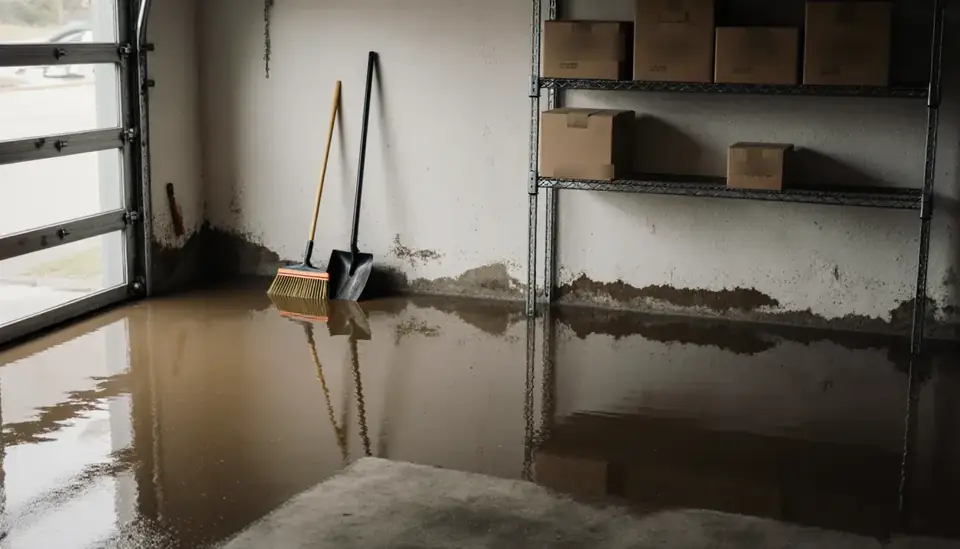
First Steps for a Wet House in Ouachita Parish
- Shut off power to flooded rooms at the breaker if you can reach it without standing in water.
- Photograph every room, the waterline on walls, and damaged contents before anything is moved or thrown out.
- Call your homeowners carrier for pipe bursts and roof leaks; rising water from outside is covered only under a separate flood policy.
- Pull rugs, cushions and anything on the floor into a dry space, and prop up furniture legs on blocks or foil.
- Ask the provider who comes out to show you moisture readings, not just a visual guess.
For storm-related flooding, the parish has also directed residents to report damage through Damage.LA.gov, which helps officials document losses for state and federal aid.
What Drying Looks Like in a Ouachita Valley Summer
Monroe-area weather tops 90 degrees on about 91 days a year, and the air stays muggy for most of that stretch. Fans alone just move humid air around. A competent crew will close up the house, run dehumidifiers alongside air movers, and check the framing, subfloor and wall cavities with meters until the readings come down to normal. Wet drywall usually gets cut a couple of feet above the waterline so the cavity behind it can breathe. That process is what structural drying means in practice, and it typically runs several days.
Mold is the reason not to stretch that timeline. In heat and humidity like this, growth can appear on baseboards, the back of drywall and the underside of carpet pad within a couple of days of a leak. If water sat for longer than that, or if you already smell mustiness, ask for a mold assessment before walls are closed back up.

Antique Alley Storefronts and Older Buildings Near the River
The city counts Antique Alley, its antiques and shopping district, among its signature assets alongside Kiroli Park. Where a shop or a West Monroe house is in an older building, drying needs a lighter hand. Brick holds moisture for a long time, original wood floors cup if dried too fast, and plaster or old millwork may be worth saving rather than tearing out. Owners should ask a provider how they plan to dry slowly and evenly, and whether contents like inventory or antiques will be packed out and cleaned separately.
Permits, Flood Maps and the 50 Percent Rule
Before rebuilding after a flood, find out whether your property sits in a FEMA special flood hazard area. Ouachita Parish follows a substantial-improvement rule: if repairs to a damaged building equal or exceed 50 percent of its market value, the work must meet current codes and elevation standards. Inside city limits, check with the City of West Monroe on its permit process; in unincorporated areas the parish permit office keeps flood maps and elevation certificates for newer construction in flood zones.
For a broader look at how storms and floods play out across the state, see our Louisiana service area page.
Where Callers in the West Monroe Area Are
Calls come in from across West Monroe, including:
- Antique Alley
The same line also serves nearby communities such as:
Questions From West Monroe Property Owners
My West Monroe home flooded from heavy rain, not the river. Does homeowners insurance cover it?
Usually not. Standard homeowners policies exclude surface water that enters from outside, whether it comes from the Ouachita or from a street that could not drain during a downpour like March 2016. That loss falls under a separate flood policy through the NFIP or a private carrier. Water from a burst pipe or a storm-damaged roof is a different matter and is often covered by the homeowners policy.
A tree came through my roof during the ice storm. What should happen first?
Get everyone out of the affected rooms and keep away from any downed lines. A tree service usually has to remove the weight before the roof can be tarped. Once the opening is covered, the inside needs attention quickly: wet insulation, sagging ceiling drywall and soaked flooring should be removed or dried before mold takes hold. Photograph everything before cleanup starts so your claim is documented.
Will a restoration provider handle Kiroli Park-area homes and the rest of the parish?
When you call our line we connect you with an independent provider that serves your address, whether that is near Kiroli Park, along Antique Alley, or out toward Calhoun. Availability varies with demand, and after a parish-wide storm many companies are stretched thin, so calling early and describing the damage clearly helps you get scheduled.
How can I check whether my West Monroe lot sits in a flood zone?
FEMA's Flood Map Service Center lets you search by address and view the current flood insurance rate map. For unincorporated parts of Ouachita Parish, the parish permit office on DeSiard Street keeps those maps and elevation certificates on file. Keep in mind that many homes damaged in 2016 were outside high-risk zones, so a low-risk rating is not a reason to skip flood coverage.