
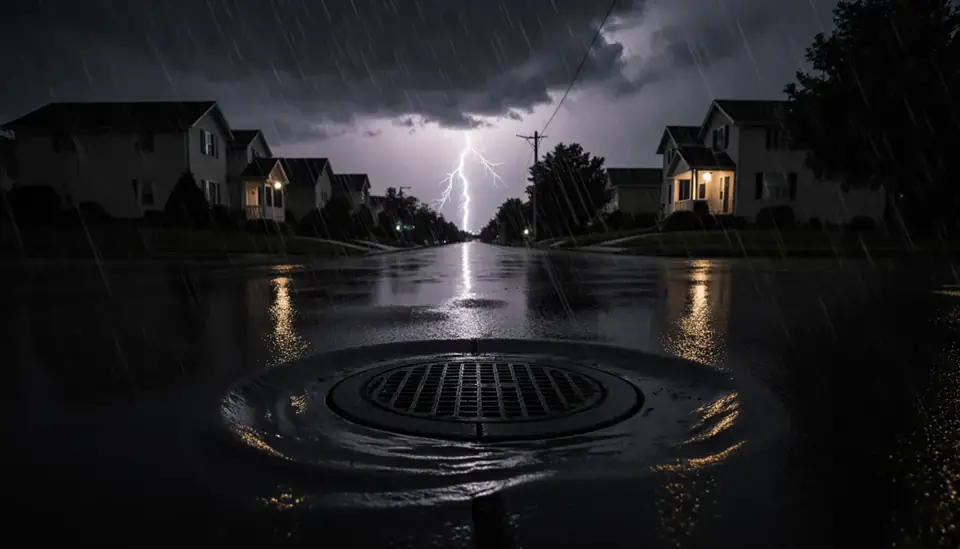
James Rouse founded Columbia in 1967 as a planned community, and its ten villages, from Wilde Lake to River Hill, were laid across rolling hills and stream valleys that drain to the Middle and Little Patuxent rivers. Streets wind with the terrain, open space threads between neighborhoods, and most homes are a short walk from a pond, a lake or a wooded stream corridor. All of that is pleasant on a dry day and a real factor when a summer thunderstorm stalls overhead.
The Restoration Job doesn't do restoration work itself; it runs a free phone line that matches Howard County callers with independent providers. Call (888) 317-9980 at any hour and we'll connect you with a provider that covers Columbia. Below is a practical look at how water tends to get into Columbia houses, townhouses and apartments, and what a careful recovery involves.
How the call works: when you call (888) 317-9980, The Restoration Job connects you with an independent restoration provider that serves Columbia. That provider inspects the damage, explains the scope and quotes the work. The Restoration Job doesn't perform restoration itself. Read our referral disclosure.
Three Lakes, 41 Ponds and the Stream Valleys Between Villages
Columbia Association maintains more than 3,600 acres of open space, including three man-made lakes (Kittamaqundi, Wilde Lake and Lake Elkhorn), 41 ponds and roughly 34 miles of stream valleys. Those greenways double as the community's drainage system. Homes that back onto open space, or that sit at the low end of a cul-de-sac, can collect runoff from the slope above them, particularly after several days of rain have already saturated the soil.
Elevations around Columbia run from about 200 to 500 feet, and on that kind of rolling ground the downhill wall of a house usually takes the brunt. Water finds a foundation crack, fills a window well faster than its drain can empty it, or rises through a floor drain when the sump pump falls behind. Howard County's drainage-complaint mapping shows that most complaints filed between September 2014 and March 2022 came from the eastern portion of the county, a reminder that this is a common problem and not bad luck on one street.
Afternoon Cloudbursts Over the Patuxent Watersheds
Columbia averages about 47 inches of precipitation a year, and summers are hot and muggy. The rain that does the most damage often comes all at once. The National Weather Service calculated that the July 30, 2016 storm over nearby Ellicott City had a 0.1 percent or lower annual chance at durations up to three hours, and on May 27, 2018 the heaviest band dropped 6 to 12 inches over the same area. Columbia was not the bullseye of either storm, but both show what Piedmont thunderstorms in this part of Howard County can deliver in one afternoon.
In a Columbia neighborhood the typical result is not a river in the street but overwhelmed gutters, a sump pump that lost power, downspouts emptying against the foundation, or a basement window well acting like a funnel. During a storm, stay out of standing water if outlets or cords are submerged, move what you can to higher shelves, and take photos and video before anything is thrown away.

Shared Walls: Townhouse and Apartment Leaks in the Villages
Rouse planned Columbia to mix residents of different incomes, so the villages hold a range of housing, and attached homes and apartments are common. In a building with shared walls, a failed washing machine hose or a cracked toilet supply line rarely stays in one unit. Water follows floor framing and pipe chases, showing up as a stain on a neighbor's ceiling or a wet carpet next door.
Who handles what depends on where the leak started and on the governing documents of the condominium or homeowners association, along with each owner's insurance policy. A sensible first round of calls goes to the neighbor whose unit is affected, the property manager or association, and your own insurer. Shut off the fixture valve or the main supply, then let a restoration provider measure moisture on both sides of the wall so the drying plan covers every affected space and not just the unit where the water was first noticed.
What Drying Out a Columbia Basement Involves
Many basement losses here are clean water from a supply line or groundwater seeping in, though floor-drain backups carry sewage and need to be handled as contaminated. A typical job unfolds roughly like this:
- Standing water is pumped or vacuumed out, a step providers call water extraction.
- Wet carpet pad is usually removed, and drywall or baseboard that wicked water is cut back above the wet line.
- Air movers and dehumidifiers run for several days of structural drying, with moisture readings taken each day.
- The crew documents conditions with photos and readings, which helps with any insurance claim.
- Repairs such as new drywall, paint and flooring follow once materials test dry.

Mold Pressure in a Humid Howard County Summer
Columbia's humid summers keep indoor air damp, and a finished basement with carpet over concrete holds moisture well after the visible water is gone. Mold can start growing on wet drywall, paper facing and wood within a day or two in that environment. Running dehumidification, removing soaked materials promptly and confirming that framing has actually dried are the practical defenses. If you notice a musty smell, staining along the bottom of walls or growth behind furniture weeks after a leak, a provider offering mold remediation can contain the area, remove affected materials and address the moisture source so it does not come back.
Where Callers in the Columbia Area Are
Calls come in from across Columbia, including:
- Wilde Lake
- Harper's Choice
- Oakland Mills
- Long Reach
- Owen Brown
- Town Center
- Hickory Ridge
- Kings Contrivance
- Dorsey's Search
- River Hill
The same line also serves nearby communities such as:
- Ellicott City
- Elkridge
- North Laurel
- Savage
- Fulton
- Jessup
- Scaggsville
- Highland
Questions From Columbia Property Owners
Does living near one of Columbia's lakes or ponds put my home in a flood zone?
Not automatically. Flood zones follow mapped floodplains, not distance to a lake. Howard County's flood map page shows the effective maps from November 6, 2013 alongside preliminary maps released August 1, 2025, and the county also regulates floodplains on smaller drainage areas than FEMA maps. You can look up a property on the county's map viewer or call the Bureau of Environmental Services at 410-313-6444.
A leak from my neighbor's townhouse damaged my unit. Who pays?
It depends on where the leak began, what your association documents assign to owners versus the association, and how each insurance policy is written. Report the damage to your neighbor, the association or manager, and your insurer right away, and keep photos and any moisture readings. A restoration provider can document both units, which helps the people sorting out responsibility later.
Will homeowners insurance cover a basement that flooded during a storm?
Standard homeowners policies generally exclude flooding from surface water, which is covered by separate flood insurance. Water backing up through a floor drain or a failed sump pump is often covered only if the policy has a specific endorsement for it. Read your declarations page or ask your agent before assuming either way, and photograph everything before cleanup begins.
What can I do in Columbia while I wait for a restoration provider?
Stop the source if you can, such as a supply valve or the main shutoff. Keep away from water near outlets or cords. Move rugs, boxes and furniture off wet floors, wipe up what you can and run any dehumidifier you own. Take photos and video. Call (888) 317-9980 and we'll connect you with an independent provider that serves Columbia.