
Germantown is Maryland's third-most populous community, yet it saw little development until the mid-20th century. A 1967 master plan, a revised 1974 plan that organized it into six villages, and the sewer line completed that same year set off a rapid building boom; the population more than quadrupled during the 1980s alone. Much of the housing is townhouses and single-family homes built from the 1980s onward, spread across rolling Piedmont ground between Great Seneca and Little Seneca creeks.
The Restoration Job owns no equipment and employs no technicians; it is a no-cost matching service. Call (888) 317-9980 around the clock and we'll connect you with an independent provider that serves Germantown and the upper Montgomery County area. Here is what to expect when water gets into a home here.
How the call works: when you call (888) 317-9980, The Restoration Job connects you with an independent restoration provider that serves Germantown. That provider inspects the damage, explains the scope and quotes the work. The Restoration Job doesn't perform restoration itself. Read our referral disclosure.
Six Villages Built in a Single Building Wave
Gunners Lake, Kingsview, Churchill, Middlebrook, Clopper's Mill and Neelsville villages were laid out under the 1974 plan, and much of the housing in them dates from roughly the same few decades. That matters for water damage because components installed at the same time tend to wear out around the same time. Water heaters, washing-machine hoses, toilet supply lines, ice-maker connections and original roofing all have service lives, and in an older townhouse community several may be due at once.
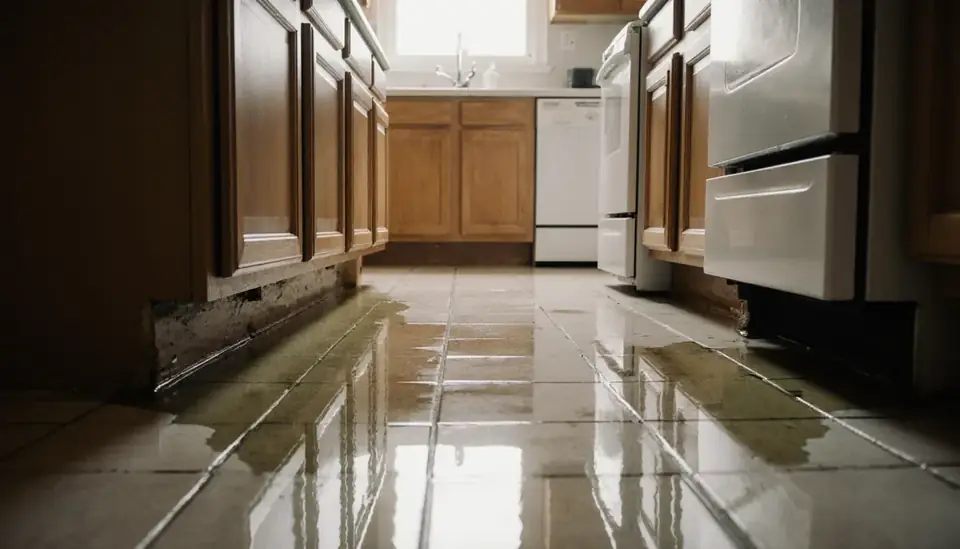
Where a townhouse has a finished lower level, a failed water heater in a utility closet or a leaking shutoff at the main can soak carpet and drywall across the whole floor before anyone goes downstairs. Checking the age of your water heater, replacing rubber washer hoses with braided ones and knowing where the main valve is are inexpensive ways to head off a large claim.
Seneca Creek Valleys, Little Seneca Lake and Hillside Runoff
Great Seneca Creek runs past Germantown on its way to Gaithersburg and Seneca Creek State Park, while Little Seneca Creek flows from near Clarksburg into Little Seneca Lake, a 505-acre reservoir completed in 1984 inside Black Hill Regional Park. WSSC Water operates the dam, and the lake holds an emergency water supply for the Washington region. Clopper Lake, a 90-acre reservoir on Long Draught Creek, is also part of the Seneca system.
Germantown's elevation is close to 500 feet, and the terrain is hilly enough that the most common flood problem is runoff moving downhill toward a foundation rather than a stream overtopping its banks. Northern Montgomery County can see very wet years; in 2018 a weather station near Damascus recorded more than 65 inches of precipitation, about 18 inches above normal. Saturated ground plus a heavy thunderstorm is when sump pumps run nonstop and basement walls begin to seep.

Getting Water Out of a Walkout or Below-Grade Level
Speed matters most in the first day. A provider handling water extraction in Germantown will typically:
- Identify the source and confirm it is stopped, whether a pipe, appliance, sump failure or surface water.
- Classify the water as clean, gray or contaminated, which determines what can be saved.
- Pump or vacuum standing water and pull up saturated carpet pad.
- Remove the lower portion of wet drywall and any wet insulation behind it.
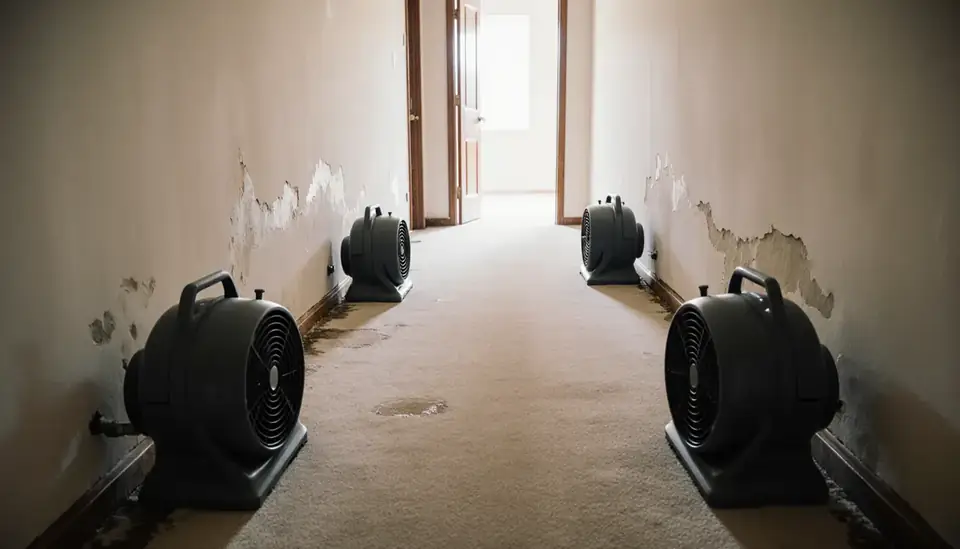
- Set dehumidifiers and air movers and take daily readings until the structure is dry.
Walkout basements dry faster when exterior doors stay closed and dehumidifiers do the work; opening windows on a humid summer day usually adds moisture rather than removing it.
HOA Rules, Shared Walls and Insurance
Townhouse communities commonly have homeowners associations, and condominium buildings share roofs, plumbing stacks and walls. When water crosses from one unit into another, the association's documents and each owner's policy determine who repairs what. Notify the association and neighbors right away, and photograph both sides of the shared wall. Remember that standard homeowners policies typically exclude surface flooding, and sump pump or drain backup damage usually requires a separate endorsement.
Mold Watch Through Hot, Humid Summers
July afternoons here average in the mid-80s with high humidity, and a basement that stays damp after a leak can show mold on drywall or carpet backing within a couple of days. Running a dehumidifier during the summer and watching for musty odors near the floor are simple habits that pay off. If you find growth behind baseboards or under flooring after a past leak, a provider offering mold remediation can remove it under containment and help identify where the moisture is coming from.
Areas In and Around Germantown
Calls come in from across Germantown, including:
- Gunners Lake Village
- Kingsview Village
- Churchill Village
- Middlebrook Village
- Clopper's Mill Village
- Neelsville Village
- Churchill Town Sector
The same line also serves nearby communities such as:
- Gaithersburg
- Clarksburg
- Boyds
- Montgomery Village
- Darnestown
- Damascus
Questions From Germantown Property Owners
Our sump pump stopped during a storm and the basement flooded. Is that covered?
Often only if your homeowners policy includes a water backup or sump overflow endorsement, which is sold separately and frequently has its own limit. Flooding from surface water entering the house generally requires flood insurance. Check your policy before cleanup, photograph the failed pump and the water level, and keep the pump for the adjuster to inspect if asked.
My Germantown townhouse is about 35 years old. What should I check first?
Start with the water heater's age, since tanks near the end of their life are a frequent source of basement floods. Then inspect washing-machine hoses, toilet and sink supply lines, the dishwasher connection and any ice-maker line. Make sure the main shutoff turns freely. Replacing a few inexpensive parts is far cheaper than drying out a finished lower level.
Who do I contact while I wait for a restoration provider?
Your insurer and, if you live in a townhouse or condo, your association and any neighbors who might be affected. A broken main in the street or sewage coming up from a public line goes to WSSC Water's emergency number, 301-206-4002. Then call (888) 317-9980 and we'll connect you with an independent provider that serves Germantown for extraction and drying.