

Two rivers meet in the far northeastern corner of Manville: the Millstone empties into the Raritan there, and the low ground between them has flooded for as long as the borough has existed. The town grew up around the Johns-Manville manufacturing plant and took its name from the company, and whole blocks of homes were built on the low ground closest to the water.
Our line is a free referral service, not a contractor. Call (888) 317-9980 and we'll connect you with an independent restoration provider that serves the borough, whether the problem is river water on the first floor, a basement that filled during a downpour, or a pipe that let go in January.
How the call works: when you call (888) 317-9980, The Restoration Job connects you with an independent restoration provider that serves Manville. That provider inspects the damage, explains the scope and quotes the work. The Restoration Job doesn't perform restoration itself. Read our referral disclosure.
Lost Valley: Living Between the Raritan and the Millstone
Lost Valley, in the eastern part of the borough, sits on the natural floodplain between the two rivers. It is cut off from the rest of town by the railroad, with only a tunnel at Kyle Street and a bridge at Bridge Street crossing the tracks. That layout matters in a flood: when water rises, residents have few ways out, and crews have few ways in until it drops.
Tropical Storm Doria in 1971 destroyed many Lost Valley houses outright, leaving some without foundations. The April 2007 nor'easter was called the worst flood since Floyd, again hitting this section hardest. After Irene in 2011, state funding was directed toward buying out flood-prone homes, with Lost Valley named as a priority. Homeowners who remain should assume the next major crest will reach them and plan accordingly.
Floyd, Irene and Ida on the River Gauge
Flooding begins at the Manville gauge at 14 feet, and severe flooding starts at 18. Floyd in September 1999 pushed the Raritan here to a record near 27 feet. Parts of town sat under about 10 feet of water; around 1,500 homes were damaged, 284 were condemned and roughly 1,000 people evacuated, some by helicopter.
Ida broke that record in September 2021, reaching 27.66 feet. The Millstone gauge at nearby Weston also hit record flooding the same morning. During the high water, a house on Boesel Avenue exploded after its residents had evacuated, and the Saffron banquet hall burned to the ground. Fires in flooded buildings are a reminder that gas and electrical systems need to be checked by the utility or a qualified electrician before anyone turns them back on.
Cleaning Up After River Water in a Manville Home
River floodwater is contaminated. It carries sewage, fuel and whatever it picked up across upstream farms and roads, so the cleanup standard is different from a clean supply-line leak. A restoration crew handling flood cleanup in a river town will usually work through these steps:
- Photograph every room and the waterline before anything is removed.
- Pump out standing water and haul out saturated carpet, pad and upholstered furniture.
- Cut wet drywall and insulation well above the visible line, since wicking carries water higher than the flood reached.
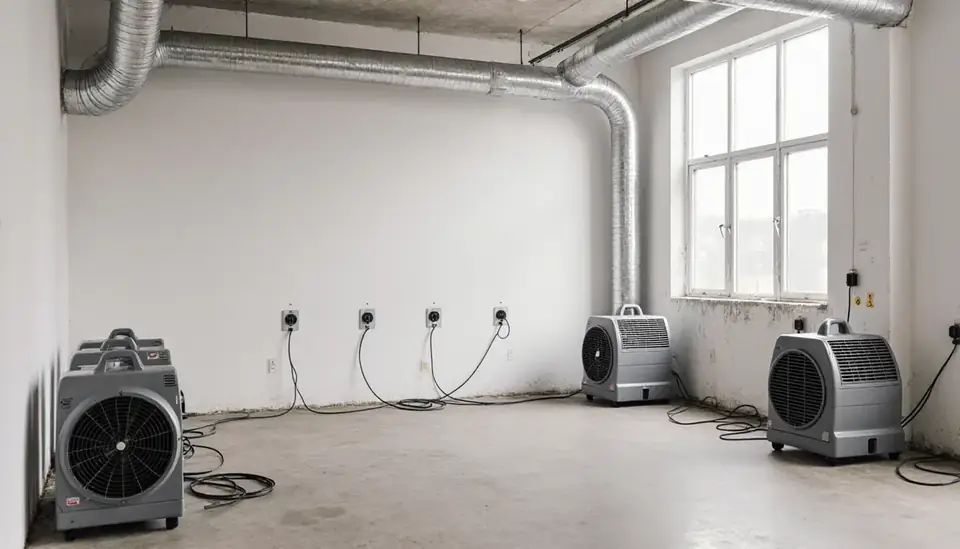
- Clean and disinfect framing and slabs, then dry with dehumidifiers and air movers until moisture readings are back to normal.
Plan for the wait. After a regional event, every provider in the valley is busy at once, and drying alone often takes several days.
Mold After the Crest Recedes
The worst rivers here crest in late summer and early fall, when warm, humid air speeds up mold growth. July is also the wettest month on average in Somerset County, with close to five inches of rain. Wet drywall and wood left closed up for more than a day or two can begin to grow mold, especially in basements and in the cavities of older walls. Getting materials out and the structure dry quickly is the main defense; if growth has already started, mold remediation involves containment and removal rather than just surface cleaning.

Insurance, Buyouts and Flood Maps
Standard homeowners policies do not cover rising river water; that requires a separate flood policy through the National Flood Insurance Program or a private carrier. Check your address on the FEMA flood map before you assume where you stand. Homes in a mapped high-risk zone with a federally backed mortgage generally must carry flood coverage. Keep receipts for pumps, fans and emergency repairs, and photograph damaged items before they go to the curb.
Areas In and Around Manville
Calls come in from across Manville, including:
- Lost Valley
- Millsboro
The same line also serves nearby communities such as:
Questions From Manville Property Owners
Where can I watch the Raritan River level before a storm in Manville?
The U.S. Geological Survey operates the Raritan River at Manville gauge, which has collected data since 1903 and shows the current level online. The National Weather Service office in Mount Holly issues river forecasts and flood warnings for Somerset County. Flooding starts at 14 feet on this gauge, so watching the forecast crest gives you time to move valuables and vehicles before water reaches Lost Valley streets.
Is it safe to go back into a flooded house right away?
Not until officials say the area is open and the utility has checked the power and gas. During Ida, flooded homes and a banquet hall in Manville caught fire and one house exploded. Wear boots and gloves, avoid touching wet electrical equipment, and photograph the damage before any removal starts so your claim is documented.
Does my flood policy cover my finished basement?
Flood policies under the National Flood Insurance Program limit what they pay for below-grade spaces, generally covering structural items and essential equipment like furnaces and water heaters but not finished walls, flooring or most belongings stored there. Read your declarations page and ask your agent before you rebuild a finished basement in a flood-prone part of the borough.