

Princeville began in 1865 as Freedom Hill, a settlement formerly enslaved people built at a Union encampment on the low ground across the Tar River from Tarboro. Incorporated in 1885, it was the first independently governed African American community chartered in the United States. The same riverside land that gave the town its start has also put it in the path of the Tar's worst floods, first during Hurricane Floyd in 1999 and again during Hurricane Matthew in 2016.
The Restoration Job is a free call-connection service; it does not send workers or perform repairs. Call (888) 317-9980 day or night and we will put you in touch with an independent restoration provider that covers Princeville and the surrounding part of Edgecombe County. Those companies run their own businesses, set their own prices, and often offer emergency service for flooding, sewage backups and leaks.
How the call works: when you call (888) 317-9980, The Restoration Job connects you with an independent restoration provider that serves Princeville. That provider inspects the damage, explains the scope and quotes the work. The Restoration Job doesn't perform restoration itself. Read our referral disclosure.
Behind the Levee: Floyd, Matthew and the Tar
The U.S. Army Corps of Engineers built a levee for Princeville in 1967. In September 1999, Floyd's rain sent the Tar River over that levee, and the town sat under more than 20 feet of floodwater for about ten days, with water reaching nearly to rooftops and church steeples. Town officials turned down a federal buyout and chose to rebuild. In October 2016, Matthew brought another devastating flood as the Tar again rose roughly 24 feet above flood stage in places and stayed high for up to three days.
In 2020 the Corps announced $39.6 million in funding for a levee project to better protect the town. Until any new protection is complete, residents should treat a forecast of major flooding on the Tar as a reason to move valuables, vehicles and important papers early. Town hall is on South Main Street, and Edgecombe County's emergency management division coordinates evacuations and alerts.
Long-Duration Floodwater and What It Does to a House
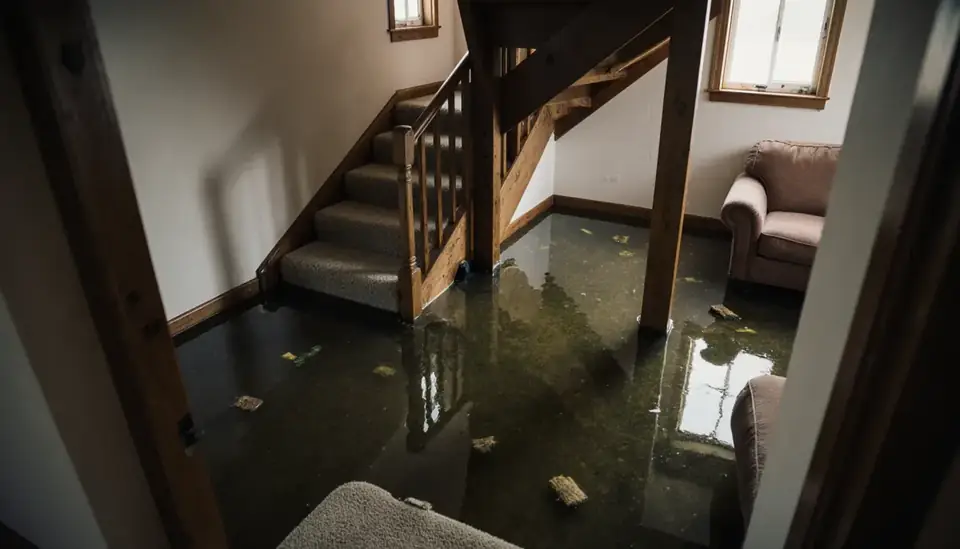
Princeville's floods have not been quick in-and-out events. Water that sits in a home for days soaks deep into framing, subfloor and wall cavities, carries river mud and sewage, and leaves contamination behind on every surface it touched. Restoration after that kind of flood is closer to a partial gut than a cleanup:
- Remove all wet drywall, insulation, flooring and cabinets that the water reached; see what flood cleanup covers.
- Shovel out silt and wash framing, then apply an antimicrobial treatment.
- Check the electrical panel, outlets, water heater and HVAC ductwork before anything is turned back on.
- Dry framing to normal moisture levels with dehumidifiers and air movers before rebuilding.
Take photos and a written inventory before anything goes to the curb, and keep samples of flooring or cabinetry if your adjuster asks for them.
Smaller Emergencies Between River Floods
Most calls in a small town are not disasters. A water heater gives out, a toilet supply line splits, or heavy summer rain overwhelms a yard and seeps into the crawl space. In a low-lying place where municipal sewer and water have been run by the county at times, a backed-up line after a storm is also a real possibility. Sewage in a home should be handled as a biohazard; read more about sewage cleanup before deciding how much to handle yourself.
Mold Risk in a Freedom Hill Home After the River Drops
Eastern North Carolina summers stay humid, and after a flood the house itself becomes a moisture reservoir. Mold commonly appears on the backs of drywall, inside lower cabinets and on joists in the crawl space within days if drying stalls. Opening walls and getting dehumidifiers running fast is the main defense. If growth is already widespread, a provider can set up containment, remove affected materials and clean the framing before new walls go up, so the problem is not sealed in.

Help From Across the Bridge
Restoration providers serving Princeville generally also work in Tarboro, Rocky Mount and the smaller Edgecombe County towns, so a single call can reach someone already working nearby. Flood insurance is separate from a homeowners policy, and new policies usually wait 30 days before taking effect, so check coverage well ahead of hurricane season. You can look up your address on the state's Flood Risk Information System to see how your lot is mapped.
Areas In and Around Princeville
Calls come in from across Princeville, including:
- Freedom Hill
The same line also serves nearby communities such as:
- Tarboro
- Rocky Mount
- Speed
- Conetoe
- Pinetops
- Leggett
Princeville Water Damage Questions
Does the Princeville levee mean my home won't flood?
No. The levee built in 1967 was overtopped by the Tar River during Hurricane Floyd in 1999, and the town flooded badly again during Hurricane Matthew in 2016. The Corps announced funding for a new levee project in 2020, but no levee removes all risk. Flood insurance and an evacuation plan still make sense for homes in town.
Can a house that sat in floodwater for days be saved?
Often the frame and structure can be saved, but almost everything porous that the water touched has to go: drywall, insulation, carpet, many cabinets and furniture. After the debris is removed and the framing is cleaned and treated, it needs thorough drying before rebuilding. A restoration provider can assess the building and give you a scope of work to share with your insurer.
Who should I contact for evacuation and emergency alerts in Princeville?
Edgecombe County Emergency Services includes an Emergency Management division that handles disaster planning, response and recovery for the county, including Princeville. The county offers emergency notification sign-ups on its website. For river forecasts on the Tar, check the National Weather Service office in Raleigh.