
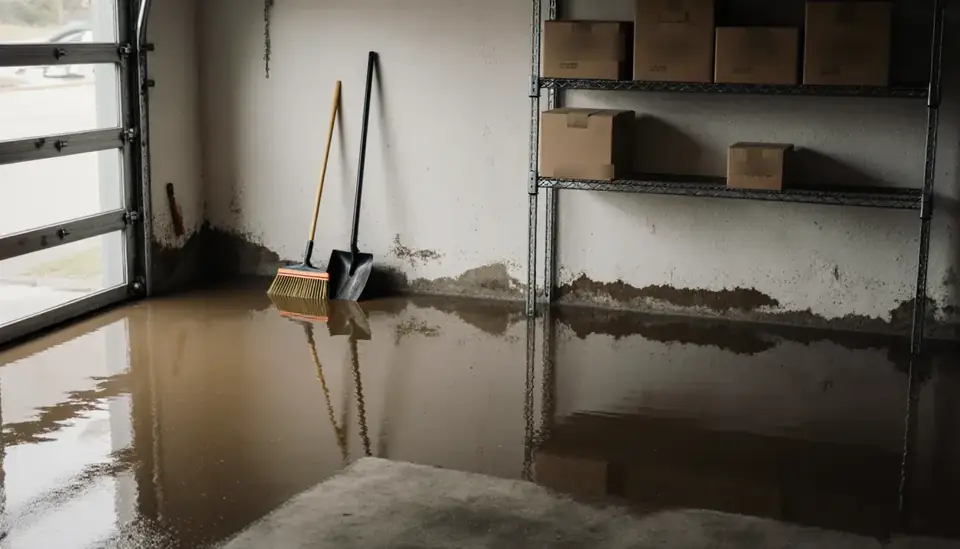
Rocky Mount grew up at the falls of the Tar River, the spot where the river crosses the fall line between the Piedmont and the Coastal Plain. Within the city limits the Tar drops about 25 feet over Upper Falls and Little Falls, and the city spreads across two counties, Nash on the west and Edgecombe on the east. That river runs right through town, and in September 1999 it produced the worst flooding in its recorded history.
Help on this page comes through a free phone line run by The Restoration Job, which does no repair work itself. Call (888) 317-9980 and we will connect you with an independent restoration provider that serves Rocky Mount, whether the problem is a soaked crawl space, a failed water heater or a roof opened up by a storm. Providers set their own rates and many of them offer emergency service.
How the call works: when you call (888) 317-9980, The Restoration Job connects you with an independent restoration provider that serves Rocky Mount. That provider inspects the damage, explains the scope and quotes the work. The Restoration Job doesn't perform restoration itself. Read our referral disclosure.
Floyd's Mark on Both Sides of the Falls
Rocky Mount measured 18 inches of rain from Hurricane Floyd, more than a 100-year storm would be expected to deliver. Roughly 30 percent of the city ended up underwater, and it stayed that way for days. Downstream in Edgecombe County, the Tar crested 24 feet above flood stage at Tarboro and poured over the levee at Princeville, leaving that town under more than 20 feet of water for ten days. The U.S. Geological Survey later found that 500-year or greater floods had struck every river basin east of Raleigh that fall.
Floyd is a reminder that the Tar can stay high long after the rain ends. Water that sits in a building for days soaks into framing, subfloors and wall cavities and brings bacteria from sewers, farm fields and fuel spills along with it. Recovery from that kind of event is a demolition and disinfection job first and a drying job second. Our flood cleanup page explains the usual sequence in more detail.
Mill Village Houses, Villa Place and the Older Core
The Rocky Mount Mills Village Historic District preserves worker housing built between 1885 and 1940 beside the river, and older neighborhoods such as Villa Place, West Haven and Crosstown also have a large share of homes built well before modern building codes. Common weak points in that housing stock include:
- Crawl spaces that trap moisture after a plumbing leak or heavy rain.
- Older galvanized or cast-iron piping that can leak slowly inside walls and floors.
- Original hardwood floors that cup and buckle when water gets underneath.
- Roofs and gutters that let water into the attic when they are overdue for repair.
Newer subdivisions on the edges of town tend to have different issues, such as washing machine hoses, ice maker lines and water heaters set in garages or closets.

Drying a House After a Leak, Step by Step
A clean-water leak from a supply line or water heater can usually be dried in place if work starts quickly. A restoration crew will extract standing water, pull up carpet pad, map moisture in walls and floors with meters, and set up dehumidifiers and air movers. Drywall is often cut a short distance above the wet line so the cavity can dry. Check-ins every day or so track readings until materials are back to a normal level.
The longer water sits, the more the job changes. A leak that went unnoticed under a crawl-space floor for weeks may involve rotted subflooring, insulation removal and mold cleanup before any structural drying can finish. Taking photos before work starts and saving damaged materials until an adjuster has seen them helps with any insurance claim.
Damp Summers and Mold in Nash and Edgecombe Homes
The Rocky Mount area gets close to 49 inches of precipitation a year, and summer humidity stays high for months. Under those conditions, mold does not need a flood to get started. A slow drain leak, a sweating air handler or a crawl space with standing water can be enough. Signs to watch for include a musty smell that gets stronger when the HVAC runs, warped baseboards and dark spotting on drywall near the floor.
Mold work should begin by finding and fixing the moisture problem. After that, contaminated porous material is removed under containment and the remaining surfaces are cleaned. Bleach sprayed on drywall does not solve the problem underneath it.
Areas In and Around Rocky Mount
Calls come in from across Rocky Mount, including:
- Villa Place
- West Haven
- Crosstown
- Rocky Mount Mills Village
- Battleboro
The same line also serves nearby communities such as:
- Nashville
- Tarboro
- Princeville
- Sharpsburg
- Dortches
- Red Oak
Frequently Asked Questions
Does it matter whether my home is on the Nash or Edgecombe side of Rocky Mount?
For the cleanup itself, no; restoration providers serving the area work on both sides. It can matter for paperwork, because county offices, emergency management contacts and some permit processes differ between Nash and Edgecombe counties. Your flood zone depends on the address, not the county, so look it up in North Carolina's Flood Risk Information System before assuming either side is safe.
The Tar is rising. What should I do before water reaches the house?
Follow evacuation orders and do not drive through flooded roads. If there is time, move valuables, documents and medications upstairs or out of the house, shut off electricity at the main if you can do so safely while dry, and photograph each room so you have a record of its condition. Afterward, call (888) 317-9980 to be connected with an independent restoration provider.
Is water in my crawl space an emergency?
Standing water under the house is worth dealing with quickly, even if the floors above look fine. It raises humidity in the whole home, can saturate insulation and wood framing, and gives mold a place to start. A provider will usually pump out the water, remove wet insulation, and run dehumidification until the framing dries, then the source, whether a plumbing leak or drainage problem, needs repair.