
Ash Creek drains the small Polk County city of Monmouth, which sits about 12 miles west of Salem on Route 99W at roughly 207 feet above sea level, a short distance west of the Willamette River. Western Oregon University anchors the town, and that shapes the housing: the 2020 census counted 3,932 homes, and slightly more than half of the occupied ones were rented rather than owned.
That mix means a burst pipe or roof leak here often involves two or three parties at once, such as a tenant, a landlord and sometimes a property manager. Our phone line is a free referral service rather than a contractor. Call (888) 317-9980 at any hour and we'll connect you with an independent restoration provider that works in Monmouth; that provider inspects, quotes and does the work.
How the call works: when you call (888) 317-9980, The Restoration Job connects you with an independent restoration provider that serves Monmouth. That provider inspects the damage, explains the scope and quotes the work. The Restoration Job doesn't perform restoration itself. Read our referral disclosure.
Ash Creek, Catch Basins and Where the Rain Goes
According to the city's stormwater guidance, rain falling on Monmouth roofs, yards, driveways and sidewalks runs into catch basins and then through pipes straight to local creeks, with Ash Creek carrying it on toward the Willamette. Nothing treats or slows that water along the way. When leaves plug a grate during a heavy winter rain, water backs up across the street and can reach low driveways, garages and basement window wells.
Public Works takes reports of flooding, leaks and blocked drains at 503-838-2173 on weekdays, with an after-hours number listed on the stormwater page. A clogged drain in the street is the city's to clear. Water that has already entered the house is the owner's to deal with, and any water that came off the street should be handled as dirty. A flood cleanup crew will usually cut out wet drywall and padding instead of trying to dry them in place.
A River Town History Next Door
Monmouth's neighbor Independence shows how the Willamette can behave. The great flood of December 1861 followed weeks of autumn rain on top of Cascade snow, and accounts say a boat could have been rowed across the original Independence townsite. The town later moved to higher ground across Ash Creek. Monmouth itself is set back from the river, but the same long, soaking storm patterns still swell local creeks, saturate soil against foundations and overwhelm gutters. FEMA's flood map is the place to check whether a specific address falls in a mapped flood zone.
Student Rentals: Sorting Out Who Handles a Leak
With renters occupying about 52 percent of occupied homes, many water losses in Monmouth happen in apartments, duplexes and older houses divided for students. A few habits keep a small leak from turning into a dispute:
- Shut off the fixture or the main valve, then notify the landlord or manager in writing with photos and the time you found the water.
- Tenants should contact their renters insurance carrier; the building owner's policy generally covers the structure, not a tenant's belongings.
- In shared buildings, check the unit below or beside yours, since water travels along floor joists and pipe chases.
- Report a leak before leaving for a term break, not after. Wet materials left over a long weekend tend to need removal rather than drying.
A provider handling water damage restoration in a rental typically documents moisture readings for both the owner and the insurer.
Power Outages, Sump Pumps and Drying Equipment
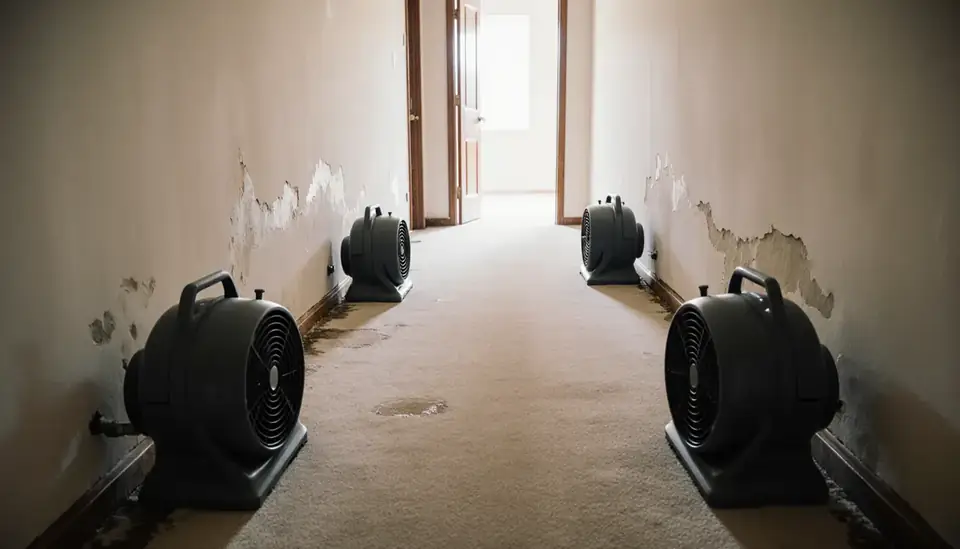
Monmouth runs its own electric utility, Monmouth Power & Light, and outages are reported directly to the city. Winter storms that knock out power are also the storms that load crawl spaces and sumps with water, so a home that relies on a sump pump can take on water during an outage. A battery backup or a water alarm in the crawl space is inexpensive protection. After a loss, drying equipment such as dehumidifiers and air movers needs steady power for several days, so mention any service problems to the provider at the first visit.

Mold in Monmouth's Damp Season
Most of the year's rain in the mid-Willamette Valley falls between October and April, and nearby Salem averages around 40 inches a year. During those months houses do not dry out on their own, and closed-up bedrooms, bathrooms without working fans and crawl spaces stay humid. Mold can start on wet drywall or subflooring within a couple of days. Running the bath fan, keeping furniture slightly off exterior walls and reporting musty smells early helps. Growth that covers more than a small patch is a job for mold remediation with containment.
For broader regional context, see our Oregon service area page.
Monmouth Neighborhoods and Surrounding Towns
The same line also serves nearby communities such as:
- Independence
- Dallas
- Salem
- Falls City
Frequently Asked Questions
I rent near Western Oregon University and my ceiling is dripping. What should I do first?
Move belongings and electronics away from the drip, put a bucket under it and turn off the water if you know where the source is. Then tell your landlord or property manager right away, in writing with photos. The owner is responsible for repairs to the building, while your renters policy, if you have one, is what covers your own things. You can also call (888) 317-9980 if the owner asks you to arrange a provider.
Who do I contact about a flooded street or blocked storm drain in Monmouth?
Monmouth Public Works handles flooding, leaks and drainage problems in the public system. Call 503-838-2173 during weekday business hours or use the after-hours number on the city's stormwater page. Clearing leaves off the grate in front of your home before a big storm also helps, as long as you can do it safely and away from traffic.
Does homeowners insurance pay for water that comes in from Ash Creek or street runoff?
Usually not. Standard homeowners and renters policies cover sudden water from inside the house, like a burst supply line, but exclude flooding from creeks and surface water. That coverage comes from a separate flood policy, which often has a waiting period. Look up your address on FEMA's flood map and ask your agent before the rainy season starts.
Where can Monmouth residents sign up for emergency notifications?
The City of Monmouth sends emergency notifications through an Everbridge alert system that residents can sign up for on the city website. Polk County Emergency Management coordinates disaster response and runs the county emergency operations center during major events. Signing up for city alerts ahead of winter storms means warnings about outages and road flooding reach you by phone or text.