
Henry Pfluger, a German immigrant, bought land northeast of Austin in 1849 and raised corn, wheat and sugar cane on what was then open prairie. That farmland is now one of the region's fastest-growing suburbs, with about 65,000 residents in 2020 compared with roughly 16,000 in 2000. The terrain is lower and flatter than the Hill Country towns to the west, around 686 feet, and two creeks run through it: Gilleland Creek and Wilbarger Creek. Lake Pflugerville, built in 2005, serves as a water reservoir and recreation area.
The Restoration Job does not perform repairs; it is a free referral line. Call (888) 317-9980 any time and we'll connect you with an independent provider that serves Pflugerville and the neighboring parts of Travis and Williamson counties.
How the call works: when you call (888) 317-9980, The Restoration Job connects you with an independent restoration provider that serves Pflugerville. That provider inspects the damage, explains the scope and quotes the work. The Restoration Job doesn't perform restoration itself. Read our referral disclosure.
Gilleland Creek and Flash Flooding on the Prairie
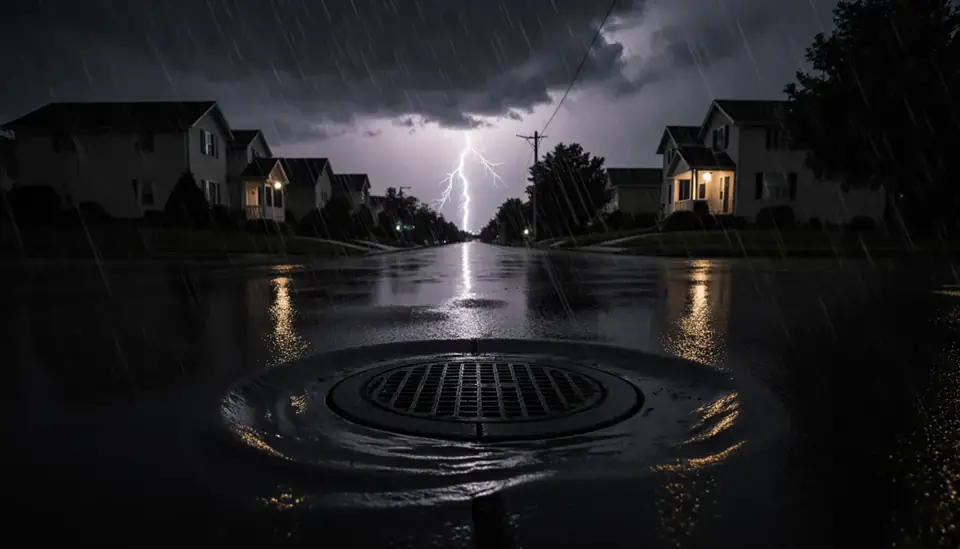
The eastern side of Travis County is Blackland Prairie, and the same is true across the line in Williamson County, where the soils are dark clay. When intense rain falls here, water does not race downhill the way it does in the hills; instead it collects in streets, yards and drainage channels and pushes Gilleland and Wilbarger creeks up over a few hours. During the storm of October 30 and 31, 2013, the National Weather Service logged flash flood reports in Pflugerville, and volunteer observers just north of town measured 4.50 and 5.93 inches of rain.
Homes near the creeks, near drainage easements or at the low end of a street are the most exposed. Look up your address on FEMA's flood maps, and remember that a standard homeowners policy does not cover water rising from outside.
What Flood Cleanup Looks Like in a Slab Home
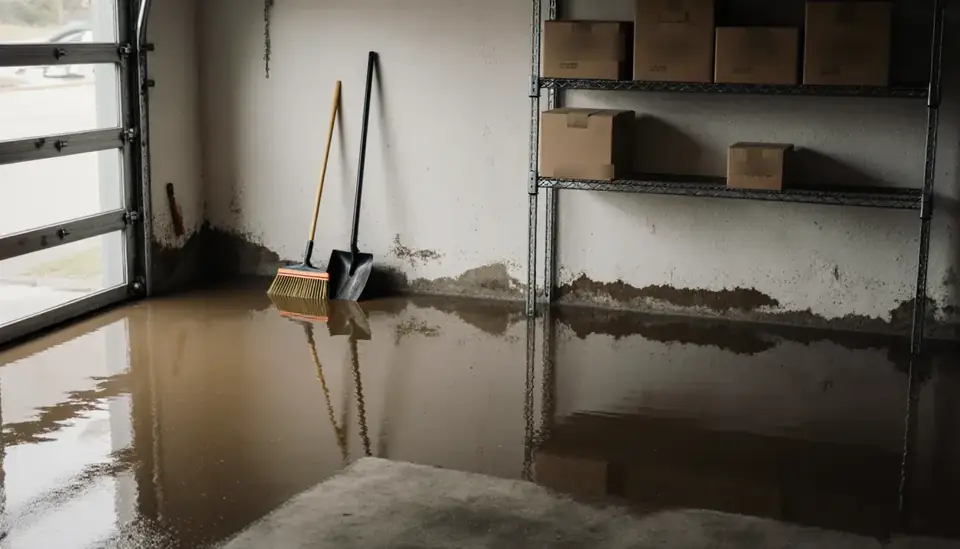
Much of the housing built during Pflugerville's growth since the 1990s sits on concrete slabs. Floodwater on a slab soaks carpet pad, swells laminate and vinyl plank, and climbs drywall by wicking well above the visible waterline. Because creek and street runoff carry sewage, chemicals and silt, those porous materials generally need to come out rather than be dried in place.
- Wait until officials say the area is safe, and keep children and pets out of the water.
- Turn off power to flooded rooms at the panel if you can reach it without standing in water.
- Photograph waterlines on walls, furniture and appliances before anything is removed.
- Remove drywall and insulation to a safe height above the waterline, then clean and disinfect the framing.
Flood cleanup ends with structural drying, measured daily, before any new drywall goes up.
Freeze Damage in February 2021
During Winter Storm Uri, an observer southwest of Pflugerville reported 5.0 inches of snow on the morning of February 15, 2021, and hard freezes lasted for days afterward. Exposed lines in attics, garages and exterior walls broke across the area. Leaks inside a wall often stay hidden until drywall stains, paint bubbles or baseboards swell.
Clean water from a supply line is the easiest kind of loss to save if drying starts right away. Shut off the main, open up wet cabinets and pull back rugs, then have moisture readings taken through the floor and lower walls to find everything that got wet.
Slow-Drying Clay Ground and Mold Indoors
Clay soils hold water near the surface after storms, which can keep crawl spaces, garages and slab edges damp longer than in rocky ground to the west. Inside, humid Gulf air means wet drywall and carpet pad can begin growing mold within a few days. Keep the air conditioning running, set up dehumidifiers and do not trap moisture under new flooring or paint. For visible growth beyond a small patch, mold remediation starts with fixing the water source and removing affected materials under containment, and Texas sets rules for larger projects.
Where Callers in the Pflugerville Area Are
The same line also serves nearby communities such as:
- Austin
- Round Rock
- Hutto
- Manor
- Brushy Creek
- Elgin
Questions From Pflugerville Property Owners
Which county handles emergencies in Pflugerville?
Most of the city lies in Travis County, with part in Williamson County, so the right county office depends on your address. Weather warnings for both counties come from the National Weather Service office for Austin and San Antonio. Signing up for local alerts with your street address is the simplest way to get flash flood warnings for your exact location.
Is water from Gilleland Creek safe to clean up myself?
Approach it with caution. Creek and street floodwater can carry sewage, fuel and chemicals, so wear boots and gloves, keep children away, and treat soaked drywall, insulation and carpet as contaminated. Many owners hire a restoration provider for removal and drying because moisture often spreads farther into walls and under floors than it appears.
Can I get help if I live in the Williamson County part of Pflugerville or nearby Round Rock?
Yes. The referral line covers both counties. Call (888) 317-9980 and we'll connect you with an independent provider that serves your address, whether you are in Pflugerville or next door in Round Rock.