
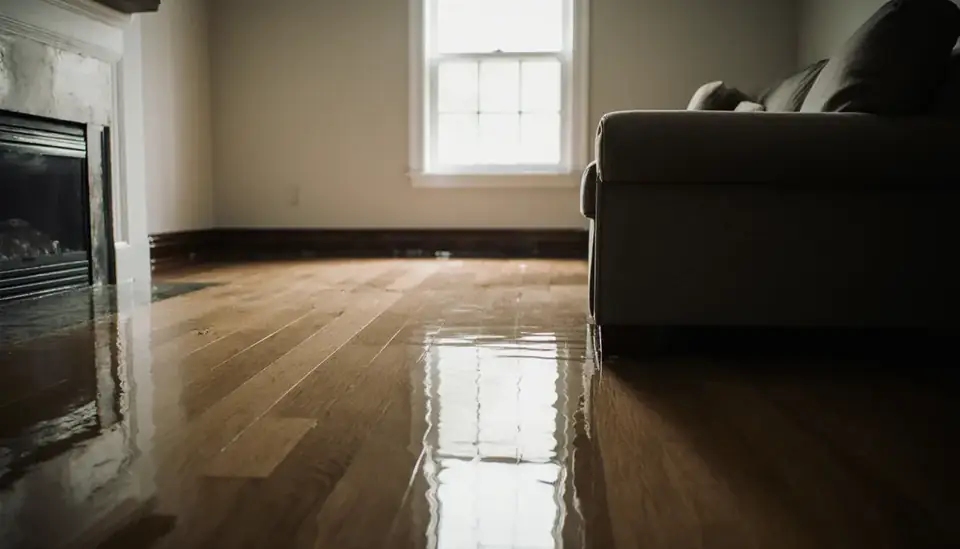
Early residents called Temple "Tanglefoot," partly for the mud in its streets, and anyone who has walked a construction lot here after a rain understands why. The city grew up on the black clay of the Blackland Prairie, which swells when wet and shrinks and cracks when dry. That soil, more than any river, shapes how water damage plays out in Temple homes: it moves foundations and buried pipes, and it holds rainwater against slabs and crawl spaces instead of letting it drain away.
The Restoration Job connects callers with independent providers and does not do restoration itself. Call (888) 317-9980 at any hour and we'll link you to a restoration provider that serves Temple and nearby Bell County communities.
How the call works: when you call (888) 317-9980, The Restoration Job connects you with an independent restoration provider that serves Temple. That provider inspects the damage, explains the scope and quotes the work. The Restoration Job doesn't perform restoration itself. Read our referral disclosure.
Black Clay Soil and the Plumbing Under Your Slab
Geologists class the Blackland Prairie soils as vertisols, clays that shrink and swell with moisture and crack deeply in dry spells. In a long drought followed by a soaking spring, a slab can shift enough to stress water and drain lines running beneath or through it. Signs worth investigating include a warm spot on a tile floor, an unexplained jump in the water bill, damp carpet with no visible source, or cracks that suddenly open in drywall near a bathroom.
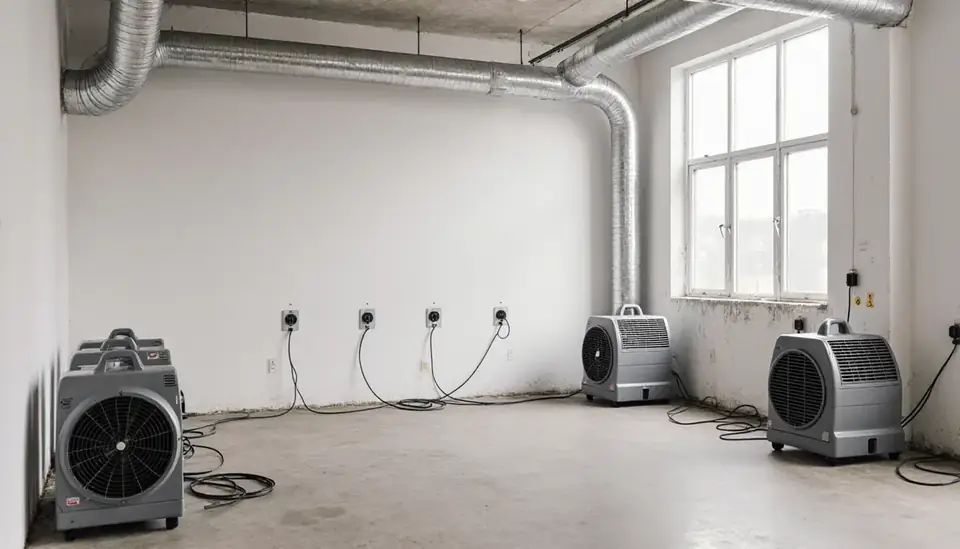
A slab leak needs leak detection and a plumber before drying makes sense. Once the line is repaired, a provider offering structural drying can dry flooring, baseboards and lower walls while tracking readings, rather than guessing when it's safe to put the room back together.
Rainy Springs on the Prairie Side of Bell County
Temple averages close to 37 inches of rain a year, and May is the wettest month. The city sits at the seam where flat prairie to the east gives way to rolling limestone hills to the west, and heavy thunderstorms can push runoff across yards and toward low entries, garages and window wells faster than clay ground can absorb it. Roofs take the other share of damage, particularly where hail has loosened shingles before the next downpour.
Water that came in from outside, across the ground, should be treated as dirty. Drywall and carpet pad soaked by it are usually removed rather than dried, which is a standard part of flood cleanup.
Railroad-Era Buildings and Medical-District Growth
Temple began in 1880 as a Santa Fe railroad construction camp, and the Temple Commercial Historic District downtown preserves some of that early building stock. Older commercial and residential buildings near the center may have cast-iron drains, galvanized supply lines and decades of remodeling layered on top, which makes leaks harder to trace. The city's growth since mid-century, tied in large part to Scott and White and the hospitals around it, filled outer areas with slab-on-grade subdivisions and apartment complexes, where a single leak can reach several units.
Leon River, Belton Lake and What They Do and Don't Protect
The Leon River forms the line between Temple and Belton. Upstream, Belton Lake, impounded by the Corps of Engineers in 1954, supplies drinking water to Temple and helps control floods on the Leon. The river's highest recorded crest near Belton came in December 1913, long before the dam existed. Even so, the reservoir was tested in 1991 and 1992, when two roughly 50-year floods in close succession damaged the area below its spillway.
Day to day, the bigger risk for most households is a storm that overwhelms neighborhood drainage. Check the FEMA flood map for your address, and keep in mind that homeowners policies exclude rising water; flood coverage is a separate policy.

Where Mold Hides After a Temple Leak
Humid summers make a wet wall a mold risk within a couple of days. In Temple homes, attention usually goes to:
- Cabinet bases and the wall behind a dishwasher or refrigerator line
- Carpet pad and tack strip along exterior doors after storms
- Attic decking and insulation under a slow roof leak
- Crawl spaces under older pier-and-beam houses, where clay soil holds moisture
If growth covers a sizable area, Texas regulates the work through TDLR, so ask a mold remediation provider how assessment and clearance will be handled.
Neighborhoods and Nearby Communities
Calls come in from across Temple, including:
- Downtown Temple
The same line also serves nearby communities such as:
Temple Water Damage Questions
Can clay soil really cause a water leak in my Temple house?
It can contribute. Blackland Prairie clay expands when wet and contracts as it dries, and that movement can stress a slab and the pipes inside or under it. Foundations shift for many reasons, so a leak isn't automatic, but if you notice new cracks plus damp flooring or a rising water bill, have a plumber check for a slab leak before anyone dries or replaces floors.
Does Belton Lake protect Temple from flooding?
Belton Lake reduces flooding on the Leon River downstream, which forms the boundary between Temple and Belton. It cannot help with heavy rain that falls directly on Temple neighborhoods and overloads streets or drainage. Use the FEMA Flood Map Service Center to see your property's zone, and talk to your agent about a separate flood policy if you're near a channel or low area.
Who handles a leak between apartment units in Temple?
Report it to the property manager right away, in writing, with photos. The owner's side usually covers the building, including drywall, flooring and cabinets, while your belongings depend on renters insurance. If water is coming through a light fixture or a ceiling is sagging, turn off that circuit and stay out of the room until it's addressed.
Is a musty smell after a repaired leak normal?
It's common but shouldn't be ignored. It often means a wall cavity, cabinet base or carpet pad stayed wet after the visible water was cleaned up. A moisture meter and, if needed, a small inspection hole can confirm it. Drying or removing the affected material quickly is far cheaper than dealing with growth that spreads over a humid summer.