

Laurel is Henrico County's seat, an unincorporated community in the western part of the county that has gone by several names: Hungary, Hungary Station, Jenningsville and, for a time, simply School. The Richmond, Fredericksburg and Potomac Railroad served it in the 1800s, and CSX runs the line today. Its 5.4 square miles now hold about 17,800 people, at roughly 3,300 per square mile, which makes it one of the more tightly settled parts of suburban Henrico.
The Restoration Job is a free phone referral, available 24/7 at (888) 317-9980. We connect Laurel callers with independent restoration providers that work in the area; they handle the visit, the estimate and the cleanup.
How the call works: when you call (888) 317-9980, The Restoration Job connects you with an independent restoration provider that serves Laurel. That provider inspects the damage, explains the scope and quotes the work. The Restoration Job doesn't perform restoration itself. Read our referral disclosure.
Higher Ground, but Not Out of Reach
Laurel sits around 243 feet above sea level and has very little surface water, so river flooding is not its main threat. The water that damages homes here mostly comes from three directions: plumbing failures inside the house, rain driven through a roof or siding in a storm, and runoff that collects against foundations during intense downpours. Henrico estimates that about 1,500 homes and businesses countywide sit within floodplains, many of them with drainage issues, and the county maps floodplains of its own on top of FEMA's. A property far from any creek can still have a low corner of the lot where water gathers.
If you want certainty, the county's interactive flood zone map shows both FEMA's current zones, effective April 25, 2024, and the county's additional floodplains.
Storms That Shaped Expectations in Western Henrico
Hurricane Isabel, in September 2003, remains the storm most people in the Richmond area compare others against. Gusts reached 73 mph at Richmond International Airport, roughly 365,000 customers lost power, trees came down on homes, and a Henrico resident drowned after crashing into a flooded creek. Roof punctures and torn shingles from a storm like that lead straight to interior water damage, often in attics and upstairs bedrooms where it is not noticed right away.
Covering the roof is the urgent step. After that, storm damage cleanup usually means removing soaked insulation, checking ceiling drywall for sagging and drying the framing before repairs.
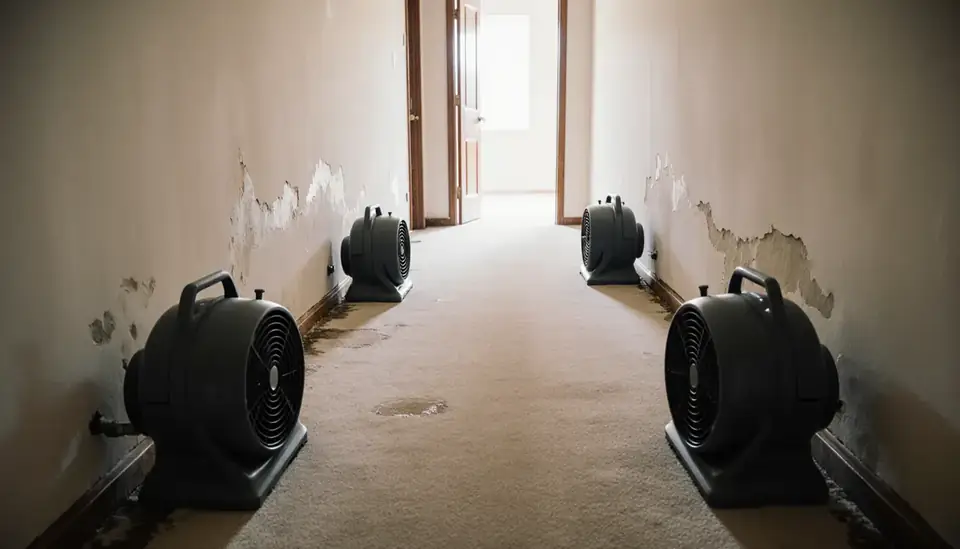
Indoor Leaks: The Everyday Cause
Most water damage calls in a suburb like Laurel start indoors. A few patterns repeat:
- A water heater tank rusts through and leaks slowly for days before anyone sees it.
- A frozen pipe in an exterior wall or crawl space splits during a cold snap and sprays once it thaws.
- A dishwasher or refrigerator line fails behind the appliance, soaking the subfloor.
- An HVAC condensate line clogs in summer and overflows into a ceiling or closet.
Fast response limits the damage. Shut off the water, move furniture and rugs out of the wet area, and photograph everything. A provider offering water damage restoration will measure moisture in floors and walls, extract what can be extracted and set up drying equipment, checking readings until materials are dry.
Humidity and Mold in Laurel Houses
Mold needs moisture, warmth and something to feed on, and a humid Central Virginia summer supplies the first two. Wet drywall, carpet pad, subfloor and stored cardboard supply the third. The longer a leak sits, the better mold's chances, which is why drying within a day or two matters more than any cleaning product. After a leak, watch for a musty smell, discoloration on baseboards or under sinks, and flooring that buckles or feels spongy. Any of those suggests moisture that was missed. In those cases, have the area opened and checked rather than covering it with new paint or flooring.

County Programs Worth Knowing in the County Seat
Henrico participates in the National Flood Insurance Program, which means anyone in the county can buy a flood policy regardless of zone. That matters because most homeowner and renter policies exclude flood damage. The county's Class 5 standing in FEMA's Community Rating System gives NFIP policyholders here a 25 percent premium discount, effective since October 1, 2024, and submitting an elevation certificate can lower premiums further. The county also publishes dam break inundation zones for its five county-owned dams and the 30-plus other dams in Henrico, and encourages flood insurance for properties in or near them.
Areas In and Around Laurel
The same line also serves nearby communities such as:
- Lakeside
- Glen Allen
- Tuckahoe
- Short Pump
- Chamberlayne
- Richmond
Common Questions
Laurel isn't near a river. Can my house still flood?
Yes. Laurel is on relatively high ground, but intense rain can overwhelm drainage and push runoff toward foundations, basements and crawl spaces. Henrico notes that many structures in its floodplains have drainage problems, and it maps local floodplains beyond FEMA's. Check the county's flood zone map, and remember that surface water damage is usually excluded from homeowner policies.
My water heater leaked overnight. Is the floor salvageable?
Often, if drying starts quickly. Water from a heater is clean, so carpet and hardwood can sometimes be dried in place if they are extracted and treated with dehumidification within a day or two. Laminate and particleboard subfloors swell and usually need replacing. A provider can take moisture readings to show what can be saved before anything is torn out.
How can I reach help in Laurel outside business hours?
Call (888) 317-9980 at any hour. We will connect you with an independent restoration provider serving the Laurel area. Many providers offer emergency service, but timing depends on the company and on demand, which can be heavy after a regional storm or a hard freeze. Stop the water at the main valve while you wait.