

Martinsville sits on rolling Piedmont ground at roughly 1,020 feet, with the Smith River tracing its southern edge. The north side of the city is its highest ground, and the east side slopes gradually down toward the river. That terrain shapes how water behaves here: rain runs downhill fast, pools against foundations cut into slopes, and finds its way into basements that older houses on hilly lots commonly have.
Once known for plug tobacco and later as the "Sweatshirt Capital of the World," the city has a large stock of homes and commercial buildings dating from its furniture and textile years. As a free call-connection line, The Restoration Job does not send its own workers. Dial (888) 317-9980 and we'll put you in touch with an independent restoration provider that serves Martinsville and nearby Henry County.
How the call works: when you call (888) 317-9980, The Restoration Job connects you with an independent restoration provider that serves Martinsville. That provider inspects the damage, explains the scope and quotes the work. The Restoration Job doesn't perform restoration itself. Read our referral disclosure.
The Smith River and Philpott Dam Upstream
The Smith River leaves Philpott Lake as a tailrace stream and runs about 44 miles through Franklin and Henry counties before joining the Dan at Eden, North Carolina. The U.S. Army Corps of Engineers built Philpott Dam between 1948 and 1952, roughly seven miles above Bassett, partly to control flooding along the river. Releases are managed for hydropower, cool water for trout and recreation.
The dam reduces flood peaks from the upper watershed, but it does nothing about rain that falls below it. Creeks and storm drains within Martinsville and the surrounding county still respond to local downpours, and properties in low spots near the river or along drainage paths can take on water during a slow-moving storm.
Tropical Rain Over Henry County
The biggest recent soakers have come from tropical systems. When the remnants of Michael crossed in October 2018, the Martinsville filter plant measured 5.19 inches. In the Veterans Day storm of November 2020, the Martinsville airport station recorded 4.81 inches, and an observer near Bassett reported 4.27 inches. Totals like that on clay soils overwhelm gutters, saturate the ground around foundations and push water through basement walls and floor cracks.
Storms like these also bring down trees on waterlogged ground. If a limb punctures a roof, tarp it once conditions are safe and call for storm damage cleanup before the next rain widens the damage.
Basements on Sloped Lots
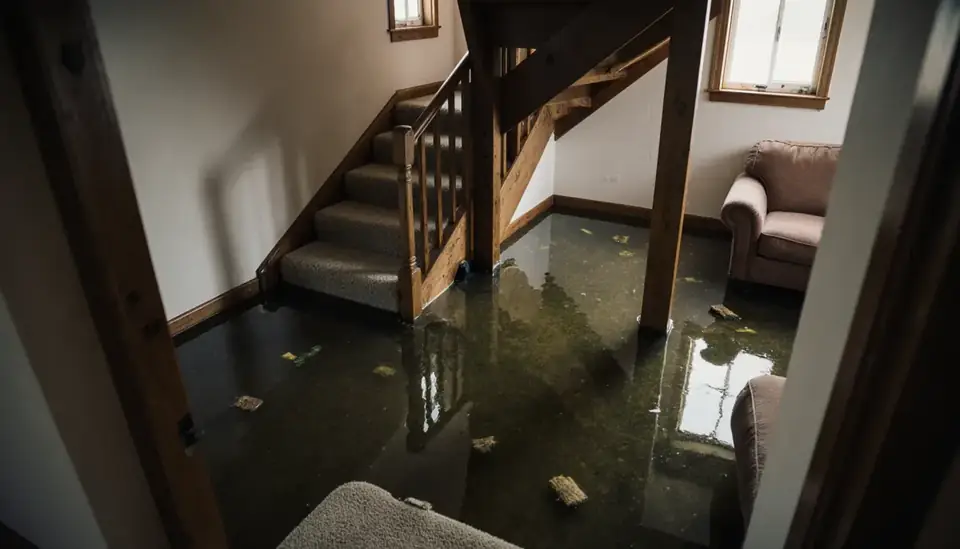
Houses built into hillsides often have one or two basement walls below grade on the uphill side. Common trouble spots in Martinsville include:
- Downspouts that empty right beside the foundation instead of away from it
- Window wells and exterior stairwells that fill during heavy rain
- Old clay or cast-iron drain lines that back up when the system is overloaded
- Water heaters and washers in finished basements that fail unnoticed
Clear water from a supply line can usually be extracted and dried without major demolition if it is caught early. Groundwater seepage or a drain backup is different; anything touched by sewage needs to be removed or disinfected, and a provider offering sewage cleanup will handle it with protective gear.
Older Homes in the Historic Districts
The East Church Street-Starling Avenue and Fayette Street historic districts preserve houses, churches and storefronts from the late 1800s and early 1900s. Fayette Street in particular grew as a center of African American churches, schools and businesses in the early twentieth century. Buildings of that age tend to have plaster walls, hardwood floors laid over plank subfloors and plumbing that has been patched across several generations.
For these properties, ask the provider to map moisture before removing anything. Careful water damage repair in an older home often means drying plaster and wood in place and replacing only what has truly failed.

Mold in Damp Piedmont Basements
Martinsville gets around 47 inches of precipitation a year and has warm, humid summers. Below-grade rooms hold that humidity, and a basement that took on water can grow mold on drywall, carpet backing and stored cardboard within 24 to 48 hours. Run a dehumidifier, pull wet items out, and keep air moving while you wait for help.
If growth covers a large area, appears inside wall cavities or follows dirty water, professional remediation with containment is the safer route. Fixing the drainage or leak that caused it matters just as much as cleaning the surface.
Areas In and Around Martinsville
Calls come in from across Martinsville, including:
- East Church Street-Starling Avenue Historic District
- Fayette Street Historic District
The same line also serves nearby communities such as:
- Collinsville
- Bassett
- Fieldale
- Ridgeway
- Axton
- Danville
Questions From Martinsville Property Owners
Philpott Dam is upstream. Does that mean Martinsville can't flood?
No. The dam holds back water from the upper Smith River watershed, which lowers river peaks, but rain falling on Martinsville and the creeks below the dam still runs off quickly. Basement seepage, overwhelmed storm drains and roof leaks are far more common than river flooding for most homes in the city. Check your address on the FEMA flood map and consider flood coverage if you are near low ground.
My basement gets wet every time it storms. Is that a restoration job or a drainage problem?
Usually both. The immediate step is extracting the water and drying walls, floors and anything stored down there before mold starts. After that, look at the cause: downspouts, grading that slopes toward the house, a failed sump pump or cracks in the foundation. A restoration provider handles the drying; a waterproofing or drainage contractor typically addresses the source.
Does homeowners insurance pay for water that seeps through basement walls?
Often not. Many homeowners policies exclude groundwater seepage and surface water, and flood damage requires a separate flood policy. Sudden, accidental plumbing failures are more commonly covered. Read your policy or call your agent, photograph everything before cleanup, and keep receipts for any emergency work.