
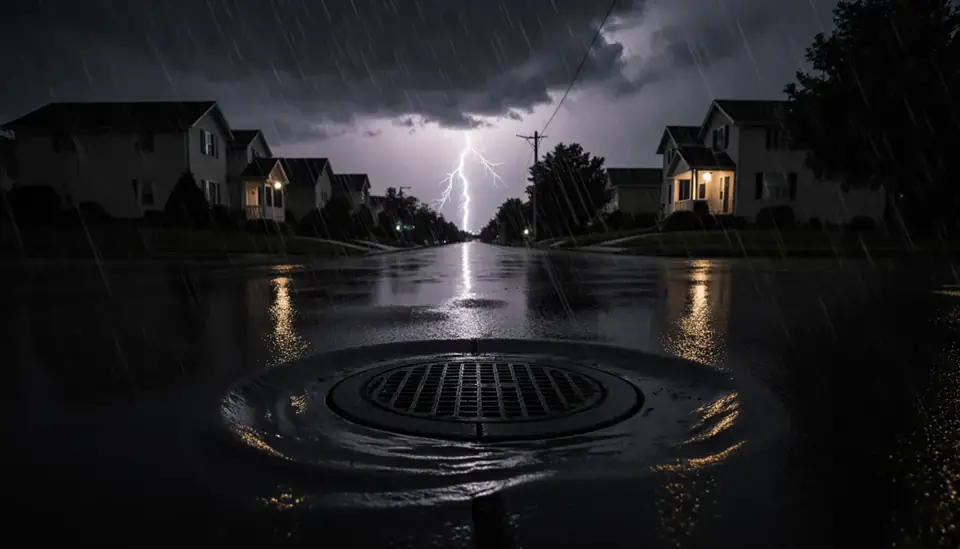
Corona sits where the Santa Ana River squeezes through the canyon between the Inland Empire and Orange County, with the Santa Ana Mountains rising to the west and southwest. That position puts the city at the bottom of a lot of drainage. Temescal Creek runs through a concrete channel across the north side of town, side canyons feed washes that cut through neighborhoods, and just downstream the Prado Dam basin turns into a lake when the river runs high.
Most calls about water damage in Corona, however, start indoors: a cracked supply line, an overflowing washer or a roof that lets go during a winter storm. The Restoration Job connects callers with independent restoration providers that work in Corona and nearby communities through a free line at (888) 317-9980, open around the clock. Many providers handle emergencies at any hour, but timing depends on the company.
How the call works: when you call (888) 317-9980, The Restoration Job connects you with an independent restoration provider that serves Corona. That provider inspects the damage, explains the scope and quotes the work. The Restoration Job doesn't perform restoration itself. Read our referral disclosure.
Temescal Creek, Side Canyons and the Prado Basin
Temescal Creek drains the largest area of any Santa Ana River tributary, though it rarely carries much water except in very wet years. Through Corona it is confined to a concrete channel that also collects runoff from Main Street Canyon Wash, the Oak Avenue Drain and the Arlington Valley Channel. Those drains exist because storm water from the hills has to go somewhere fast.
The Prado Dam, completed in 1941, holds back the Santa Ana just downstream. In a flood the basin behind it fills and the creek's confluence with the river disappears under water. Homes away from the channels are not at risk from that pool, but neighborhoods near washes and canyon mouths can see fast street flooding in a heavy storm. The county's Floodplain Web map shows whether a parcel is in a regulated floodplain.
Burn Scars Above the Southern Neighborhoods
The Holy Fire burned more than 23,000 acres in August and September 2018, and evacuation orders reached Corona neighborhoods including Glen Eden and Indian Canyon, along with Temescal Valley and Lake Elsinore. Wildfire leaves slopes that absorb less water and shed more mud and debris, and that effect can last for several rainy seasons.
If your home backs up to a burned or recently burned hillside, treat winter storm warnings seriously. Keep drainage paths clear, have sandbags ready (county fire stations provide up to 10 free), and sign up for alerts. Corona runs its own city alert system in addition to the county's Alert RivCo, and Riverside County recommends registering for both. Mud that enters a house is a different job from a clean-water leak and usually calls for flood cleanup with removal of affected drywall and flooring.
From Lemon Groves to Master-Planned Tracts
Corona began as a citrus colony in 1886, laid out around the Grand Boulevard circle that gave it the Circle City nickname. Growth after 1980 replaced most of the groves with subdivisions, and areas like Sierra Del Oro, Eagle Glen and Dos Lagos reflect that later wave. The result is a housing stock that runs from older homes near the circle to the many two-story houses in the newer subdivisions.
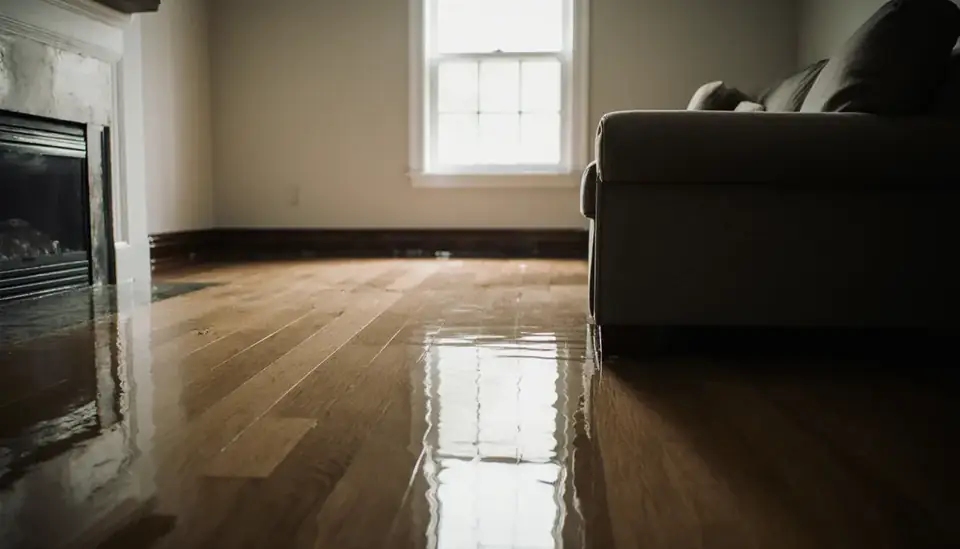
Two-story homes bring a specific risk: a bathroom or laundry leak upstairs can travel through the floor system and come out of a downstairs ceiling, light fixture or wall. Insulation and joists in between can stay wet long after the visible drip stops. A provider should open the ceiling where needed and confirm with a moisture meter that the framing has dried.
Getting the House Dry Without Trapping Moisture
- Stop the water and cut power to affected rooms if water is near outlets or cords.
- Take photos and video of damage before anything is moved or thrown out.
- Lift furniture off wet carpet with blocks or foil under the legs.
- Call your insurer, then call (888) 317-9980 if you need a restoration provider.
A typical water damage restoration job in Corona involves extracting standing water, cutting out wet drywall and pad that cannot be saved, then running dehumidifiers and air movers with daily readings. Corona's dry inland air speeds evaporation, but sealed spaces such as cabinets, wall cavities and the space between floors still need targeted drying.
Mold Risk After Winter Storms
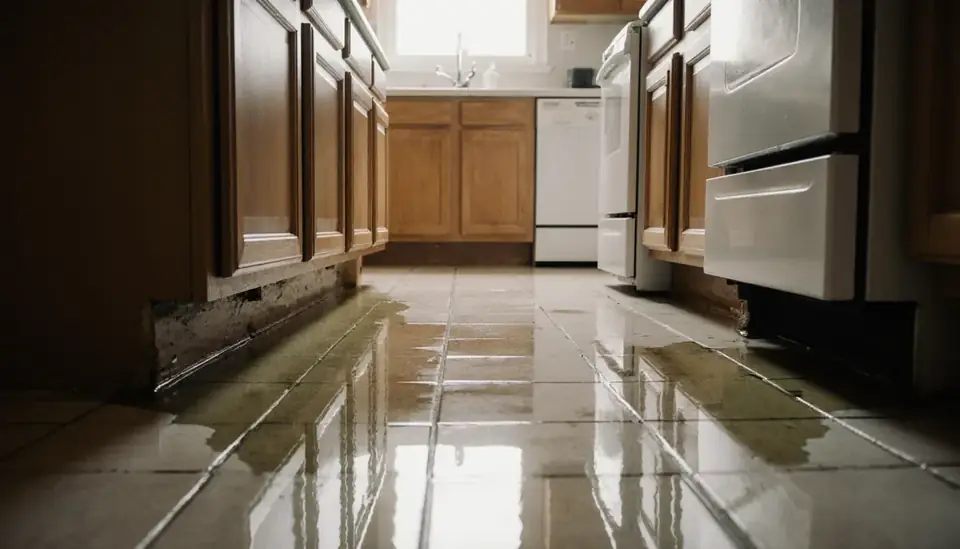
Most of Corona's roughly 14 inches of annual rain falls in winter and early spring, when houses are closed up and cooler indoor surfaces hold moisture longer. A leak that would dry quickly in July can linger in January. If drywall, carpet or cabinet bases have been wet for more than a day or two, have them checked for mold before they are covered up or repainted. Riverside County Flood Control's after-storm advice is simple and worth following: get wet contents out promptly to keep mold from starting.
Neighborhoods and Nearby Communities
Calls come in from across Corona, including:
- Sierra Del Oro
- Eagle Glen
- Dos Lagos
- Glen Eden
- Indian Canyon
The same line also serves nearby communities such as:
- Norco
- Riverside
- Eastvale
- Temescal Valley
- Home Gardens
- El Cerrito
- Yorba Linda
Questions From Corona Property Owners
Does Prado Dam mean Corona can't flood?
The dam controls the Santa Ana River, not the rain falling on Corona's own streets and hillsides. Local washes, canyon runoff and storm drains that back up can still put water into homes during heavy storms. Check your parcel on the county Floodplain Web map, and remember that homeowners insurance typically excludes flood, so outside water needs separate coverage.
My house is near the Holy Fire burn area. What should I do before rain?
Clear gutters and yard drains, keep sandbags on hand for door thresholds and garage openings, and register with both Corona's city alert system and Alert RivCo. Burned slopes can send mud and debris downhill quickly in intense rain. If mud gets inside, avoid hosing it into walls; a provider should remove it and the materials it soaked.
Water came through my downstairs ceiling. Is it safe to stay?
Turn off power to that area at the breaker if water is near a light fixture or outlet, and keep people out from under a sagging ceiling, which can hold a surprising amount of water. Find and shut off the source upstairs. A restoration provider can safely drain the ceiling, remove wet drywall and dry the joists between floors.