
Ballona Creek cuts diagonally across Culver City, running northeast to southwest through most of town before it empties into Santa Monica Bay at Marina del Rey. Today it is a broad concrete-and-rock channel with a bike path along its banks, but it drains a watershed of roughly 130 square miles, which the city describes as virtually all of west Los Angeles. On the southeast side, the Baldwin Hills rise above neighborhoods like Blair Hills and Culver Crest, so the city has both a major flood channel and hillside streets within its five square miles.
The Restoration Job only makes referrals and never sends its own workers. Call (888) 317-9980 at any hour and we will connect you with an independent restoration provider serving Culver City. Many providers offer emergency service, but schedules and availability are set by each company.
How the call works: when you call (888) 317-9980, The Restoration Job connects you with an independent restoration provider that serves Culver City. That provider inspects the damage, explains the scope and quotes the work. The Restoration Job doesn't perform restoration itself. Read our referral disclosure.
How Ballona Creek Became a Channel
Before it was straightened and lined, Ballona Creek flooded the low ground around it. A December 1931 storm pushed flows past 7,000 cubic feet per second, and deadly floods in 1934 forced closure of wooden bridges at Venice, Redondo and other boulevards. The Army Corps of Engineers channelized the creek in the 1930s, and that work changed what flooding looks like here. In December 1963, when the Baldwin Hills Reservoir failed and destroyed 277 homes in the neighborhoods below it, the channel carried much of the released water out to the sea.
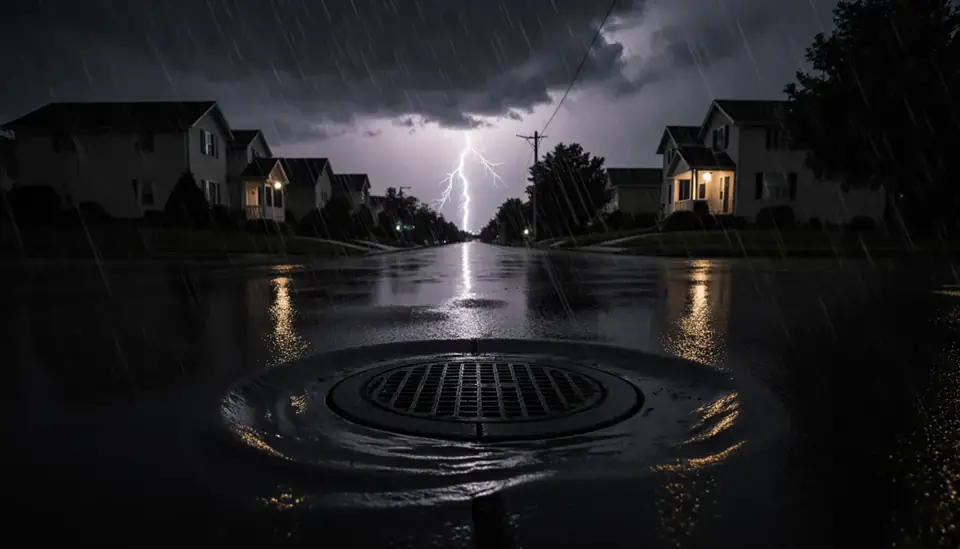
Today the bigger risk for most households is local: storm drains that back up in intense rain, water ponding at low intersections and driveways, and runoff that enters garages and ground-floor rooms. Checking your address on the county flood zone map tells you whether your lot falls in a mapped flood hazard area.
Blair Hills, Culver Crest and Hillside Runoff
Culver City averages about 14 inches of rain a year, and January and February are the wettest months. On the hillside streets of Blair Hills, Blanco-Culver Crest and Fox Hills, a heavy storm sends water down driveways and side yards toward the downhill side of each house. Clogged area drains, failing retaining-wall drainage and gutters full of leaves are the usual culprits when water reaches a lower-level room or crawl space.
- Clear gutters, downspouts and yard drains in fall.
- Keep soil and mulch below the level of wood siding and door thresholds.
- Watch for cracks or bulges in retaining walls after a wet storm.
Older Homes and Mixed-Use Buildings Near Downtown
Culver City grew as a film-production center from the 1920s, and many of its neighborhoods, from Clarkdale and McManus to Carlson Park and Sunkist Park, mix older single-family homes with newer apartments and mixed-use buildings. In an older house with a raised floor, a slow drain leak under a bathroom can spread across a crawl space before anyone sees it. In a newer stacked building, an overflowing tub or failed dishwasher line upstairs can reach a ceiling, a hallway and the business on the ground floor.
For leaks in shared buildings, notify management or the HOA right away and document everything. Water damage restoration in multi-unit buildings often requires access to more than one unit to locate and dry all wet materials.
Culver City Leaks: Steps Before Help Arrives
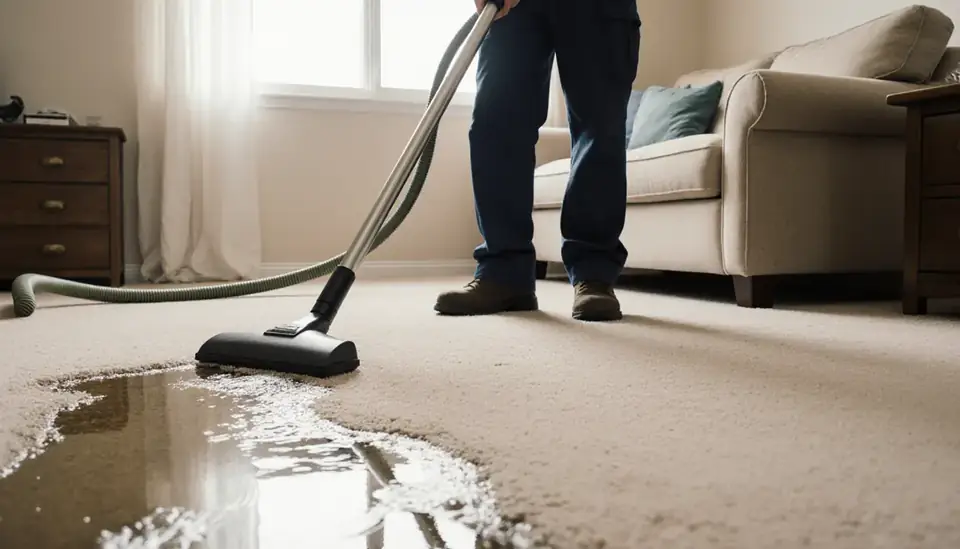
Turn off the water at the fixture or the main, and stay out of rooms where water is near outlets or power strips. If storm water came in from outside, treat it as contaminated and keep children and pets away. Take photos and video before moving anything, then lift furniture off the floor and pull back rugs. A provider will typically extract the water, take moisture readings in walls and floors, remove saturated padding or drywall where needed, and run dehumidifiers and air movers while tracking progress. Wet crawl spaces need their own attention, because they can hold moisture against floor joists long after rooms upstairs look dry.
Mold Between the Coast and the Basin
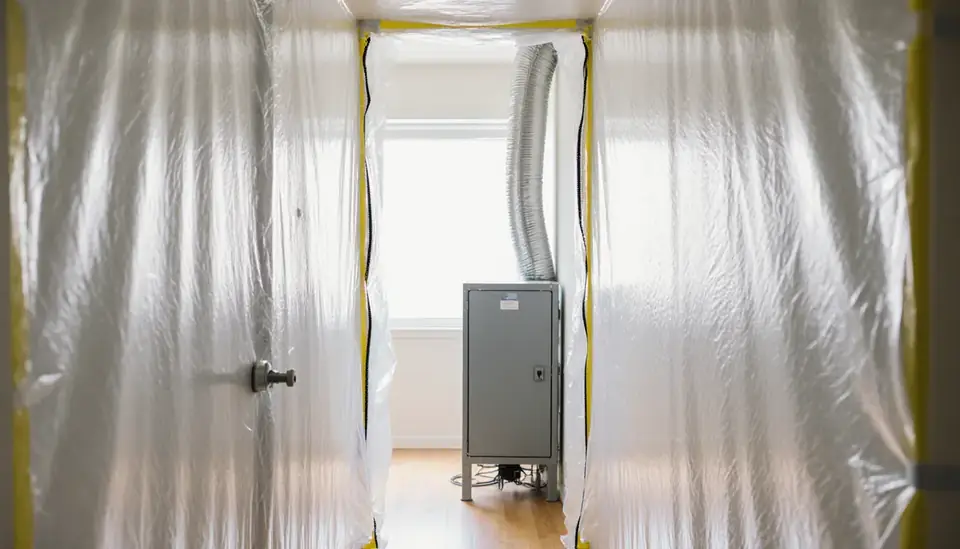
Culver City sits a few miles inland, close enough to the ocean that damp coastal air and fog can reach it. That moisture slows drying in closed spaces like closets, cabinets and crawl spaces. Mold usually follows moisture that was missed, so confirm materials are actually dry before walls are closed up. If you notice a persistent musty smell or spotting after a leak, mold remediation can remove affected materials and fix the conditions that allowed growth.
Where Callers in the Culver City Area Are
Calls come in from across Culver City, including:
- Blair Hills
- Blanco-Culver Crest
- Fox Hills
- Clarkdale
- McManus
- Carlson Park
- Sunkist Park
- Downtown Culver City
The same line also serves nearby communities such as:
- Los Angeles
- Ladera Heights
- Marina del Rey
- Santa Monica
- Inglewood
- View Park-Windsor Hills
Questions From Culver City Property Owners
Is my home near Ballona Creek in a flood zone?
Being near the channel does not automatically put a home in a mapped flood zone. Look up your address on the Los Angeles County flood zone determination site or FEMA's flood map service center to see the official designation. Even outside mapped zones, street flooding and backed-up drains can still affect low-lying lots, and those losses are usually not covered by a standard homeowners policy.
Rainwater came into our lower level in Blair Hills. What usually causes that?
On sloped lots, water often enters where the hillside meets the house: through a slab joint, under a door at the downhill side, or through a retaining wall that is not draining. Clogged area drains and gutters make it worse. After the room is dried and cleaned, have the exterior drainage checked so the same path does not open up in the next storm.
Does Culver City have a hazard plan that covers storms?
The city adopted a Hazard Mitigation Plan in 2024 that was reviewed and approved by Cal OES and FEMA. It identifies the hazards facing the community and lists projects and partnerships to reduce risk. For day-to-day storm alerts, sign up with Ready LA County and follow National Weather Service forecasts for the Los Angeles area.