

Malibu runs 21 miles along the Pacific with the Santa Monica Mountains rising directly behind it, so almost every property sits between steep canyon slopes and the surf. Four major fires have burned through parts of the city in the last few decades, from the 1993 Old Topanga Fire to the Woolsey Fire in 2018, the Franklin Fire in December 2024 and the Palisades Fire in January 2025. Each one left hillsides that shed water and mud far more easily when winter rain returns.
For help reaching a provider, call The Restoration Job at (888) 317-9980, a free line staffed around the clock. We connect callers with independent restoration providers that work in Malibu. We do not do the work ourselves, and response depends on the provider and on road access, which can be limited during storms.
How the call works: when you call (888) 317-9980, The Restoration Job connects you with an independent restoration provider that serves Malibu. That provider inspects the damage, explains the scope and quotes the work. The Restoration Job doesn't perform restoration itself. Read our referral disclosure.
Burn Scars Above the Canyons
Fire strips vegetation and leaves soil that repels water, so rain runs off quickly and carries ash, rock and mud with it. After the 1993 fire, a massive mudslide near Las Flores Canyon closed Pacific Coast Highway for months. The City of Malibu warns that debris flows can happen even after the rain stops, when logs and boulders that formed temporary dams give way, and advises residents in burn areas to get to a safe place before a storm and stay there until well after it ends.
Los Angeles County Public Works offers email and text alerts with debris and mudflow forecasts for recent burn areas, including the Palisades burn. Signing up is one of the most useful things a canyon resident can do before the rainy season.
Erosion Along PCH After the Palisades Fire
Water damage in Malibu is not only about rain. In August 2026, after inspecting all 320 beachfront parcels in the Palisades burn area along PCH, the city reported 23 red-tagged properties and said the erosion continued to accelerate, with extreme high tides over eight feet expected. In September 2026, erosion on Sea Level Drive led to evacuation orders and red tags affecting 31 properties, and because that road is the only way in and out, the area became inaccessible.
For beachfront owners, the practical takeaways are to keep documentation of your home's condition before winter, know your evacuation route, and understand that wave and surge damage is generally a flood-insurance matter rather than a homeowners claim.

Getting Ready for an El Niño Winter
The city held an El Niño preparedness workshop in late September 2026 with Public Works, Public Safety, Community Development and Caltrans, and its El Niño page lists steps for homeowners. Malibu's rainfall averages only about 12.5 inches a year, but that average hides a lot of variation, and wet winters on burned or eroding slopes are where the damage piles up.
- Clear retaining wall drains, surface drains, culverts and gutters before storm season.
- Free sandbags are available at Los Angeles County fire stations with proof of residency; Malibu allows only burlap or jute bags, not plastic.
- Sign up for the city's alert center and Ready LA County notifications.
Mud, Septic Systems and What Cleanup Involves
Malibu has historically relied on onsite septic systems rather than a regional sewer, and that matters after a flood. Saturated ground and runoff can overwhelm a leach field, and floodwater that has passed through yards, roads and burn debris should be treated as contaminated. Mud and ash on floors need to be removed and surfaces cleaned before drying starts; porous items like carpet and padding that sat in muddy water are usually discarded.
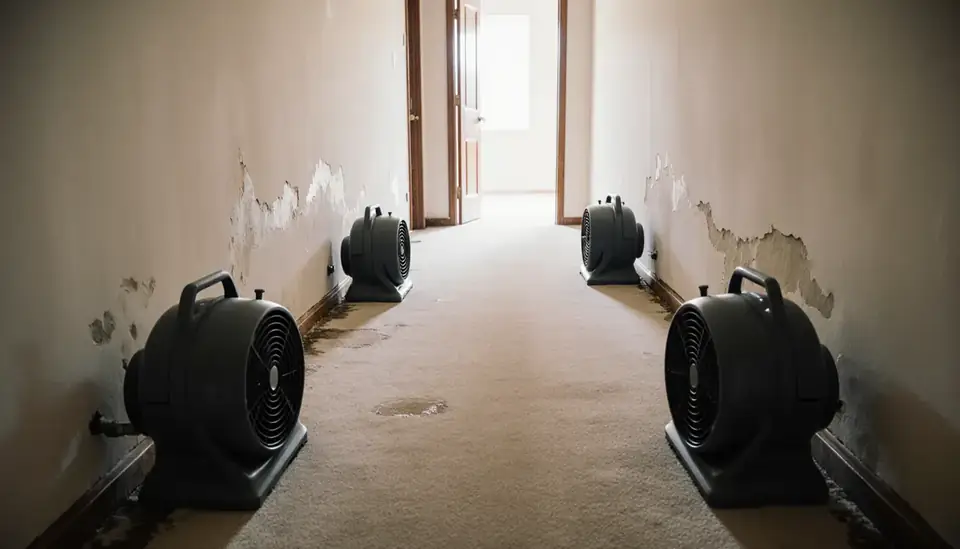
A provider handling flood cleanup on a canyon or beach property will typically remove sediment, extract remaining water, open wet walls where needed, and dry the structure with monitored equipment. If wastewater has backed up, ask about sewage cleanup procedures.
Ocean Air and Slow-Drying Homes
The Malibu climate is mild, with cool marine air and fog for much of the year. That keeps interiors humid near the water and makes wet framing, insulation and subfloors dry slowly. After a leak or storm intrusion, closed rooms, lower floors built into hillsides and closets on ocean-facing walls are where mold tends to appear first. Dehumidification and verified moisture readings matter more here than simply airing out the house.
Where Callers in the Malibu Area Are
Calls come in from across Malibu, including:
- Point Dume
- Malibu Colony
- Big Rock
- Las Flores
- Corral Canyon
- Serra Retreat
The same line also serves nearby communities such as:
- Topanga
- Calabasas
- Agoura Hills
- Santa Monica
- Monte Nido
Questions From Malibu Property Owners
Where can I get sandbags in Malibu, and what kind are allowed?
The City of Malibu directs residents to free sandbags at Los Angeles County fire stations, with proof of residency, and the county has a sandbag locator. Only burlap or jute bags are allowed in Malibu; plastic sandbags are restricted to first-responder emergency use. Fill and place them before a storm so they guide shallow water away from doors and garage openings.
I live below a burn area. How will I know if a debris flow is likely?
Los Angeles County Public Works offers email and text alerts with debris and mudflow forecasts for recent burn scars, and the National Weather Service in Oxnard issues flash flood watches and warnings. The city also runs its own alert center. Sign up for all three before winter, and plan to leave early: debris flows can arrive fast and may continue after rain ends.
Mud came into my house during a storm. Can I just hose it out?
Storm mud from burned hillsides can contain ash, debris and other contaminants, so wear gloves, boots and a mask, and avoid washing it into drains that serve a septic system. Photograph everything for insurance first. Mud trapped in wall cavities, under flooring or in HVAC ducts is hard to remove by hand, which is why many owners call a restoration provider for sediment removal and drying.
Does my homeowners policy cover erosion or wave damage on a beachfront property?
Standard homeowners policies typically exclude flood, surge and earth movement. A National Flood Insurance Program or private flood policy may cover some wave and surge damage to the structure, depending on the policy terms. Go over your coverage with your agent before winter storms, and keep dated photos of your home's condition.