

California's capital was built where the American River meets the Sacramento River, on ground only about 26 feet above sea level. The city flooded in its first winters, saw a brand-new levee breached in 1852, and spent the years after the Great Flood of 1862 lifting its downtown streets with brick walls and fill. Today much of the city depends on levees, upstream dams and the Yolo Bypass to keep river water out, and local flood planners still treat that protection as something to keep improving rather than a finished job.
Most calls about water damage in Sacramento, though, start indoors or overhead: a failed supply line, a water heater giving out, a roof that leaked during the first big storm of the season, or a tree that came down in the wind. The Restoration Job runs a free 24/7 line at (888) 317-9980 and connects callers with independent restoration providers that serve the area. We are a referral service, not a contractor, and the companies you reach set their own schedules, though many offer emergency service.
How the call works: when you call (888) 317-9980, The Restoration Job connects you with an independent restoration provider that serves Sacramento. That provider inspects the damage, explains the scope and quotes the work. The Restoration Job doesn't perform restoration itself. Read our referral disclosure.
Two Rivers, a Raised Downtown and the 1986 Wake-Up Call
The Great Flood of 1862 left much of the city under water for roughly three months, and the response was dramatic: streets and buildings were raised by as much as 9.5 feet. Folsom Dam, finished in the 1950s, became the main flood-control structure on the American River. In 1986 that system was pushed to its limit. The Sacramento Area Flood Control Agency (SAFCA) notes that Folsom Dam exceeded its normal flood-control storage that year and several area levees nearly collapsed. The Legislature created SAFCA in 1989 in response, and its work since has aimed at a minimum 200-year level of protection for the urban area.
That history matters for homeowners because levee protection lowers risk without removing it. Some properties shown outside high-risk flood zones on federal maps still sit in places that would take on water if a levee failed. Flood coverage is sold separately from a standard homeowners policy, and SAFCA points residents to the National Flood Insurance Program at (800) 427-4661 for details.
Natomas and the Neighborhoods Behind the Levees
Natomas is the clearest example of living below the rivers. The district sits on the historic Sacramento River floodplain, bordered by the Garden Highway and American River on the south, Steelhead Creek on the east and the Sacramento River on the west. South Natomas filled in with homes from the 1950s through the 1980s, and North Natomas grew rapidly from the mid-1990s on. SAFCA's Natomas Basin and Sacramento River East Levee projects are both aimed at strengthening the levees that ring these neighborhoods.
Residents of Natomas, Little Pocket, Greenhaven, Land Park and the other river-adjacent areas should know their evacuation route, keep important papers off the floor, and photograph their home and belongings before winter. Those photos make an insurance claim much easier if water ever does arrive.
Wind, Downed Trees and the 2022-2023 Storm Run
Sacramento's rain comes mostly between November and April, averaging a little over 18 inches a year but swinging from under 6 inches in 2013 to more than 33 inches in 1983. A wet winter often arrives as a string of atmospheric rivers. Between December 26, 2022 and January 11, 2023, the city recorded 9.58 inches of precipitation, gusts topped 60 mph, and more than 500,000 customers lost power across the region. Sacramento County saw five storm deaths, more than any other county in the state.
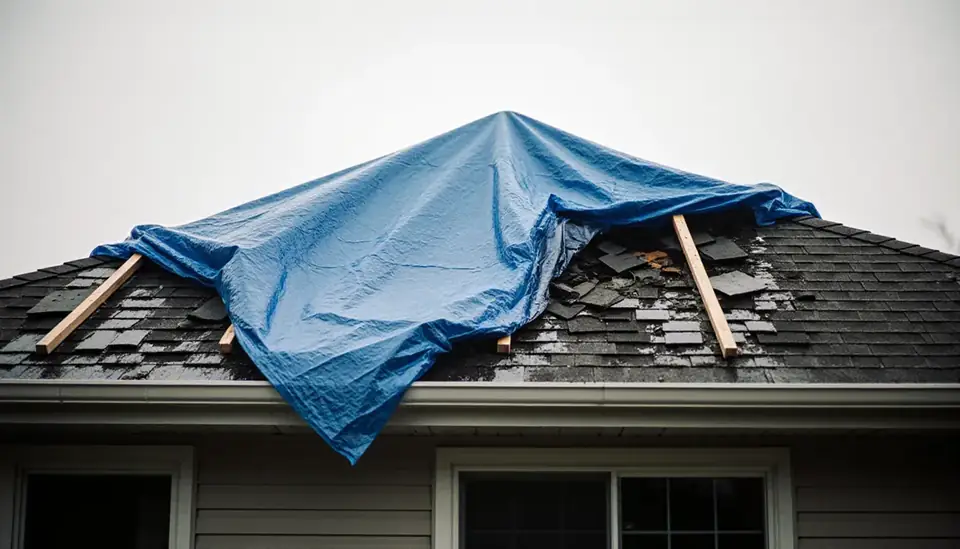
For homeowners the damage in storms like those is often a tree limb through the roof, rain driven past old flashing, or saturated soil pushing water under a garage door. Tarping the opening quickly and getting wet insulation and drywall out of the ceiling below are the first priorities. Storm damage cleanup typically combines that emergency protection with drying and repairs.
Drying Out a Sacramento House: Crawl Spaces, Slabs and Tule Fog
How a restoration crew approaches the job depends a lot on what sits under your floor. A house with a raised foundation can collect water in the crawl space, where it needs to be pumped out and the space ventilated before wood framing and subfloor dry. A slab-on-grade home hides a different problem: a leak under or beside the slab can wet flooring and baseboards across several rooms before anyone sees it.
- Shut off the water at the main valve and cut power to wet rooms if it is safe to do so
- Pull rugs, furniture and boxes out of standing water
- Photograph everything before it is moved or thrown away
- Ask the provider for moisture readings at the start and end of drying
Winter brings its own drag on drying. Tule fog and cool, damp days slow evaporation, so dehumidifiers and air movers often have to run longer than they would in July. Professional structural drying is about confirming with meters that framing and subfloors are dry, not just that surfaces feel dry.

Mold After a Wet Winter or a Hidden Summer Leak
Sacramento's long, hot summers dry things out quickly in the open air, but a slow leak inside a wall, under a sink or above a ceiling stays damp no matter how hot it is outside. In winter, a crawl space that took on water can stay humid for weeks. Either way, mold can start on wet drywall, carpet pad and wood within a few days. A musty smell, bubbling paint or soft baseboards are signs to have the area opened up and tested for moisture. For visible growth larger than a small patch, mold remediation with containment is safer than scrubbing it yourself.
Areas In and Around Sacramento
Calls come in from across Sacramento, including:
- Natomas
- Land Park
- East Sacramento
- Midtown
- Oak Park
- Curtis Park
- Greenhaven
- Little Pocket
- Del Paso Heights
- Tahoe Park
The same line also serves nearby communities such as:
- West Sacramento
- Elk Grove
- Rancho Cordova
- Arden-Arcade
- Carmichael
- Florin
- North Highlands
Common Questions
My Sacramento home isn't in a FEMA high-risk flood zone. Do I still need flood insurance?
It is worth considering. Much of Sacramento relies on levees and upstream dams, and local flood agencies describe their goal as reducing risk, not eliminating it. Standard homeowners policies exclude flooding from outside water, so a separate policy through the National Flood Insurance Program or a private carrier is what covers it.
A tree fell on my roof during a windstorm. What should happen first?
Make sure everyone is out of the affected rooms and stay clear of any downed power lines, then call the utility. Once it is safe, the opening needs to be covered to keep rain out, and wet ceiling material, insulation and drywall below should be removed before it sags or grows mold. Take photos of the tree, roof and interior for your insurer before cleanup begins.
Why does drying take longer in a Sacramento winter than in summer?
Evaporation slows when the air is cool and already damp, as it is during tule fog season. Drying equipment can still bring materials down to normal moisture levels, but it may need to run for more days. Ask the restoration provider to show you daily moisture readings so you know when the job is truly done.
Who do I call about a flooded street or blocked storm drain?
Street drainage is handled by the city, so report blocked drains or street flooding to the City of Sacramento rather than waiting for water to reach your door. Inside your home, a restoration provider handles extraction and drying. If street water entered the house, treat it as contaminated and have surfaces cleaned and disinfected, not just dried.