

Kendall is not a city at all in the legal sense. It is an unincorporated community of about 16.6 square miles in southwest Miami-Dade, bounded by Snapper Creek on the north, U.S. 1 on the east and the Turnpike's Homestead Extension on the west. That means county agencies, not a city hall, handle permits, drainage complaints and flood-zone questions here. The land was pine rockland and groves until a building boom from the 1950s through the 1990s filled it with subdivisions, townhome communities and shopping around Dadeland.
The Restoration Job connects callers with independent restoration providers and does none of the work itself. Call (888) 317-9980 any time, day or night, and we will route you to a provider serving Kendall. The guidance below is written for the kinds of homes and problems common in this part of the county.
How the call works: when you call (888) 317-9980, The Restoration Job connects you with an independent restoration provider that serves Kendall. That provider inspects the damage, explains the scope and quotes the work. The Restoration Job doesn't perform restoration itself. Read our referral disclosure.
Snapper Creek and the Canal Grid South of Miami
Snapper Creek runs about four miles to Biscayne Bay, and its canal continues roughly ten miles west toward the Everglades. Its western reaches were dredged into the regional canal system in the 1940s, before the South Florida Water Management District existed. Together with other canals, it helps drain Kendall, but the ground is still flat, elevations average around seven feet, and summer rain can outrun the drainage.
When canals run full, stormwater backs up into swales and streets. Townhome rows and homes at the low end of a cul-de-sac often see water first. Report flooded roads and blocked drains to Miami-Dade 311, and keep yard debris out of drains so they can do their job.
The October 2000 Flood and Other Rain Events
On October 3, 2000, a tropical disturbance that later became Tropical Storm Leslie stalled over South Florida. The National Weather Service in Miami recorded 12 to 18 inches of rain in 24 hours, with 17.5 inches at nearby South Miami, and estimated that about 93,000 residences were flooded or isolated. Damage reached roughly $700 million, most of it agricultural losses in the farm areas to the south and west.
Events like that one are a reminder that you do not need a hurricane, or a coastal address, to flood. Miami-Dade's rainy season officially runs from May 15 to October 15, and a slow-moving storm in that window can put water into homes that have never flooded before.

Rebuilt After Andrew, Still Prone to Leaks
Hurricane Andrew in August 1992 destroyed many homes and businesses in Kendall, and much of the area was rebuilt over the following years. Today the more common losses are indoor ones: water heaters in garages and utility closets, washing machine hoses, failed toilet supply lines, and air handlers whose condensate drains clog. In two-story townhomes, an upstairs bathroom leak often shows up first as a stain on the kitchen or living room ceiling below.
For a clean-water leak caught early, water damage repair may be limited to drying, a section of drywall and new baseboard. When the leak has run for days, expect cabinet bases, flooring and more wall to come out.
Drying a Slab Home the Right Way
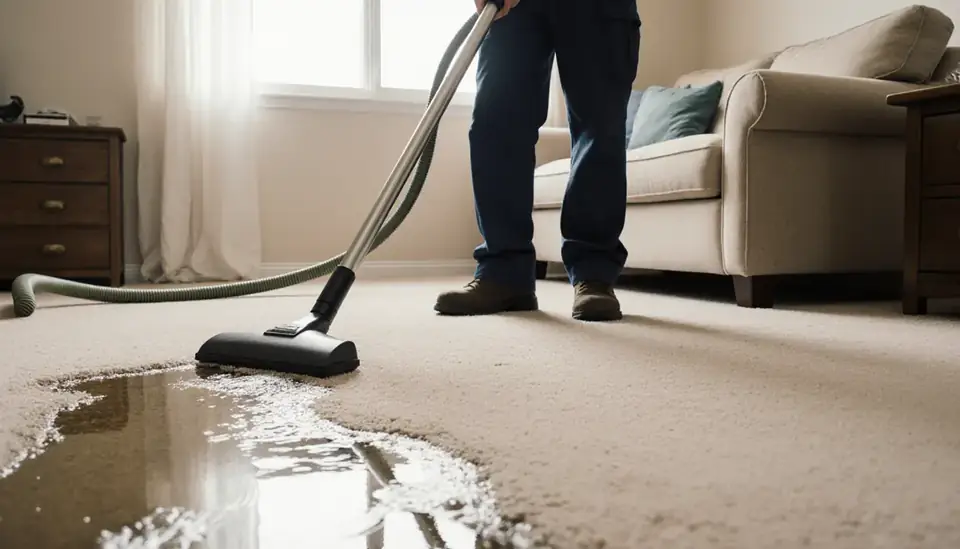
Kendall homes built on a concrete slab and finished with tile or laminate dry differently from wood-framed floors. Water spreads under laminate and behind baseboards fast, and a slab gives moisture back slowly. A sound drying job usually involves:
- Extracting water from floors and carpet, then lifting laminate or vinyl plank that has water beneath it.
- Removing baseboards and drilling or cutting the lower wall where readings are high.
- Running dehumidifiers and air movers with the house closed and the AC set to help pull moisture.
- Logging moisture readings daily and stopping only when materials reach dry targets.
A provider focused on structural drying should be able to show you those readings.
Mold in a Humid Inland Suburb
Sitting a few miles inland in Kendall does not make the air any drier. The area averages roughly 56 inches of rain a year, mostly from June through September, and indoor humidity climbs fast when the AC is off or a wall stays wet. Mold tends to show up first behind furniture on exterior walls, inside sink cabinets and on the back of baseboards. If you see spots or smell mustiness after a leak, have it assessed before you repaint or lay new flooring.
Areas In and Around Kendall
Calls come in from across Kendall, including:
- Dadeland
- Downtown Kendall
The same line also serves nearby communities such as:
- Pinecrest
- South Miami
- Palmetto Bay
- Kendale Lakes
- Sunset
- Glenvar Heights
- Richmond Heights
- Coral Gables
Kendall Water Damage Questions
Kendall isn't a city. Who do I contact about permits and flooding?
Because Kendall is unincorporated, Miami-Dade County handles building permits, flood zone information and drainage for most properties. Use Miami-Dade 311 to report flooded streets or clogged storm drains. The county's flooding page also links to flood zone maps for unincorporated areas and to guidance on protecting your property. Check that your address is not inside a neighboring municipality such as Pinecrest before you call.
My townhome's ceiling is stained from the unit next door or above. What now?
Stop the source if you can reach it, then notify your neighbor and, if there is one, the homeowners association. Responsibility depends on where the leak started and on your association's documents. Photograph the damage, keep any repair invoices, and contact your insurer. A provider can take moisture readings in both units so everyone works from the same information.
Do I need flood insurance if I'm miles from the coast?
Rain alone has flooded tens of thousands of homes in this region, as the October 2000 storm showed. Standard homeowners policies exclude rising water, so flood coverage is a separate policy, and new policies usually have a waiting period. Look up your address on the FEMA flood map, but treat a low-risk zone as lower risk, not no risk.