

Ivy League names on the east-west avenues are a clue to College Park's age. The town started in 1890 as a railroad depot called Atlantic City, became Manchester a year later and took its current name in 1896, after Cox College and the Georgia Military Academy. Its historic district covers 606 acres and 853 recognized structures built between 1882 and 1946, from Queen Anne houses to Craftsman bungalows, while the western part of Hartsfield-Jackson International Airport lies inside city limits.
The Restoration Job is a free call-connection service with a 24/7 phone line. Dial (888) 317-9980 and we'll connect you with an independent restoration provider that serves College Park and the neighboring Clayton County side of the city. Those independent companies do the actual repair and drying work.
How the call works: when you call (888) 317-9980, The Restoration Job connects you with an independent restoration provider that serves College Park. That provider inspects the damage, explains the scope and quotes the work. The Restoration Job doesn't perform restoration itself. Read our referral disclosure.
Leaks in Century-Old Bungalows and Queen Anne Houses
Houses in the College Park Historic District were built with materials that react to water differently from modern drywall. Plaster on wood or metal lath holds moisture longer and can lose its grip on the lath when soaked. Older hardwood floors cup and crown as they absorb water, and raised foundations with open crawl spaces let humid air and leaks linger underneath.
- Plaster ceilings that sag or bulge after a leak can fall; keep people out of the room below.
- Wood floors often recover with slow, controlled drying, so avoid ripping them up at the first sign of cupping.
- Original trim, doors and mantels are worth protecting; ask the provider to remove and store pieces that must come off.
Look for a provider comfortable with older homes who will dry in place where possible instead of defaulting to demolition. Our water damage repair page explains how drying and rebuilding fit together.
Weather Recorded Right Next Door at the Airport
Atlanta's official weather records have been kept at Hartsfield-Jackson since 1928, so College Park's climate is essentially the city's own record book. Annual precipitation averages about 49.7 inches, with the wettest periods in late winter, early spring and July. Summer afternoons bring a 20 to 40 percent chance of thunderstorms that can drop heavy rain in a short burst.
Winter matters too. The airport measured 4.5 inches of snow in the March 1993 Storm of the Century, and 2.6 inches fell on January 28, 2014. Cold snaps put pipes in unheated crawl spaces and exterior walls at risk, and a split pipe usually shows itself only when the thaw begins and water starts running.
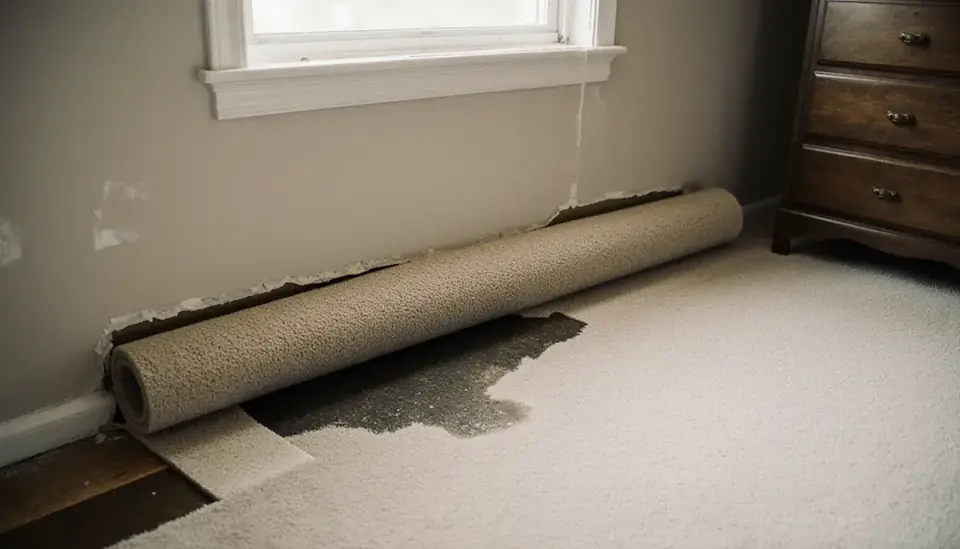
From the Flint's Headwaters to Your Gutters
The Flint River rises just north in East Point and runs under the airport's runways, which tells you how close College Park sits to a drainage divide. There are no wide river floodplains here. Water damage from outside more often comes from roof runoff, gutters spilling against old foundations, and street drainage that cannot keep up during a cloudburst. Downspouts that discharge right next to a pier or brick foundation are a common source of wet crawl spaces.
Extending downspouts and regrading soil away from the house are cheap fixes. Once water is already inside, prompt water extraction limits how far it soaks into subfloor and framing.
Mold Under Raised Historic Floors
Raised older homes breathe through their crawl spaces, and in Georgia's humid summers that air carries a lot of moisture. After a plumbing leak or storm intrusion, wet joists and subflooring can grow mold within a few days if nobody dries them. Signs include a musty smell rising through floor registers, white or dark spotting on wood below, or condensation on ductwork.
A restoration provider will typically dry the structure with dehumidifiers, remove any wet insulation from between the joists, and treat or remove affected material. Where growth has spread, mold remediation uses containment so cleanup does not carry spores into the living space.

Two Counties, One City: Practical Notes for Owners
Most of College Park is in Fulton County, but about 1,270 residents live on the Clayton County side, so county alert systems and some records differ by address. Check which county your property is in when signing up for emergency notifications. For flood risk, enter your address on FEMA's flood map rather than assuming either way.
The city's 7,090 housing units include apartments, among them its first mid-rise buildings in decades, alongside older houses. Tenants should report leaks to the landlord in writing, photograph damage, and contact renters insurance for belongings. Owners of historic homes should keep receipts for drying and repair, because insurers often ask for proof of what was saved versus replaced. Neighboring East Point faces many of the same older-housing issues.
College Park Neighborhoods and Surrounding Towns
Calls come in from across College Park, including:
- College Park Historic District
The same line also serves nearby communities such as:
Frequently Asked Questions
Should plaster walls be torn out after a leak in an older College Park home?
Not always. Plaster on lath can often be dried in place if it stays firmly attached and the water was clean. A provider will check moisture behind it and test whether it has separated from the lath. Plaster soaked by contaminated water, or sagging and loose sections, usually needs to come down. Ask for an assessment before any demolition starts.
Is College Park in a flood zone because of the airport or the Flint River?
Generally the risk here is local drainage rather than river flooding, since the Flint River is only beginning around the airport. That said, individual low spots and properties near drainage channels can be mapped flood zones. Look up your address on the FEMA Flood Map Service Center, and remember standard homeowners policies do not cover flooding.
Which emergency agency covers my address?
Most of the city falls under the Atlanta-Fulton County Emergency Management Agency, which offers the Fulton Alert notification system. Addresses on the Clayton County side fall under Clayton County's emergency management. The National Weather Service office in Peachtree City issues the warnings for both counties, so its forecasts apply citywide.
My pipes froze during a cold snap. What should I do once they thaw?
Shut off the main valve before the thaw if you can, and open faucets to relieve pressure. Check crawl spaces, exterior walls and the attic for splits once water is restored. If a pipe has burst, turn the water off again, move belongings out of the wet area and photograph everything. Fast drying keeps a frozen pipe from becoming a mold problem.