

Flowery Branch began as a railroad stop, established in 1874, a year after the Richmond and Danville line linked Charlotte and Atlanta through this corner of Hall County. Its Cherokee name, Anaguluskee, meant flowers on the branch. The town now fronts Lake Lanier and has been growing quickly: from about 5,700 residents in 2010 to roughly 9,400 in 2020, with estimates past 13,000 since. A great deal of the housing is new, and new homes bring their own set of leaks.
The Restoration Job is a free referral service with a phone line open 24/7. Call (888) 317-9980 and we'll connect you with an independent restoration company that works in Flowery Branch and southern Hall County. That provider assesses the damage and carries out the cleanup and drying.
How the call works: when you call (888) 317-9980, The Restoration Job connects you with an independent restoration provider that serves Flowery Branch. That provider inspects the damage, explains the scope and quotes the work. The Restoration Job doesn't perform restoration itself. Read our referral disclosure.
Grease, Clogged Lines and Sewage Backups
The City of Flowery Branch runs its own water and wastewater utility, and it singles out fats, oils and grease as one of the biggest problems in its sewer lines. Grease poured down kitchen drains cools, hardens and narrows pipes until a blockage forces wastewater back up through the lowest drains in a building, often a basement floor drain, a lower-level shower or a ground-floor toilet.
- Wipe pans and pour cooled grease into a sealed container for the trash.
- Use sink strainers and keep wipes, even ones labeled flushable, out of toilets.
- If sewage backs up, stop using water in the house and keep people and pets away from it.
- Report a suspected main-line blockage to the city; its website lists after-hours water and sewer emergency contacts.
Sewage carries bacteria and viruses, so sewage cleanup involves protective gear, removal of contaminated porous materials such as carpet and drywall, and disinfection before drying.
New Construction Along the Lanier Shoreline
Much of the growth around Flowery Branch has come as new subdivisions and townhomes near the lake. Recently built homes rarely fail in the ways older houses do, but they have weak points of their own: supply lines at refrigerators and washing machines, water heaters set in attics, condensate drains from air handlers, and shower pans or window flashing that were not sealed properly during construction.
If your home is still under a builder warranty, notify the builder in writing and document the damage with photos. Do not hold off on stopping the water and starting the drying while you wait, though. A slow leak inside a wall can damage drywall, insulation and framing for weeks before a stain appears.
Hillside Lots, Lower Levels and Runoff Toward the Lake
Lake Lanier is managed by the U.S. Army Corps of Engineers with a normal full pool of 1,071 feet above sea level, and its level is controlled at Buford Dam, where the Chattahoochee leaves the reservoir. For most Flowery Branch homeowners, the lake itself is not what floods the house. The more common problem is rain running down the sloped lots that lead toward the shoreline, collecting against foundations and seeping into finished lower levels.
Check that downspouts discharge well away from the house, that drains behind retaining walls are clear and that yard grading still slopes away after landscaping has settled. FEMA's flood maps show mapped flood hazard areas for your address, and keep in mind that homeowners insurance does not normally include flood coverage.
Getting a Wet Lower Level Dry
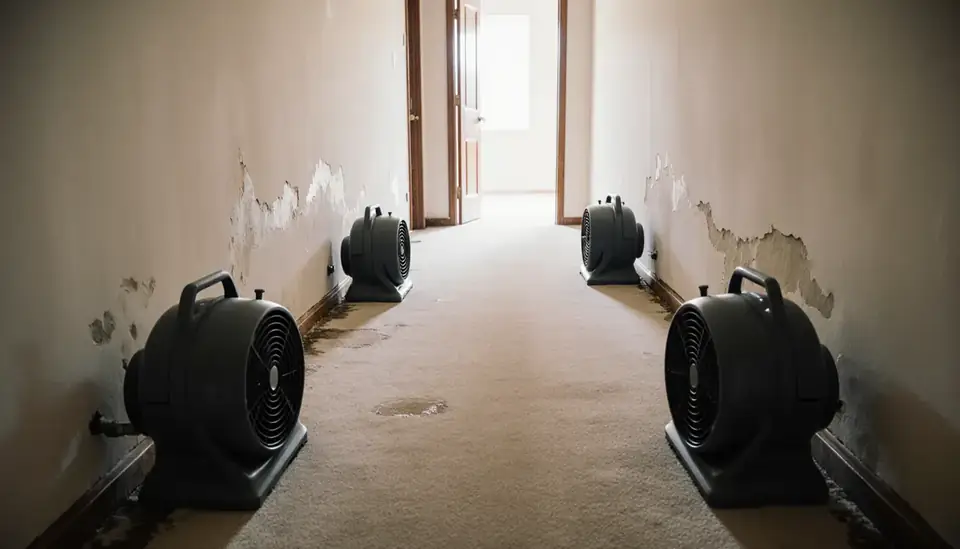
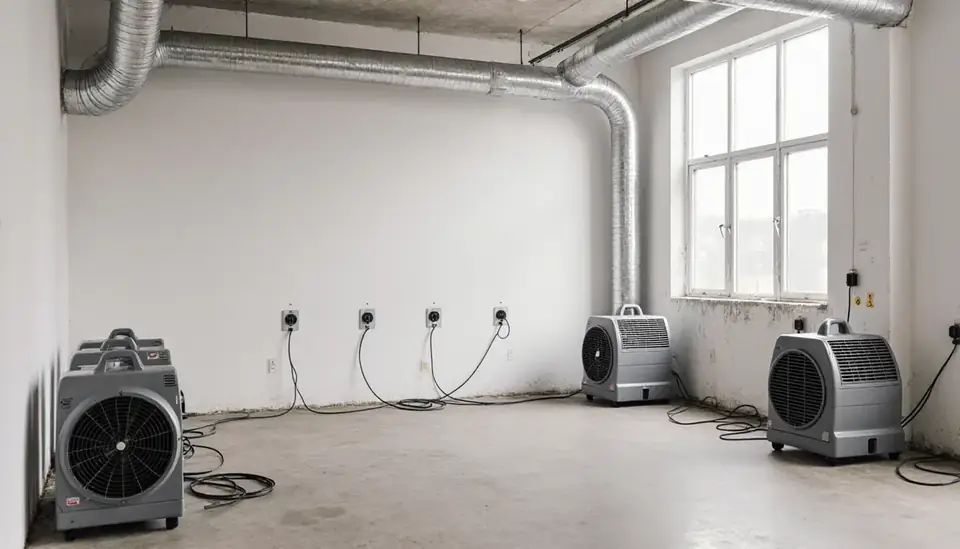
Lower levels built partly into a hillside dry slowly because concrete and the soil behind it hold moisture. After standing water is extracted, a restoration crew typically removes wet carpet pad and the bottom portion of affected drywall, then runs dehumidifiers and air movers while checking moisture in walls and slab each day. Professional structural drying is aimed at reaching normal readings, not just a dry-feeling surface, before new drywall or flooring goes in.
North Georgia Humidity and Mold After a Leak
Flowery Branch shares the hot, humid summers of the Gainesville area, where yearly precipitation averages around 55 inches. Damp materials in a closed-up lower level, behind a dishwasher or inside a bathroom wall can grow mold within a few days in those conditions. Musty smells, bubbling paint and dark spots along baseboards are common early signs.
Mold removal in Flowery Branch homes should follow, not replace, drying and repair of the moisture source. Affected porous materials such as drywall and carpet pad are generally removed under containment rather than cleaned in place.
Areas In and Around Flowery Branch
Calls come in from across Flowery Branch, including:
- Downtown Flowery Branch
The same line also serves nearby communities such as:
- Oakwood
- Gainesville
- Buford
- Chestnut Mountain
- Braselton
Questions From Flowery Branch Property Owners
Sewage is coming up through my floor drain. Who is responsible?
It depends on where the blockage is. A clog in your own service line is generally the owner's responsibility, while a blockage in the public main is the utility's. Flowery Branch customers can reach the city's water and sewer emergency contacts after hours. Either way, keep people away from the water and arrange professional cleanup, since sewage contaminates porous materials it touches.
Does homeowners insurance cover a sewer backup?
Often not by default. Many homeowners policies exclude sewer and drain backup unless you have added a specific endorsement, usually with its own coverage limit. Check your policy or ask your agent before you need it. If a backup happens, photograph the damage, keep receipts and contact your insurer promptly to learn what is covered.
My lower level gets wet in heavy rain but the lake is far below. Why?
Most likely runoff is reaching the foundation. On sloped Lanier-area lots, water from the street, roof and higher yards flows downhill toward the house. Short downspouts, settled soil and blocked drains behind retaining walls are frequent causes. Drying the space fixes the immediate damage, but redirecting water outside is what keeps it from coming back.
Where do I sign up for emergency alerts in Hall County?
Hall County Emergency Management and Homeland Security Agency offers a Citizen's Alert System and operates outdoor weather sirens. The National Weather Service office in Peachtree City issues flash flood, tornado and winter storm warnings for the county. Those alerts give you time to clear gutters, move belongings off a lower level or protect pipes.