

Arnold occupies the heart of the Broadneck Peninsula, with the tidal Severn River on its southwest side and the Magothy on its northeast. The ground here is higher than in many shoreline communities, averaging about 128 feet, but it drops toward the water in cliffs and small beaches. That mix means two kinds of homes facing two different water problems: houses up on the higher ground and houses down at the waterline.
Restoration work is done by independent companies; The Restoration Job simply runs the free line that reaches them. Call (888) 317-9980 day or night and we'll connect you with an independent restoration provider that works on the Broadneck Peninsula, from Rugby Hall to Pines-on-the-Severn.
How the call works: when you call (888) 317-9980, The Restoration Job connects you with an independent restoration provider that serves Arnold. That provider inspects the damage, explains the scope and quotes the work. The Restoration Job doesn't perform restoration itself. Read our referral disclosure.
Hillside Lots and Runoff on the Broadneck Peninsula
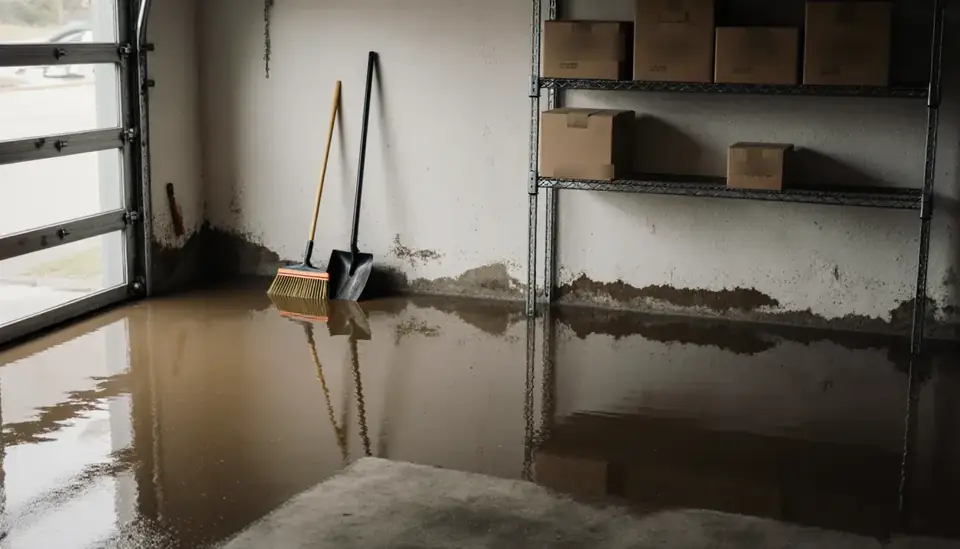
On the higher parts of Arnold, flooding from the rivers is unlikely, but rain still finds its way in. Steep lots send runoff toward foundations on the downhill side, and long driveways can channel water straight at a garage door. Homes built into a slope, with a walk-out basement on the low side, often see water come in at the base of the downhill wall or through a basement door during a heavy summer storm.
Simple grading, downspout extensions and keeping drains at the bottom of driveways clear go a long way. If water does get in, the basement or lower level should be dried promptly, since below-grade walls lose moisture slowly.
Down at the Waterline: Surge on the Severn and Magothy
Waterfront areas such as Mago Vista Beach and the communities along the creeks sit much closer to tide level. When a tropical storm or nor'easter piles water into the bay, it backs up into both rivers. Hurricane Isabel in 2003 produced a surge of about 7.2 feet at nearby Annapolis, and FEMA estimated up to $500 million in damage across the county.
Surge water is brackish and often contaminated. After it recedes, wet drywall, insulation and flooring are typically removed, the structure is cleaned and disinfected, and framing is dried and tested before rebuilding. Mechanical systems that were submerged, including furnaces, water heaters and electrical panels, need to be checked by the appropriate trades before they are used again.

Trees, Wind and Roof Damage
Where Arnold lots sit under large trees, the shade comes with a risk. In a strong storm, falling trees and limbs can open roofs and let rain pour into attics, ceilings and wall cavities. Isabel knocked out electricity to about 93 percent of the county's 211,000 power customers, a sign of how many trees and lines came down.
- Stay clear of downed lines and damaged trees still hanging over the house.
- Get an emergency tarp on the roof opening as soon as it is safe.
- Pull wet insulation out of the attic so the ceiling below can dry.
- Document everything with photos before cleanup starts.
Providers offering storm damage cleanup can usually handle tarping and interior drying together.
Interior Leaks That Have Nothing to Do With Weather
Plenty of water damage in Arnold starts inside. Failed water heaters, toilet supply lines, dishwasher connections and ice maker lines are frequent culprits, and January lows in the 20s can freeze pipes in garages and along exterior walls. Finding the source quickly limits the damage. Close the main shutoff, cut power to wet areas, and get water up before it soaks into subfloors. A provider doing water damage restoration should use moisture meters, and often thermal imaging, to trace how far water traveled behind walls and under floors.
Shade, Humidity and Mold Under the Trees
Heavy shade and humid summers keep tree-covered lots damp, and houses under a full canopy can be slow to dry after any leak. Crawl spaces, basements and north-facing walls are where mold usually turns up first. Run dehumidifiers after a water event, keep gutters free of leaves so roofs drain, and have hidden areas checked if a musty smell lingers. Taking out wet materials and drying the structure properly does more to prevent mold than any spray-on treatment.
Where Callers in the Arnold Area Are
Calls come in from across Arnold, including:
- Ulmstead Point
- Rugby Hall
- Pines-on-the-Severn
- Mago Vista Beach
The same line also serves nearby communities such as:
- Annapolis
- Severna Park
- Cape St. Claire
- Lake Shore
- Pasadena
Questions From Arnold Property Owners
My house is on a hill. Do I really need to worry about flood maps?
Probably less than a waterfront owner, but it is still worth checking. Mapped flood zones in Arnold follow the shorelines and creek valleys. Hillside homes are more likely to have runoff entering a walk-out basement, which is a drainage issue rather than a mapped flood risk. Either way, homeowners policies usually exclude surface water, so ask your agent.
A tree went through my roof during a storm. What happens first?
Safety comes first: keep away from downed wires and the damaged area. A tree service usually removes the tree, and the roof opening is tarped to stop more rain. Then the interior work begins, which includes removing soaked insulation and ceiling material and drying the framing. Call your insurer early, since tree and roof claims often involve several trades.
How do I find out whether my Arnold property is in a flood zone?
The Maryland Department of the Environment hosts the state's digital flood insurance rate maps, where you can search by address. Waterfront lots on the Severn and Magothy and properties near creek mouths are the most likely to fall in mapped zones. Your lender or insurance agent can also tell you how your property is rated.