
Ferndale sits right next to the weather station that keeps the Baltimore area's official rainfall record. Baltimore/Washington International Airport lies just across Aviation Boulevard to the west, and in 2018 that gauge measured 71.82 inches of precipitation, smashing the previous calendar-year record of 62.66 inches by more than nine inches. A wet year like that tests every gutter, foundation and sump pump in a community of about 17,000 people.
The Restoration Job is a free service that matches callers with independent, third-party restoration companies. Call (888) 317-9980 day or night and we'll connect you with a provider that serves Ferndale and the surrounding part of northern Anne Arundel County.
How the call works: when you call (888) 317-9980, The Restoration Job connects you with an independent restoration provider that serves Ferndale. That provider inspects the damage, explains the scope and quotes the work. The Restoration Job doesn't perform restoration itself. Read our referral disclosure.
An Inland Community Shaped by Rain, Not Tide
Ferndale covers just under four square miles with no open water inside its boundaries. Cabin Branch, a small stream, runs along the northern edge, and the Baltimore Beltway cuts across the area. At about 79 feet above sea level, homes here are out of reach of Chesapeake Bay surge, which means most water damage in Ferndale traces back to rainfall, groundwater and plumbing rather than tides.
That shifts the focus. Heavy, repeated rain saturates the soil around foundations, and water then pushes through block walls, slab cracks and the joint where the basement floor meets the wall. Short, intense thunderstorms can do damage of a different kind, overwhelming gutters and sending sheets of water toward doors and window wells within minutes.
What Wet Years at BWI Mean for Local Basements
The 2018 total at BWI ran nearly 30 inches above normal. Remnants of tropical systems add their own bursts: Ernesto in September 2006 dropped 3.63 inches at the airport, and Hurricane Isabel brought 3.21 inches there in 2003 along with widespread power outages across Anne Arundel County. Long soaking rains like these are when a basement that has stayed dry for years can suddenly start taking on water.
Simple maintenance cuts the risk considerably:
- Extend downspouts several feet from the foundation and keep gutters clear before fall storms.
- Test the sump pump each season by pouring water into the pit, and consider a battery backup.
- Check that soil and patios slope away from the house rather than toward it.
- Keep stored items in basements on shelving or in plastic bins, not cardboard on the floor.

Roof Openings When Storms Bring Wind as Well as Rain
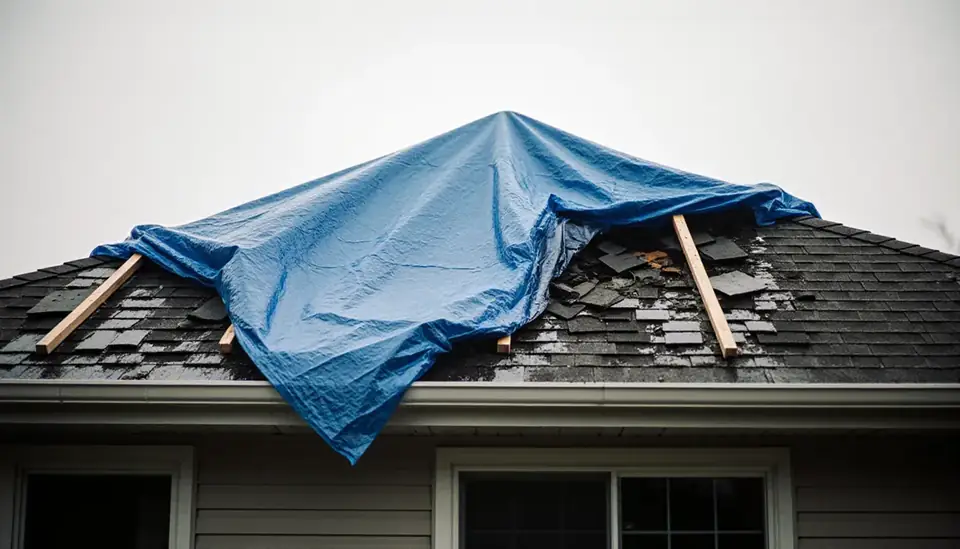
Storms that bring heavy rain to the region often arrive with strong wind. A limb through a roof or a section of torn shingles lets rain pour into attics, insulation and ceilings, and the damage spreads well beyond the visible hole. Temporary tarping is the first priority, followed by removing soaked insulation and drying framing and drywall.
If a storm has opened up your roof or siding, a provider offering storm damage cleanup can usually handle both the emergency covering and the interior water work, though roof replacement may be a separate contractor. Take photographs from the ground and inside before any tarp goes on.
How Drying Usually Proceeds in Ferndale Homes
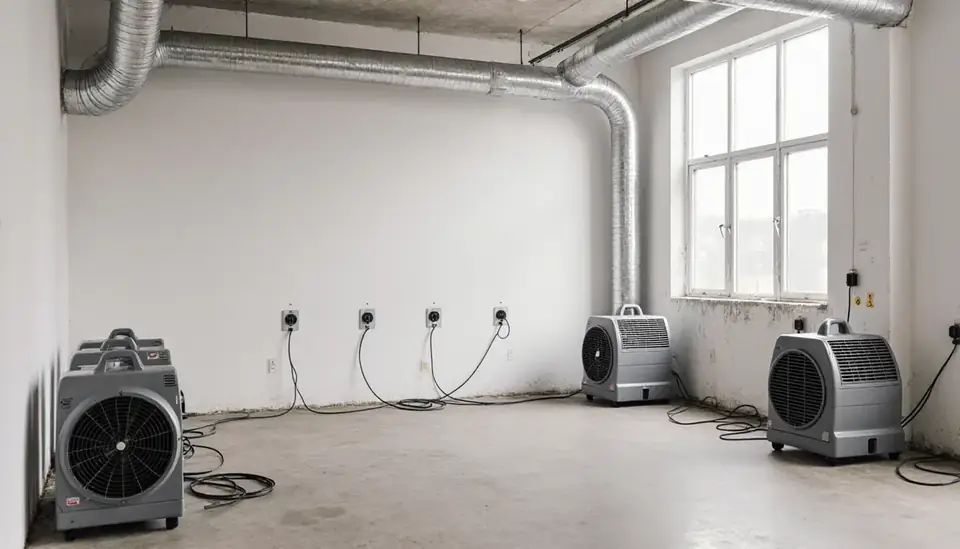
Restoration in a basement or ground floor generally follows a predictable sequence. Standing water is extracted with pumps or truck-mounted units. Wet carpet pad, saturated drywall below a measured line and swollen trim are removed. Then dehumidifiers and air movers are set up and moisture readings are taken daily until framing, subfloor and concrete reach normal levels.
Ask the provider to explain the moisture map and the drying goal at the outset; that record also helps with insurance. More detail on that phase is on our structural drying page. Reconstruction, such as new drywall and flooring, should wait until the readings confirm the structure is dry.
Mold Risk Near the Airport Corridor's Humid Summers
Ferndale shares the humid subtropical climate of the Baltimore area, with hot, humid summers that let mold colonize damp materials quickly. Carpet left wet for several days, drywall wicking water up from a flooded slab and boxes of papers in a damp corner are the usual starting points.
Visible growth larger than a small patch, or a musty odor that keeps returning after cleaning, usually means moisture is still present behind a surface. Fixing the moisture source and drying the area completely matter more than any cleaning product. If growth is widespread, ask about professional mold removal with containment so spores are not spread through the rest of the house.
Areas In and Around Ferndale
The same line also serves nearby communities such as:
- Linthicum
- Brooklyn Park
- Glen Burnie
Frequently Asked Questions
Can Ferndale homes flood even though they are far from the Bay?
Yes, though not from tides. Ferndale sits about 79 feet above sea level with no open water inside its boundaries, so surge is not the issue. Water problems here usually come from heavy rain saturating the soil, runoff collecting against foundations, overflowing gutters, sump pump failures and plumbing leaks. Cabin Branch on the northern edge drains some of that runoff away.
Where do I report a clogged storm drain on my Ferndale street?
Anne Arundel County's Department of Public Works handles county storm drains, culverts and pipes. You can report a concern by calling 311 or through the county's online reporting portal. Clearing your own downspouts, yard drains and gutters remains the homeowner's job, and doing it before a forecast storm prevents much of the water that ends up in basements.
How long does it take to dry out a wet basement?
It varies with the amount of water, the materials involved and the season. Concrete and block hold moisture longer than drywall, and humid summer air slows drying unless dehumidifiers are running. A provider should take readings each day and remove equipment only when materials reach normal moisture levels. Rushing reconstruction before that point invites mold.