
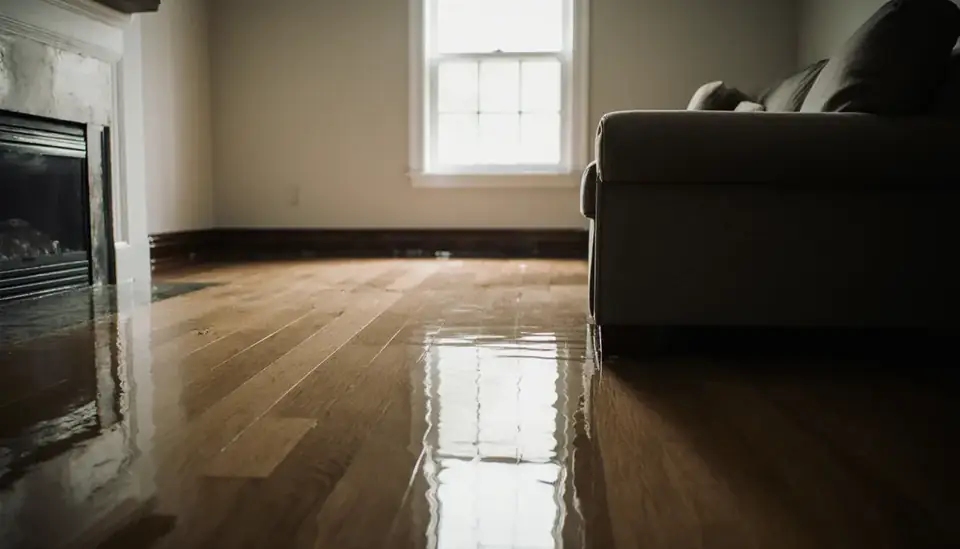
Bel Air has served as the Harford County seat since March 1782, and the blocks around the courthouse still hold a compact group of 19th- and early 20th-century brick and frame buildings. The incorporated town covers only about three square miles, though. Around it, the Bel Air North and Bel Air South communities grew explosively from the 1970s through the 1990s, so a Bel Air address can mean anything from a century-old house near Main Street to a subdivision home a few decades old.
The Restoration Job does not carry out restoration; its free 24/7 line connects callers with independent providers. Call (888) 317-9980 and we'll connect you with a company that serves Bel Air and the surrounding Harford County communities.
How the call works: when you call (888) 317-9980, The Restoration Job connects you with an independent restoration provider that serves Bel Air. That provider inspects the damage, explains the scope and quotes the work. The Restoration Job doesn't perform restoration itself. Read our referral disclosure.
Winters Run, Atkisson Dam and the Edge of the Piedmont
Harford County straddles two landscapes: the rolling Piedmont to the north and west and the flat Atlantic Coastal Plain toward the bay. Bel Air sits on the Piedmont side, where streams run in defined valleys. Winters Run, 14.6 miles long, flows from above Fallston southeast to Atkisson Dam in Bel Air and becomes Otter Point Creek on its way to the Bush River. A USGS gauge near Benson, 1.8 miles southwest of town, has tracked the stream since 1967 and drains about 34.8 square miles.
Homes along these stream valleys, and on the lowest lots of nearby subdivisions, are where heavy rain turns into flooding. On higher ground, water problems are more likely to be runoff against a foundation or a roof leak during a summer thunderstorm. Checking your lot on the state's flood map site takes a few minutes and tells you which of those risks applies.
Courthouse-Era Buildings and Older Homes Near Main Street
The Bel Air Courthouse Historic District is small, about four acres at Office, Courtland and Main streets, and its buildings are two and three stories of brick or frame put up or renovated between 1858 and the early 20th century. More than 25 Bel Air properties are on the National Register. Older structures like these often have plaster walls, wood floors and masonry foundations.
That construction can usually be dried rather than demolished, but it takes the right approach: steady dehumidification, controlled airflow and moisture readings in plaster and brick, not just a quick look at the surface. For anyone handling water damage restoration in an older building, saving original trim and floors is part of the job.
Aging Plumbing in the 1980s and 1990s Subdivisions
Bel Air South's population grew from 3,360 in 1970 to 57,648 in 2020, and Bel Air North posted its biggest jump in the 1980s. Houses from that building boom are now old enough that original water heaters, supply lines, washing machine boxes and sump pumps are reaching the end of their service lives. A failed water heater in a finished basement or a burst supply line under an upstairs sink are among the most common ways water spreads through these homes.
Inspecting those components and replacing rubber washer hoses with braided ones are low-cost steps. Once water does escape, extraction and drying should start quickly, before it wicks into drywall and under flooring.
What to Expect From the Cleanup
- An initial walk-through with moisture meters to find where water traveled, including behind walls and under floors.
- Removal of standing water, wet carpet pad and drywall that cannot be dried.
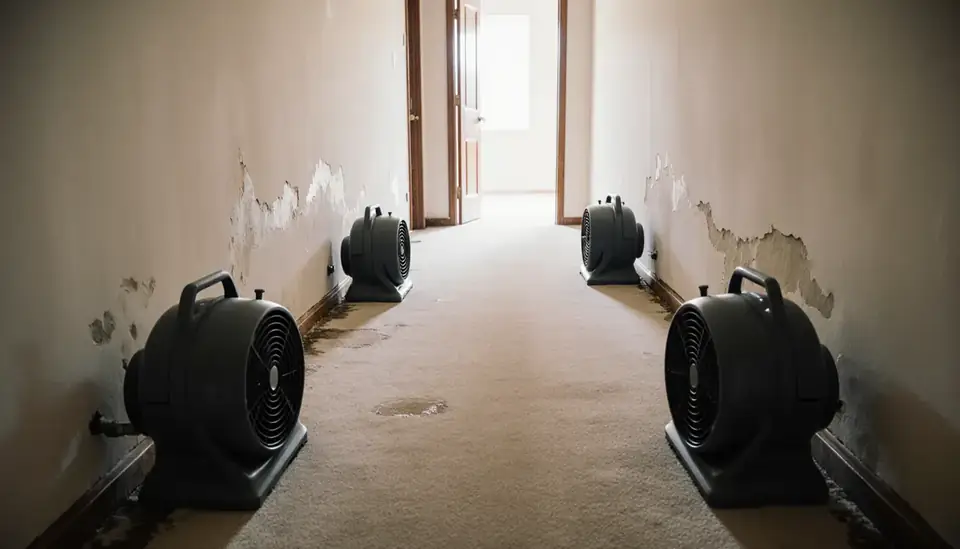
- Drying equipment running for several days, with daily readings.
- For storm-related roof or window openings, temporary covering first, which is part of storm damage cleanup.
- Photo and moisture documentation you can share with your insurer, followed by repairs once materials are dry.

Humid Harford Summers and Mold
Bel Air's July average temperature is about 76.6 degrees, and the humidity that comes with Maryland summers keeps damp materials from drying on their own. Mold can take hold on wet drywall, carpet backing and wood within a day or two, and basements are the most common place for it. Running air conditioning or a dehumidifier, removing soaked materials promptly and verifying dryness before closing up walls prevent most problems. If you already see growth or smell mustiness after a past leak, a mold remediation provider can contain it and fix the underlying moisture source.
Neighborhoods and Nearby Communities
Calls come in from across Bel Air, including:
- Bel Air Courthouse Historic District
The same line also serves nearby communities such as:
- Bel Air North
- Bel Air South
- Fallston
- Emmorton
- Fountain Green
- Edgewood
- Aberdeen
Frequently Asked Questions
Is my Bel Air home in a flood zone?
Most of the town sits on higher ground, but lots along Winters Run and other stream valleys can fall inside mapped floodplains. Search your address on FEMA's Flood Map Service Center or on the Maryland Department of the Environment's flood map site, which also shows preliminary map changes. Standard homeowners policies generally exclude flooding, so the answer affects whether you need separate flood coverage.
What is the difference between a covered leak and a flood for insurance?
Insurers usually treat sudden internal leaks, such as a burst supply line or a failed water heater, differently from surface water that rises from outside. The first is often handled under a homeowners policy, while the second needs flood insurance. Gradual leaks and sump pump failures depend on your specific policy and any endorsements, so confirm the details with your agent.
Do older houses near Main Street in Bel Air need a different drying approach?
Usually. Plaster walls, hardwood floors and brick or stone foundations hold moisture differently from modern drywall and can often be dried in place with slower, controlled drying. Ask how the provider will measure moisture in masonry and plaster and what they plan to remove before demolition starts. Call (888) 317-9980 and we'll connect you with an independent provider serving Bel Air.