

Most of Bel Air North sits on the rolling Piedmont side of Harford County, at about 460 feet above sea level, which puts it well above the tidal rivers that shape flooding farther south. The CDP wraps around the north side of the town of Bel Air, with U.S. Route 1 running through its middle, Maryland Route 23 along its northern edge and Winters Run along its southwest border with Fallston. Its population grew from 2,771 in 1970 to 31,841 in 2020, with the steepest jump in the 1980s.
That elevation changes the mix of problems. Here, the calls are more often about a split supply line, an attic leak or a basement that took in groundwater than about rising rivers. The Restoration Job connects callers at (888) 317-9980 with independent restoration providers that serve Bel Air North; it does not do the work itself.
How the call works: when you call (888) 317-9980, The Restoration Job connects you with an independent restoration provider that serves Bel Air North. That provider inspects the damage, explains the scope and quotes the work. The Restoration Job doesn't perform restoration itself. Read our referral disclosure.
Where Winters Run Floods Along the Fallston Line
The exception to the high-ground rule is the Winters Run valley. The National Weather Service gauge on Winters Run near Bel Air uses 9 feet as minor flood stage, when Carrs Mill Road goes under and the creek spills over its banks. At 11 feet a driveway off Whitaker Mill Road is covered and Carrs Mill Road has at least two feet of water on it. The record crest there is 11.35 feet on June 28, 2006, and the second highest, 10.7 feet, came on January 10, 2024, during a winter rainstorm rather than a summer one.
Bynum Run, which the weather service gauges at Bel Air, is the other stream to watch. Its record crest was 11.15 feet on August 20, 2016; at 17 feet water would approach homes near the stream along Brierhill Drive.
Cold Snaps on the Northern Piedmont
Harford County's January freezing line runs across its northern part, and the town of Bel Air next door averages about 32.6 degrees in January. Pipes in exterior walls, unheated garages, crawl spaces and over-garage bedrooms are the usual victims of a hard freeze. The damage often shows up during the thaw, when a cracked line starts spraying inside a wall.
- Before December, find the main valve where the water line enters the house and confirm it still turns.
- Disconnect garden hoses and close the interior valve for outdoor spigots before winter.
- On the coldest nights, open sink cabinets on outside walls and keep the thermostat steady, including when you travel.
A burst pipe calls for water damage repair after the drying: replacing the failed section, then the drywall, insulation and flooring it soaked.

1980s Houses Reaching Replacement Age
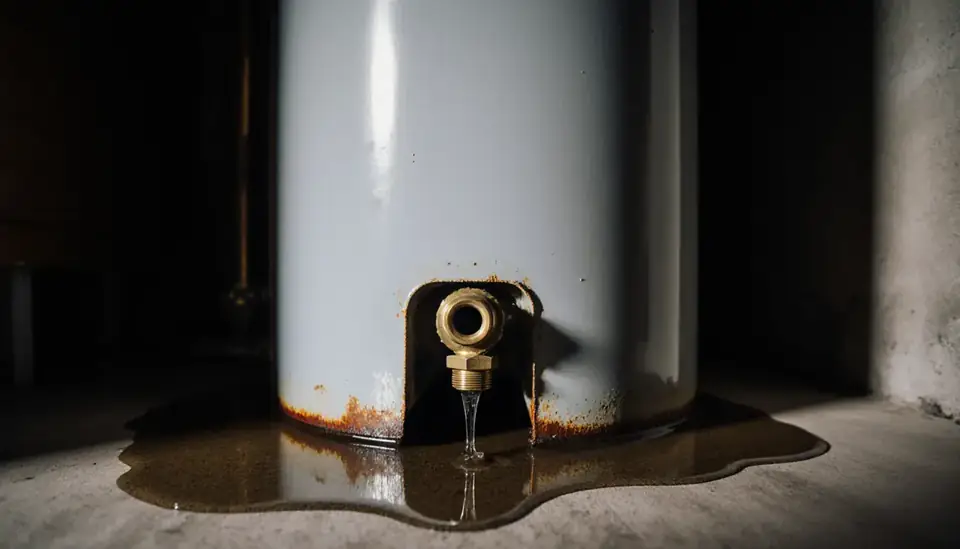
Bel Air North had about 11,544 housing units at the 2020 census, and the large share built during the 1980s boom are now around forty years old. Original water heaters, supply lines and shut-off valves, shower pans and roof shingles from that era all have finite lives. A slow leak under a second-floor bathroom can travel along joists and appear as a stain on a ceiling a room away from the source.
If you see a ceiling stain, check the fixture above it and turn off the supply to it. Moisture meters and a thermal camera let a technician trace the path of the water without opening more ceiling than needed, and structural drying of joists and subfloor follows.
Steps for the First Day After a Leak
Stop the water at the fixture valve or the main. Turn off power to any room where water has reached outlets or fixtures. Take photos and short videos before moving anything, then lift rugs, furniture and stored items off wet floors. Call your insurer to open a claim and ask whether they want an adjuster to see the damage before materials are removed. Keep damaged items you plan to claim until told otherwise.
Basement Humidity and Mold
Summer humidity in the Bel Air area is high enough that a basement which got wet in spring can still be damp in July. Mold needs moisture more than anything, so the goal after any leak is to bring materials back to normal dryness within a couple of days. A dehumidifier set around 50 percent, sealed sump lids and clean gutters help keep it that way. If growth already covers more than a small patch, or the smell returns after cleaning, it is worth having the area assessed. Owners with rentals in both communities can find details for neighboring Bel Air South as well.
Where Callers in the Bel Air North Area Are
The same line also serves nearby communities such as:
- Bel Air
- Bel Air South
- Fallston
- Forest Hill
- Jarrettsville
- Churchville
- Edgewood
Bel Air North Water Damage Questions
Is Bel Air North at much risk of flooding?
Most of the CDP sits on higher ground and is not in a mapped flood zone, but homes near Winters Run, Bynum Run and their small tributaries can be. Look up your address on FEMA's Flood Map Service Center or Maryland's flood map site. Away from streams, water damage here more often comes from plumbing failures, roof leaks and groundwater seeping into basements during long rainy stretches.
A pipe froze and burst while I was away. Where do I start?
Shut off the main water valve, then turn off power to wet areas. Photograph the damage, including the broken pipe, before any cleanup. Call a plumber for the pipe and a restoration provider for the water, since drywall, insulation and flooring may need to come out to dry the framing. Report it to your insurer quickly; most policies require prompt notice.
Why does a small upstairs leak cause so much damage?
Water follows joists, wiring holes and ductwork, so a leak at a toilet or tub can soak the ceiling and walls of rooms below and to the side. Insulation in the ceiling cavity holds water against the drywall. Drying usually means opening a section of ceiling, removing wet insulation and running drying equipment so the framing and subfloor return to normal moisture levels.