
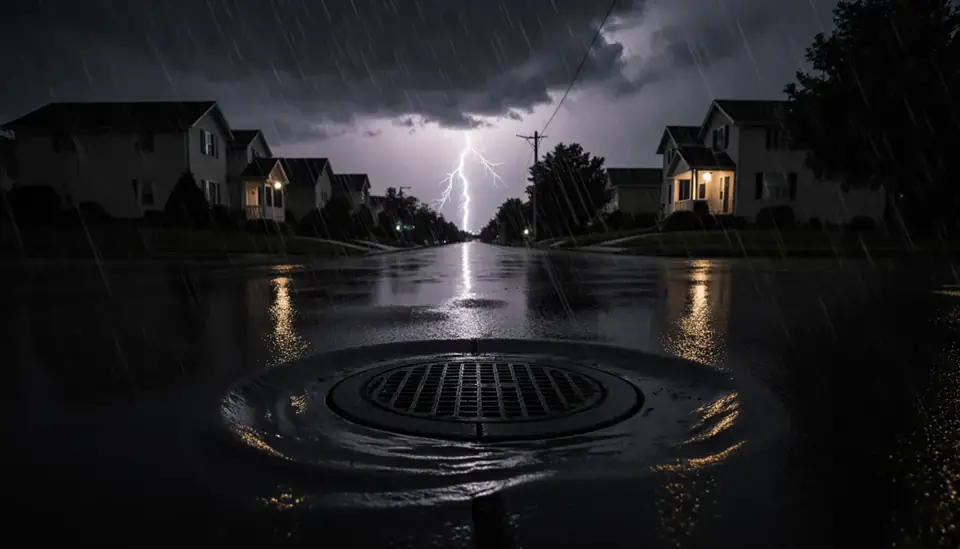
Spread across the First and Second Watchung Mountains at an elevation of around 500 feet, West Orange is the last place many people expect a flooded basement. Yet hills move water fast. Rain on the ridges and in South Mountain Reservation runs downslope toward the township's lowest ground, the downtown basin along the eastern border, and the West Branch of the Rahway River starts here at Crystal Lake. The Second River also has its source in West Orange before heading east through Orange and East Orange.
Through The Restoration Job, a free call-connection service, you can reach an independent restoration provider serving West Orange at (888) 317-9980, day or night. The provider handles the inspection and the work; we simply make the connection.
How the call works: when you call (888) 317-9980, The Restoration Job connects you with an independent restoration provider that serves West Orange. That provider inspects the damage, explains the scope and quotes the work. The Restoration Job doesn't perform restoration itself. Read our referral disclosure.
Ridge Runoff and the Downtown Basin
On steep lots, stormwater picks up speed and finds the easiest path, which is often a driveway sloping toward a garage, a window well, or a retaining wall with clogged weep holes. Houses built into a hillside frequently have one basement wall below grade and the other exposed, and hydrostatic pressure on the uphill side can push water through cracks and the joint between wall and floor. Downtown, at the bottom of the slope, streets and storm drains collect what the hills shed.
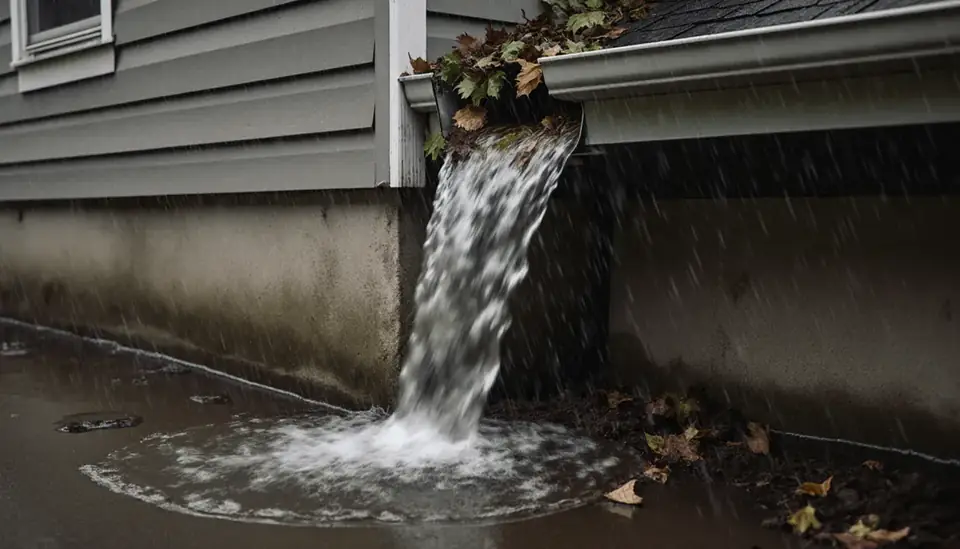
Simple fixes help: extend downspouts, regrade soil so it slopes away from the foundation, and keep yard drains and catch basins free of leaves, especially in fall when the ridges drop a heavy load of them.
Headwaters of the Rahway River
The Rahway River basin has a long flood record, with damaging events in 1938, 1968, 1971, 1973, 1975, 1992, 1996 and 1997, Floyd in 1999, an April 2007 nor'easter and Irene in 2011. Most of the worst damage has occurred downstream in Union County communities such as Springfield and Cranford, and in 2016 Congress authorized a federal flood risk study for the basin. West Orange sits at the top of that system, so local stream flooding is usually brief, but the same storms that swell the river also overwhelm basements and drainage up here.
Historic Houses, Estates and Garden Apartments
The housing mix is wide: Victorian, Jazz Age and Tudor-style houses, large estates, garden apartments and post-war homes. Llewellyn Park, often described as the first planned community in America, has some of the oldest and largest of them. Older homes bring plaster walls, slate and tile roofs, and plumbing that may include original galvanized or cast-iron lines. Garden apartments raise a different issue: a leak in one unit can reach several neighbors through shared walls and ceilings.
Old houses reward a patient approach. Plaster and old-growth hardwood can often be dried in place with patience, and a good provider will explain what can be saved before recommending demolition.
How Drying a Hillside Home Works
- Stop the source. Shut off the water main for plumbing leaks; for groundwater, get a pump running.
- Remove standing water. Extraction comes first, then wet carpet and pad are lifted.
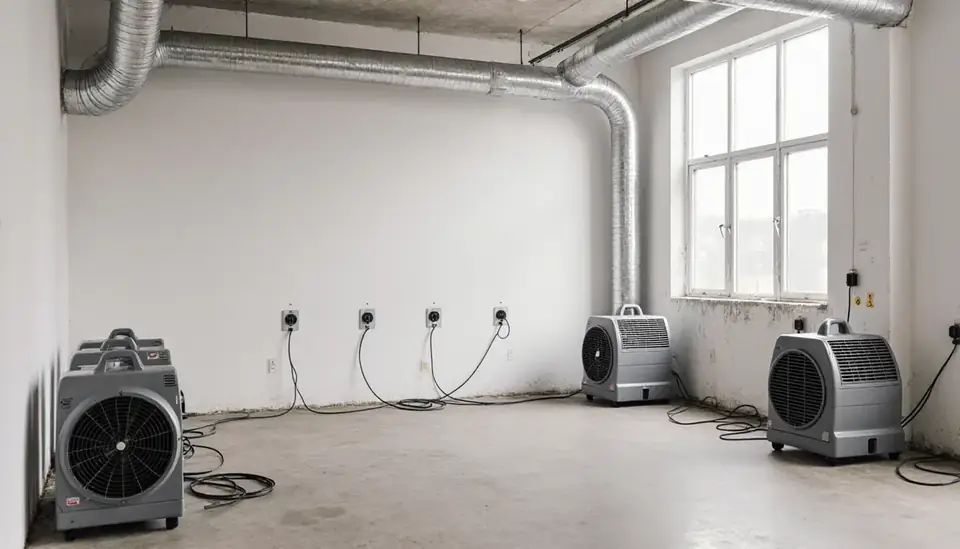
- Dry the structure. Structural drying with dehumidifiers and air movers usually takes several days, longer for masonry and plaster.
- Verify, then rebuild. Moisture readings should be back to normal before walls are closed and floors refinished.
For a broader look at what water damage restoration includes, including when materials are removed versus dried, see the service overview.
Wind, Trees and Mold After a Storm
Mature trees cover much of West Orange's hills, and strong storms bring down limbs that puncture roofs and let rain into attics. Tarping the opening quickly limits the damage, and storm damage cleanup often combines debris removal with interior drying. Wet attic insulation and roof sheathing are common places for mold to start in humid summer weather, so they should be inspected rather than left to dry on their own. Mold also likes the cool, damp corners of below-grade rooms on the uphill side of a house.
Where Callers in the West Orange Area Are
Calls come in from across West Orange, including:
- Llewellyn Park
- Pleasantdale
- Gregory
- St. Cloud
- Crestmont
- The Valley
The same line also serves nearby communities such as:
- Montclair
- Orange
- South Orange
- Maplewood
- Livingston
- Verona
- Millburn
- Roseland
Common Questions
Why does water come into only one side of my West Orange basement?
On sloped lots the uphill wall holds back saturated soil, and after heavy rain that water presses against the foundation and finds cracks or the floor joint. The downhill side often stays dry. Gutters, downspout extensions, grading and sometimes interior drainage can relieve the pressure; drying out the wet side and checking for mold should come first.
Does West Orange get river flooding like towns farther down the Rahway?
Much less. West Orange holds the river's headwaters, including Crystal Lake, so streams here are small. The basin's major flood damage has historically been downstream in Union County. Most local water calls involve hillside runoff, basement seepage, roof leaks from fallen limbs and plumbing failures rather than an overflowing river.
Can plaster walls in an older home be dried instead of replaced?
In many cases, provided the water was clean and dehumidifiers go in early. Plaster on wood or metal lath can tolerate getting wet better than drywall, but it holds moisture longer and needs steady dehumidification and monitoring. Plaster that is crumbling, sagging away from lath or soaked by contaminated water usually needs to come out. A provider can test and advise.
Where can I check flood maps and weather warnings for West Orange?
FEMA's Flood Map Service Center shows the official flood hazard mapping for any address. For warnings about flash floods and severe storms, the National Weather Service office in New York covers northeast New Jersey. Statewide emergency updates are posted by the New Jersey Office of Emergency Management.