
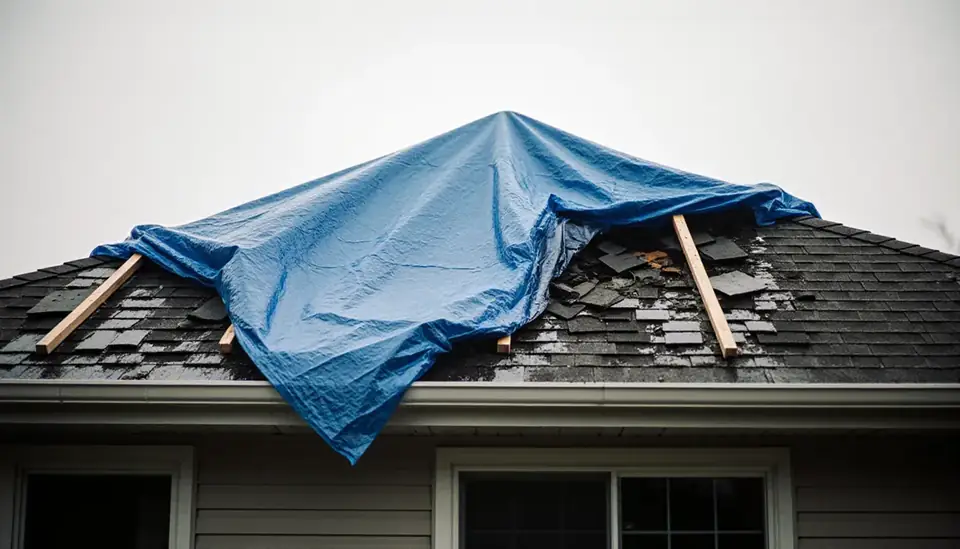
New Rochelle's straight-line shoreline on Long Island Sound is only 2.7 miles long, but once you follow its coves, necks and islands the waterfront stretches about 9.3 miles. Davenport Neck juts into the Sound lined with beach clubs, Echo Bay cuts in near downtown, and Glen Island and Davids Island sit just offshore. Inland, the Hutchinson River begins at the city's border with Scarsdale and runs south through the northern sections toward Mount Vernon and Pelham. That gives the city two kinds of water exposure: coastal storms pushing the Sound inland, and heavy rain moving through neighborhoods away from the shore.
Through The Restoration Job, you get a free connection, not a crew. Call (888) 317-9980 and we'll put you through to an independent restoration provider that serves New Rochelle, from Premium Point to Wykagyl.
How the call works: when you call (888) 317-9980, The Restoration Job connects you with an independent restoration provider that serves New Rochelle. That provider inspects the damage, explains the scope and quotes the work. The Restoration Job doesn't perform restoration itself. Read our referral disclosure.
Davenport Neck, Echo Bay and the Sound Shore
Westchester's Long Island Sound shore is mostly rocky, broken up by tidal mud flats, marshes and small beaches. Properties on the necks and around the coves sit closest to that water. When a nor'easter or tropical system drives the Sound up against the shore, low lots near the harbors can take water in yards, garages and lower levels. During Sandy in 2012, Con Edison reported roughly 140,000 Westchester customers without power, and long outages bring their own problems: sump pumps that stop, basements that stay damp for days, and refrigerators that leak as they thaw.
Saltwater flooding calls for more than drying. Salt and silt need to be rinsed from surfaces, wet insulation in walls usually comes out, and furnaces, water heaters and electrical panels that were submerged should be checked by qualified trades before anyone turns them back on. Arrange flood cleanup promptly, because mud left in wall cavities holds moisture.
Hutchinson River and Parkway-Area Drainage
The Hutchinson River is a short stream, about ten miles long with a drainage basin of roughly 19 square miles, and it forms part of the boundary between several municipalities. The Hutchinson River Parkway runs through much of New Rochelle, and portions of it were closed during the flash flooding of September 29, 2023. Streets near the river and in low spots between hills can collect water quickly when a storm stalls over southern Westchester.
Homes in these areas tend to see seepage through foundation walls, water entering at basement stairwells, and backups through floor drains when municipal lines are full. Keep yard drains and window wells clear, make sure downspouts carry water well away from the house, and if you have a sump pump, test it before storm season and consider a battery backup.
Gilded Age Houses, Downtown Towers and Hidden Leaks
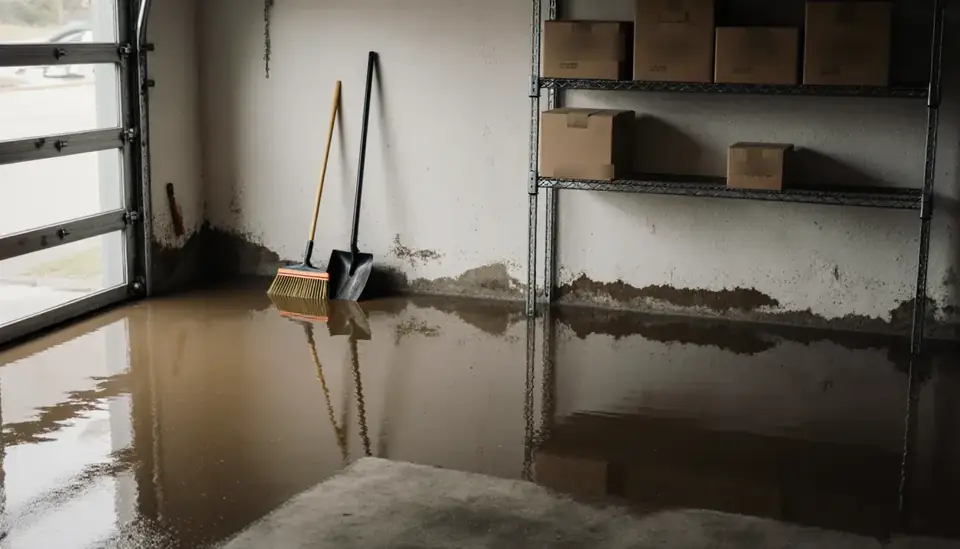
New Rochelle has a long building history, with single-family and multifamily homes dating from the eighteenth century through today. The city counts more than 11,500 single-family houses, including Queen Anne, Tudor Revival and Colonial Revival homes from the Gilded Age. Downtown, around the rebuilt train station and New Roc City, newer mixed-use and apartment construction has added a very different kind of building.
- In older houses, plaster walls and thick wood trim can hide a slow leak for weeks, and steam or hot-water heating systems may leak at radiator valves.
- Slate and tile roofs tend to fail at flashing around chimneys and dormers after wind-driven rain.
- In apartment and condo buildings, a leak in one unit can reach several others, so notify building management immediately.
For historic finishes, ask the provider about drying plaster and hardwood in place with structural drying before deciding what has to be removed.
The First Hour in a Wet New Rochelle Home
A few actions in the first hour make a difference to what can be saved:
- Turn off electricity to wet rooms at the panel only if you can reach it without standing in water.
- If a pipe, toilet or appliance hose is leaking, shut the main water valve.
- Take photos and video of every affected room and item before cleaning anything.
- Pull rugs, books, photos and electronics out of the wet area.
- Contact your insurer; flooding from outside requires a flood policy, which is separate from homeowners coverage.
Once a provider arrives, the usual sequence is water removal, moisture mapping with meters, removal of materials that cannot be dried, and then several days of controlled drying with dehumidifiers and air movers.
Sound Humidity and Mold in Lower Levels
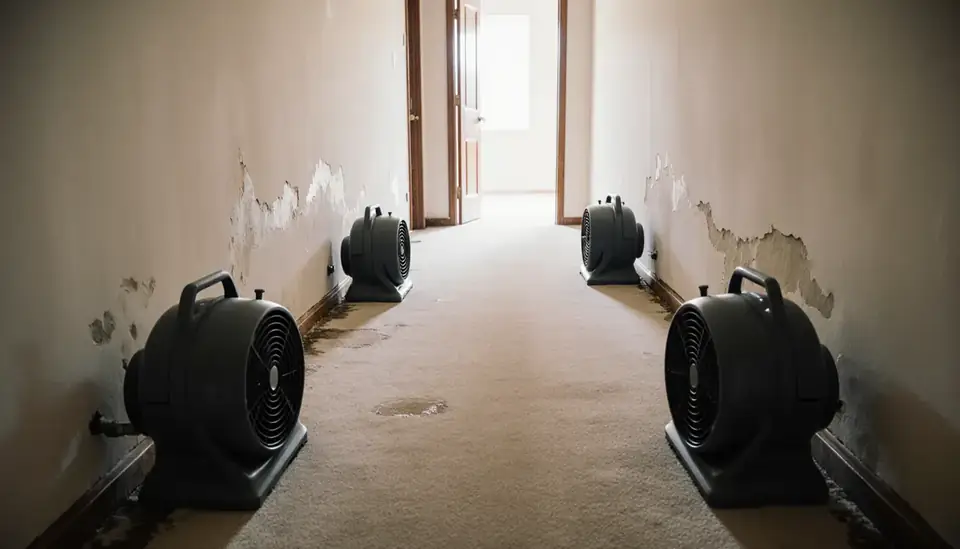
Southern Westchester summers are warm and humid, and homes near the Sound often hold moisture in basements and crawl spaces even without a leak. Add a flood or a burst pipe and mold can start on drywall, carpet backing and stored cardboard within a couple of days. Running a dehumidifier in lower levels through the summer and fixing small drips quickly are simple ways to keep humidity down.
If growth covers more than a small patch, or if you smell mustiness that does not go away after drying, a professional can find the moisture source and handle mold remediation with containment so spores are not carried into finished rooms.
Areas In and Around New Rochelle
Calls come in from across New Rochelle, including:
- Davenport Neck
- Premium Point Park
- Wykagyl
- Residence Park
- Rochelle Heights
- Beechmont
- Glenwood Lake
- Quaker Ridge
- Bayberry
- Sutton Manor
The same line also serves nearby communities such as:
- Larchmont
- Mamaroneck
- Pelham
- Eastchester
- Scarsdale
- Mount Vernon
New Rochelle Water Damage Questions
Does living near the Sound in New Rochelle mean I need flood insurance?
Standard homeowners policies do not cover flooding from rising water, so anyone on a low lot near Echo Bay, Davenport Neck or the coves should look at a separate flood policy. Even outside mapped high-risk zones, heavy rain can flood basements. Look up your address on FEMA's Flood Map Service Center and talk with your agent about flood coverage and any optional sewer backup endorsement.
Our Victorian house has plaster walls that got wet. Do they have to be torn out?
Not always. Plaster on lath is denser than drywall and can often be dried in place if the water was clean and the wall was not soaked for long. A provider can check readings inside the wall and use targeted drying. Plaster that has lost its bond to the lath, is sagging, or was soaked by contaminated water usually needs repair or replacement.
The power was out for days after a storm and my basement flooded when the sump stopped. Is that a flood claim?
It depends on the source and your policy. Groundwater entering because a sump failed is often treated differently from surface flooding, and many homeowners policies only cover it with a specific sump or water backup endorsement. Document the outage, the pump and the water level with photos, keep receipts, and ask your insurer how they classify the loss before you discard anything.