
A dam on Little Rockfish Creek is the reason Hope Mills exists. Sawmills and grist mills used that water power as early as 1766, the first cotton mill driven by the dam was finished in 1839, and Hope Mills Lake still sits beside the town center. The creek continues southeast to Rockfish Creek and on to the Cape Fear River. For a town of about 17,800 people south of Fayetteville, that history means homes near the lake and creek, older mill-era buildings downtown, and newer subdivisions on the sandy ground around them, each with its own way of getting wet.
The Restoration Job is a no-fee call-connection line. Phone (888) 317-9980 any time of day and we will put you in touch with an independent restoration provider that serves Hope Mills. Those companies operate on their own terms, and many of them handle after-hours emergencies.
How the call works: when you call (888) 317-9980, The Restoration Job connects you with an independent restoration provider that serves Hope Mills. That provider inspects the damage, explains the scope and quotes the work. The Restoration Job doesn't perform restoration itself. Read our referral disclosure.
A Lake Defined by Its Dam
Hope Mills Lake has a recent record that residents remember. In 2003 heavy rain caused the earthen dam to fail and the lake drained. A rebuilt dam was finished in 2008, filling the lake for the first time in five years, and in June 2010 the lake was drained again on purpose after an inspection found a sinkhole leaking water beneath the structure. The lesson for property owners is less about the dam itself than about how much water Little Rockfish Creek can carry when the Sandhills get a soaking rain.
During Hurricane Matthew in 2016, Cumberland County took about 10 inches of rain in late September and then another 10 to 14 inches from the storm itself. Ground that saturated cannot absorb more, so runoff collects in low yards, ditches and the lowest rooms of houses.
Mill-Era Downtown and Newer Subdivisions
The Hope Mills Historic District holds 61 contributing buildings, including the old Hope Mills Manufacturing and Rockfish Manufacturing buildings, and is roughly bounded by the railroad, Lakeview Road, Little Creek and Cross Street. Older buildings like these often have shallow foundations, layers of past repairs and plumbing that has been rerouted more than once, so a leak may travel well away from its source before it shows.
Much of the town's housing is newer, with slab and crawl-space foundations, water heaters in garages or closets, and HVAC units in attics. In those homes the common calls are supply-line failures, water heater leaks, overflowing condensate pans and roof leaks after wind-driven storms. Quick water extraction from carpet and pad in the first hours limits how far the water wicks into drywall and baseboards.
Clean, Gray or Contaminated: Sorting Out the Water
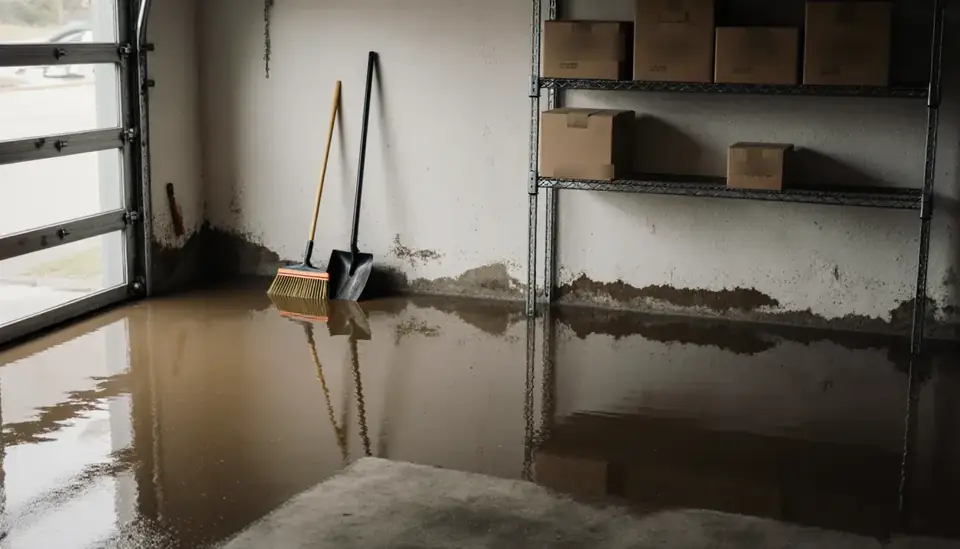
The type of water decides how much has to be removed. A burst supply line is clean at first and can often be dried in place if someone gets to it quickly. A washing machine or dishwasher overflow carries more contamination. Water from the creek, a flooded yard or a backed-up sewer line should be treated as contaminated from the start.
- Turn off the main water valve for any plumbing leak and switch off breakers for wet areas if it is safe to reach the panel.
- Photograph rooms, contents and the source before anything is moved.
- Pull rugs and furniture off wet carpet, and keep children and pets out of areas reached by outside water.
- Call your insurer early; standard homeowners policies usually exclude rising floodwater, which needs a separate flood policy.
For a home touched by creek or yard water, professional flood cleanup generally includes cutting out wet drywall and insulation, cleaning and disinfecting framing, then drying before anything is closed back up.
Damp Ground Near Little Rockfish Creek and Mold Under the Floor
Cumberland County summers are hot and humid, and that slows drying inside a closed-up house. Mold growth often starts within a day or two on wet drywall, carpet pad and cardboard storage boxes, and crawl spaces near the lake and creek can stay damp long after the visible water is gone. A musty smell in a room that looks dry is a common sign that something behind a wall or under the floor is still wet.
Moisture meters and thermal cameras help a crew find those pockets. Where growth has already started, removal of the affected material, cleaning and drying to normal moisture levels is the reliable fix.
Neighborhoods and Nearby Communities
Calls come in from across Hope Mills, including:
- Downtown Hope Mills
The same line also serves nearby communities such as:
- Fayetteville
- Spring Lake
- Stedman
- Eastover
- Rockfish
- Raeford
Hope Mills Water Damage Questions
Is my Hope Mills home at risk because it is near the lake?
Being near Hope Mills Lake or Little Rockfish Creek does not by itself mean a house will flood, but low-lying lots along the creek collect runoff in heavy rain. Check your address on FEMA's Flood Map Service Center, and remember that a flood policy is separate from homeowners insurance, so it has to be bought before a storm is on the way.
What happened to the Hope Mills dam?
The earthen dam failed after heavy rain in 2003 and the lake drained. A new dam was completed in 2008, and in June 2010 the lake was drained deliberately after an inspection found a sinkhole leaking water under the structure. Those events show how much water the creek can move during a big storm.
Who sends alerts about flooding and storms in Hope Mills?
Cumberland County Emergency Management runs Cumberland Alerts, the county's notification system for severe weather and emergencies. Signing up is free. The state FIMAN site also shows real-time readings from river and stream gauges across the Cape Fear basin.
Can a wet crawl space cause problems even if the floors look fine?
Yes. Standing water or damp soil under a house raises humidity in the floor system, which can lead to cupped hardwood, sagging insulation, musty odors and mold on joists. After a heavy storm or plumbing leak, have someone look under the house rather than relying on what you see indoors.