
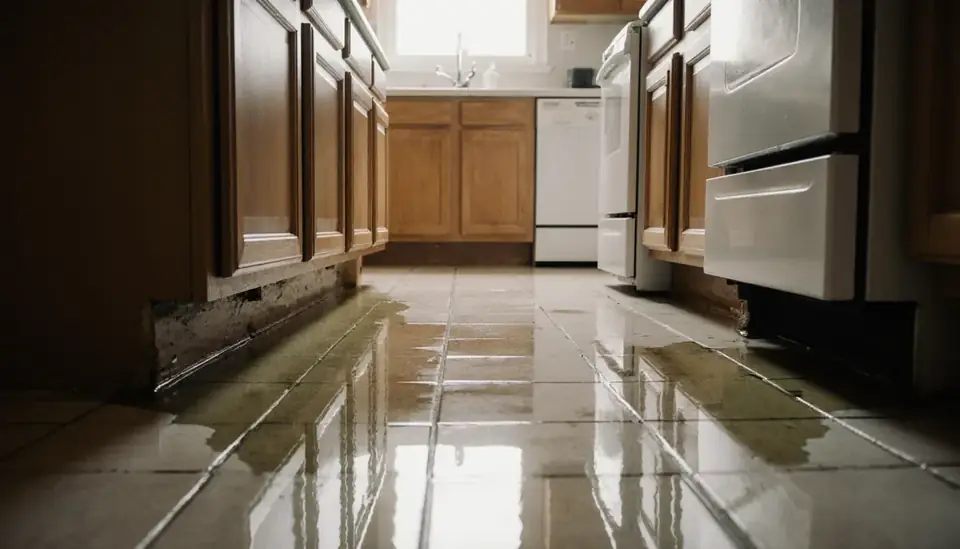
Centreville was a fortified Confederate supply depot in the winter of 1861, but almost everything a homeowner here deals with today was built much more recently. The census counted about 7,500 residents in 1980 and more than 73,000 in 2020, so most of the housing went up after 1980. In homes with a finished basement, that lower level is where water damage most often turns expensive: a sump pump that quits during a downpour, a water heater that lets go in a utility room, or snowmelt seeping through a foundation crack behind a newly carpeted rec room.
Help through The Restoration Job costs nothing, and the phone line is answered around the clock. Call (888) 317-9980 and we'll put you in touch with an independent restoration company that serves Centreville and western Fairfax County; that company assesses the damage and does the work.
How the call works: when you call (888) 317-9980, The Restoration Job connects you with an independent restoration provider that serves Centreville. That provider inspects the damage, explains the scope and quotes the work. The Restoration Job doesn't perform restoration itself. Read our referral disclosure.
Cub Run, Big Rocky Run and the Streams Feeding the Occoquan
Most of Centreville drains southwest toward Bull Run. Fairfax County's watershed plans put the Cub Run watershed at 55.3 square miles, with Big Rocky Run, Elklick Run and Flatlick Branch among its tributaries, and note that about 14 square miles of Loudoun County also drain into it. Little Rocky Run, a separate 7.4-square-mile watershed whose upper portion is heavily developed, runs south to the Bull Run and Occoquan system. All of this water ends up in the Occoquan Reservoir, a drinking water source for much of the county.
For residents, the practical point is that a lot of rooftop and pavement runoff from new development is moving through fairly small stream valleys. Lots that back onto those valleys, low-lying cul-de-sacs and townhouse rows at the bottom of a grade see water first when a thunderstorm parks over the area. Fairfax County maps minor floodplains on streams draining as little as 70 acres, so a home can sit in a county floodplain without being in a FEMA zone.
Basement Water: Sump Pumps, Window Wells and Seepage
Below-grade space is where Centreville claims tend to grow. Common sources include:
- Sump pumps that fail during a power outage or simply wear out after years of cycling.
- Window wells without covers that fill during heavy rain and push water past the frame.
- Downspouts discharging too close to the foundation.
- Hairline foundation cracks that leak only during snowmelt or long wet spells.
- Water heaters and HVAC condensate lines in unfinished utility rooms next to finished space.
Once water reaches carpet over a concrete slab, the pad holds it against the floor and drywall wicks it upward. Water extraction followed by removal of the bottom of the wall, where needed, is often faster and cheaper than trying to save saturated materials.
Heavy Snow, Thaw Cycles and Frozen Pipes
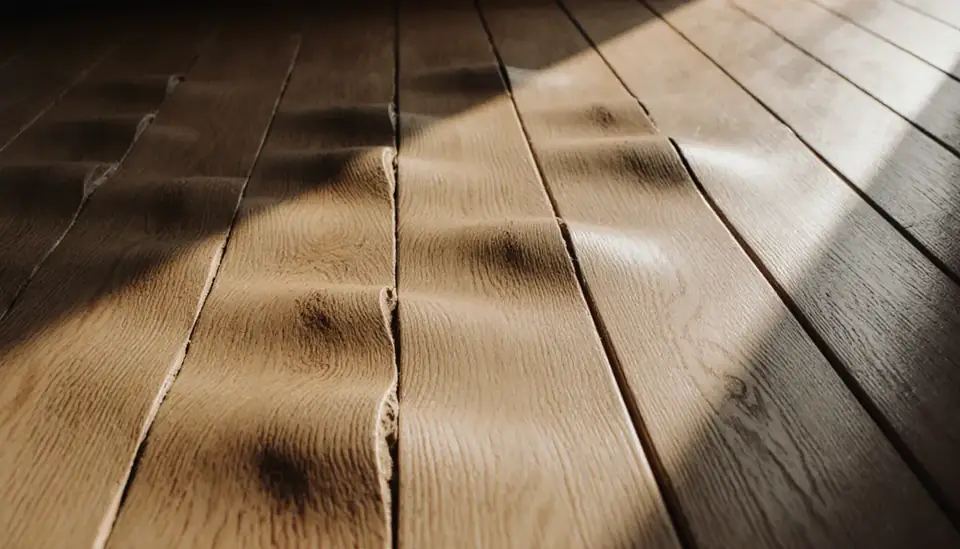
Centreville averages about 13.7 inches of snow a year, but single storms can blow well past that. During the January 22 to 23, 2016 blizzard, the National Weather Service logged 30 inches in neighboring Chantilly. The January 5 to 6, 2025 storm left 9.0 inches in Centreville itself. Deep snow against a foundation melts slowly into the backfill, and ice dams on low-slope roofs push meltwater under shingles and into exterior walls. Hose bibs, pipes in garage walls and lines over unheated crawl areas are the usual freeze points. If a pipe bursts, shut the main valve first and open the faucets to drain the line.
What a Drying Job Looks Like in a Finished Basement
A restoration provider will usually start with a moisture map: readings across the slab, the lower wall and any built-in cabinets or bar areas. Standing water gets extracted, wet pad is pulled, and baseboard and the bottom foot or two of drywall may be cut out to open the wall cavity. Dehumidifiers and air movers then run for several days, with readings taken to confirm progress. Carpet itself can sometimes be saved after clean-water losses; after groundwater or sewage, it generally cannot. When the source is a sewer line or floor drain backup, the job follows sewage cleanup procedures with disinfection and removal of porous materials.
Keeping Mold Out of Basements and Crawl Areas
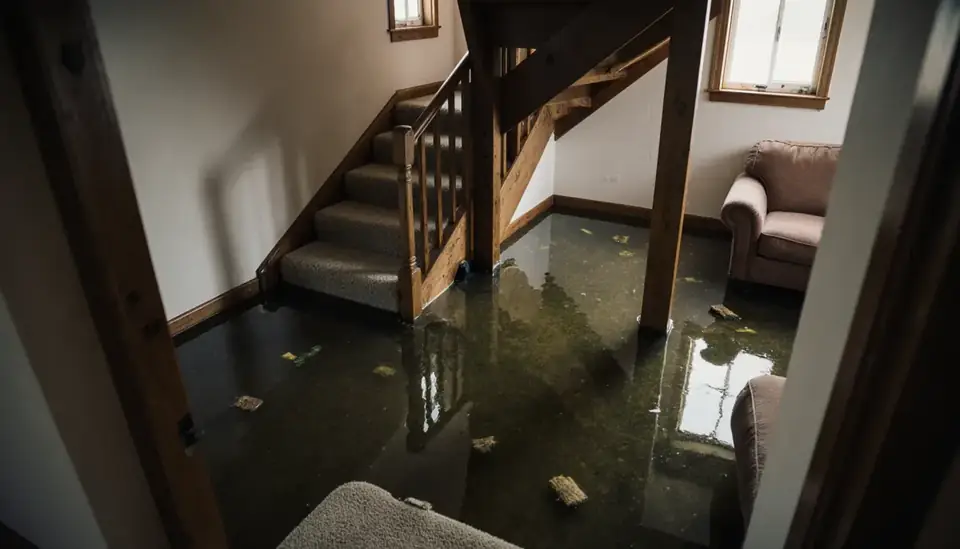
About 41 inches of precipitation falls here in an average year, spread over roughly 117 wet days, and summers are humid. Basements stay cool, which keeps relative humidity high even without a leak. After water damage, mold tends to show up behind baseboards, on the paper face of drywall and under carpet pad, sometimes within two days. Running a dehumidifier through the summer, keeping storage boxes off the floor and dealing with even small seepage promptly all help. A lingering musty smell after a cleanup is worth investigating.
Areas In and Around Centreville
The same line also serves nearby communities such as:
Centreville Water Damage Questions
My sump pump failed during a storm and the basement flooded. Is that a flood claim?
Usually not in the insurance sense. A flood policy covers surface water from outside, while sump failure and drain backup are normally handled by a separate endorsement on a homeowners policy, if you bought one. Check your declarations page and call your agent before cleanup removes evidence. Take photos of the pump, the water line on the walls and damaged contents.
Does Fairfax County have flood maps beyond FEMA's?
Yes. The county's stormwater program identifies minor floodplains on small drainage areas and major floodplains on larger streams, in addition to FEMA flood insurance maps. Its online floodplain and flood hazard maps can be searched by address. Homes near Cub Run, Big Rocky Run or Little Rocky Run stream valleys are worth checking.
We had a pipe freeze in the garage wall. What should we do before help arrives?
Turn off the main water valve, then open faucets to drain pressure. Move cars and stored items away from the wet area. Do not use a torch to thaw other sections. If the wall shares space with a finished room, check that room's baseboards and carpet for wicking. A provider can open the wall, dry the cavity and document the loss for a claim.