
Garfield occupies just over two square miles where the Saddle River flows into the Passaic. The Passaic forms the city's western boundary, with the Dundee Dam marking the point where the river stops being tidal, and the Saddle separates Garfield from Wallington to the south. The city started in 1873 as a cluster of homes called East Passaic and today packs more than 32,000 residents into that small area, with sections known as Belmont, Bogart Heights, Dundee Dam and Plauderville.
The Restoration Job connects people with independent restoration providers and does not do the work itself. Call (888) 317-9980 at any hour if your Garfield home or business has river water in the basement, a backed-up drain or a leak you cannot stop.
How the call works: when you call (888) 317-9980, The Restoration Job connects you with an independent restoration provider that serves Garfield. That provider inspects the damage, explains the scope and quotes the work. The Restoration Job doesn't perform restoration itself. Read our referral disclosure.
Where the Saddle Meets the Passaic
A city at the junction of two rivers gets water from both. The Saddle River drains about 55 square miles of mostly developed Bergen County above the Lodi gauge and can climb quickly during a thunderstorm. The Passaic, which drains a 935-square-mile basin, rises more slowly but stays high longer. Its record flood came in October 1903, and it crested again in 2007, 2010 and on August 30, 2011, after Irene. Bergen and Passaic counties led New Jersey in flood claims from that storm, each with more than 4,000.
Dundee Lake, the impoundment above the dam, was itself created by flooding: when the dam's water level was raised in 1857, adjacent land went under water. The river corridor along Garfield's western edge remains its lowest ground.
Dense Older Housing and Shared Basements
At roughly 15,000 people per square mile, Garfield is densely built, with about 12,400 housing units on its two square miles. Where buildings sit this close and house more than one household, a flooded basement can mean several households affected at once, with a boiler, water heaters and laundry for multiple units all in the same space. Water that enters one cellar through a foundation crack or floor drain may also show up in a neighbor's, especially where houses share a wall.
If you rent, tell your landlord immediately and photograph your stored belongings. Renters insurance may cover contents for a pipe break but typically not for flooding from outside; that requires a separate flood policy, which is available to tenants as well as owners.

Sewage and Contaminated Floodwater
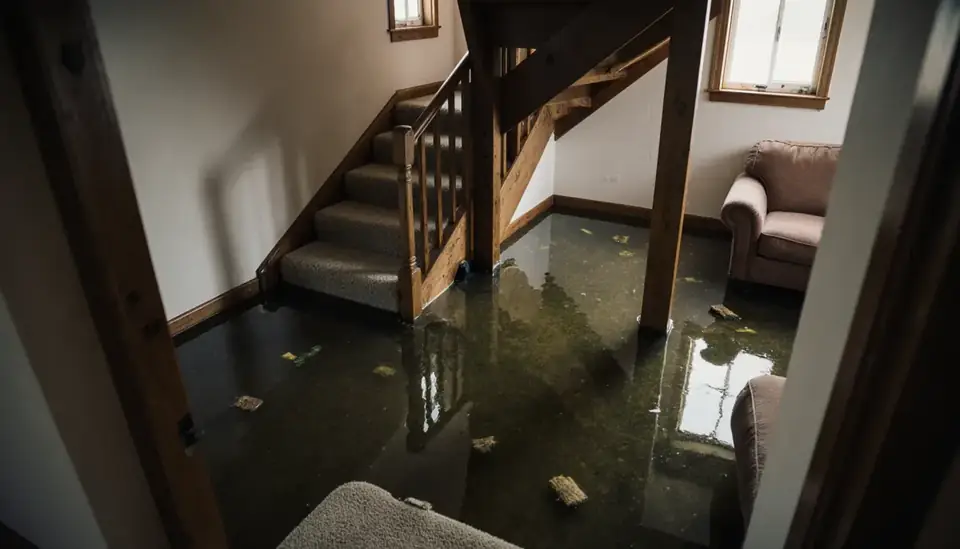
River floodwater carries whatever it picks up along the way, and in heavy rain sewer lines can back up into floor drains and basement fixtures. Both should be handled as contaminated. A provider doing sewage cleanup will wear protective gear, remove porous materials like carpet, drywall and insulation that the water reached, clean and disinfect hard surfaces and dry the area thoroughly. Keep children and pets out until the cleanup is complete, and throw away food, medicine and cosmetics that came into contact with the water.
A Short Checklist for Garfield Flood Days
- Sign up for the city's Smart911 notifications so you hear about emergencies promptly.
- Watch National Weather Service forecasts for the Passaic and Saddle when a tropical system or long rain is expected.
- Keep valuables and important papers off basement floors year-round.
- Test your sump pump and consider a backflow valve on the sewer line.
- After water enters, stay out of the basement until power to it is off, then document everything before cleanup.
Once water is out, structural drying with dehumidifiers and air movers usually takes several days, and moisture readings should confirm the walls and floors are dry before repairs begin.

Mold in Garfield's Older Cellars
Older foundations in Garfield tend to stay damp, and humid summers add to the moisture load. After a flood or leak, mold can start on organic materials in a day or two. The usual fixes are removing what soaked through, drying quickly and running a dehumidifier afterward. If you notice a persistent musty smell or growth spreading on walls or stored items, a remediation provider can identify the source and remove affected materials safely.
Where Callers in the Garfield Area Are
Calls come in from across Garfield, including:
- Belmont
- Bogart Heights
- Dundee Dam
- Plauderville
The same line also serves nearby communities such as:
Frequently Asked Questions
Which parts of Garfield are most exposed to flooding?
The lowest ground runs along the Passaic River on the city's western edge and near the Saddle River where it meets the Passaic. Those areas face the most risk when either river rises. Elsewhere, basement water usually comes from heavy rain and sewer backups. You can check whether your address is in a mapped flood zone using FEMA's Flood Map Service Center.
Does the Dundee Dam protect Garfield from floods?
No. The dam was built in the 1840s to hold back water for power and industry, not for flood control, and it marks the upper limit of the tidal Passaic. During major floods such as the one after Irene in 2011, water simply passes over it. Flood protection depends on insurance, preparation and keeping valuables out of basements.
Sewage came up through the basement drain. Is this a do-it-yourself job?
Small amounts of clean water can be handled by a homeowner, but sewage is a health hazard and porous materials it touched generally need to be removed. Professional cleanup includes protective equipment, disinfection and drying. Call (888) 317-9980 any time and we will connect you with an independent provider serving Garfield.